

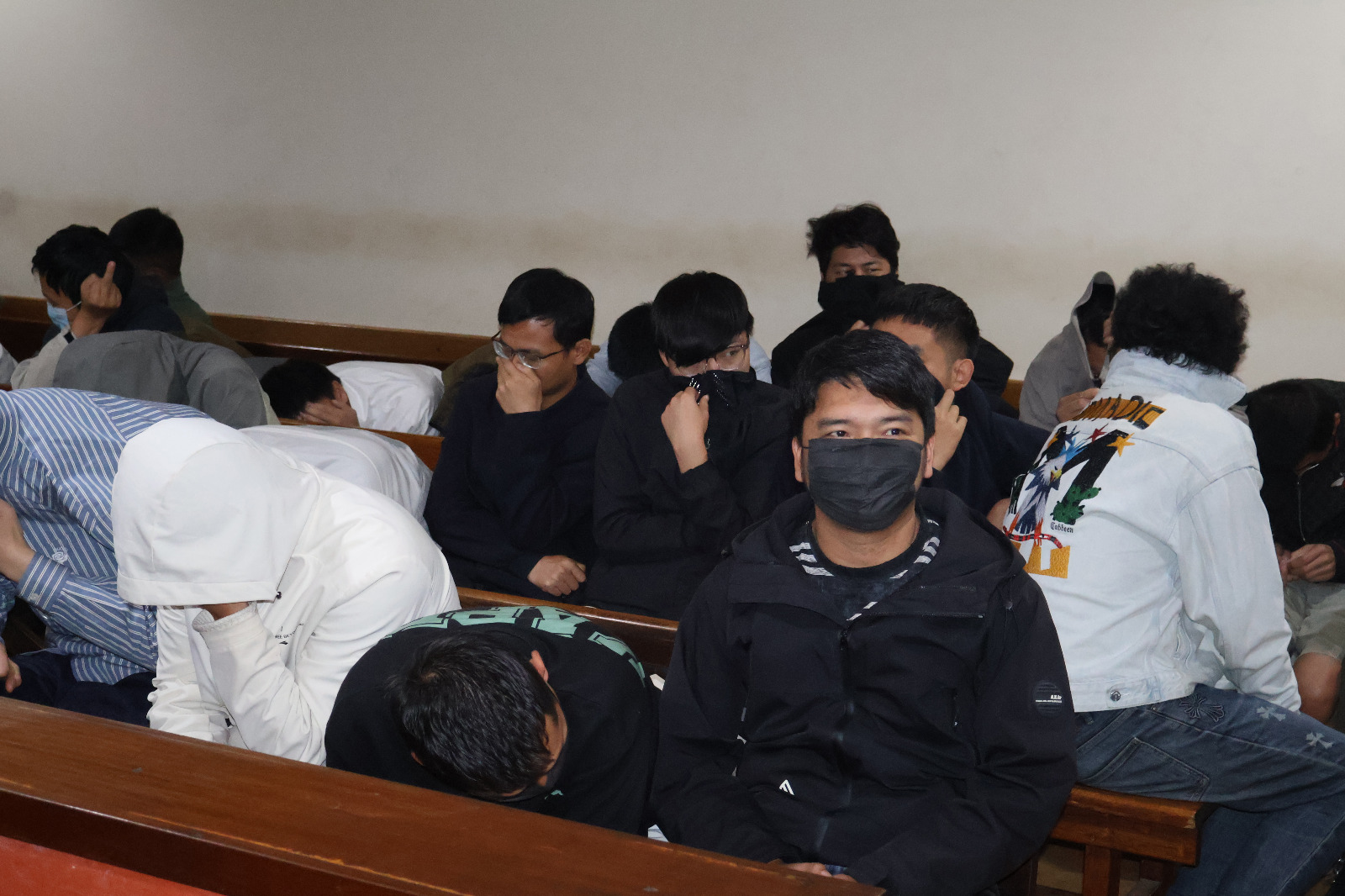
MBABANE – Government says 25 Chinese nationals were re-arrested after allegedly trying to leave Eswatini using passports that had been revoked by China.
This is contained in an answering affidavit filed by Detective Assistant Superintendent Bhekani Shiba, the officer in charge of organised crime, in the High Court.
The affidavit, the merits of which are yet to be contested, forms part of the State’s opposition to an application by the 25 foreign nationals seeking to execute a High Court judgment ordering their release.
The applicants, led by Li Hai, are seeking leave to execute the judgment delivered on August 3, 2026, pending the finalisation of the State’s appeal.
The State, however, argues that the applicants were not re-arrested for the offences for which they had already been convicted and fined, but for what it describes as fresh immigration offences.
According to Shiba, the 25 applicants were initially arrested in June and July 2026 and prosecuted before the Magistrates Court for contravening the Immigration Act.
He states that they pleaded guilty, were fined and paid the fines before being released from correctional custody on or around July 24, 2026.
The State, represented by Senior Crown Counsel Sibonginkhosi Dlamini, says the situation changed the following day when the applicants allegedly attempted to leave the country.
Shiba brought it to the court’s attention, that during routine border control and immigration checks on July 25, 2026, officers discovered that the passports presented by the applicants had allegedly been revoked, cancelled, invalidated and blocked by the Chinese authorities.
The State argues that the applicants therefore committed fresh offences by attempting to leave the country using invalid travel documents.
Shiba averred that, an alien presenting a revoked or fraudulent passport, or remaining in Eswatini without a valid passport, commits a separate and continuing statutory offence.
He maintains that the police therefore acted within their constitutional and statutory mandate when they re-arrested the applicants.
The re-arrests followed an earlier legal battle involving the foreign nationals, who had initially been detained after being arrested in connection with immigration offences.
The latest court papers now place the validity of the second arrests at the centre of the dispute.
The applicants have argued that their re-arrest amounted to double jeopardy because they had already been prosecuted, convicted and fined for contravening the Immigration Act.
However, the State disputes this, arguing that the July 25 arrests arose from conduct that allegedly occurred after their release.
The High Court subsequently ordered the immediate release of the applicants on August 3, 2026, and directed State agencies to facilitate their departure from Eswatini.
The Attorney General has since appealed the judgment to the Supreme Court.
The State argues that the noting of the appeal automatically suspended the operation and execution of the High Court judgment.
It has therefore opposed the applicants’ application for leave to execute the judgment pending the outcome of the appeal.
Shiba further argues that the applicants have another matter pending before the Magistrates Court.
According to the answering affidavit, the 25 appeared before the Principal Magistrates Court in Manzini on August 6, 2026, in connection with the fresh charges arising from the alleged use of invalid travel documents.
The State argues that the applicants cannot use the High Court application to obtain their release while their criminal matter is still pending before the Magistrates Court.
It says doing so would effectively interfere with the jurisdiction of the lower court.
The State has also challenged the applicants’ argument that the appeal does not suspend the operation of the August 3 judgment.
Shiba argues that if the applicants believed the State was acting in contempt of the High Court order, they should have instituted contempt proceedings rather than seeking leave to execute the judgment.
The State further argues that the applicants have failed to meet the requirements for leave to execute a judgment pending appeal.
The prosecution argued that the court must consider the potential prejudice to both parties, the balance of convenience and the prospects of success on appeal.
According to the State, its appeal has reasonable prospects of success because it challenges the High Court’s interpretation of the constitutional protection against double jeopardy.
The State also argues that the High Court erred by allegedly interfering with the jurisdiction of the Magistrates Court.
Another ground of appeal is that the order directing State authorities to facilitate the applicants’ departure could result in them travelling on passports that had allegedly been revoked by China.
The State says immigration authorities cannot lawfully facilitate international travel using invalid travel documents.
It further argues that releasing the applicants would create a flight risk and could prejudice the State’s appeal.
The answering affidavit asks the High Court to dismiss the application for leave to execute the August 3 judgment pending appeal. The State is also seeking punitive costs against the applicants, who are represented by Linda Dlamini of Linda Dlamini and Associates.
















Leave a comment