

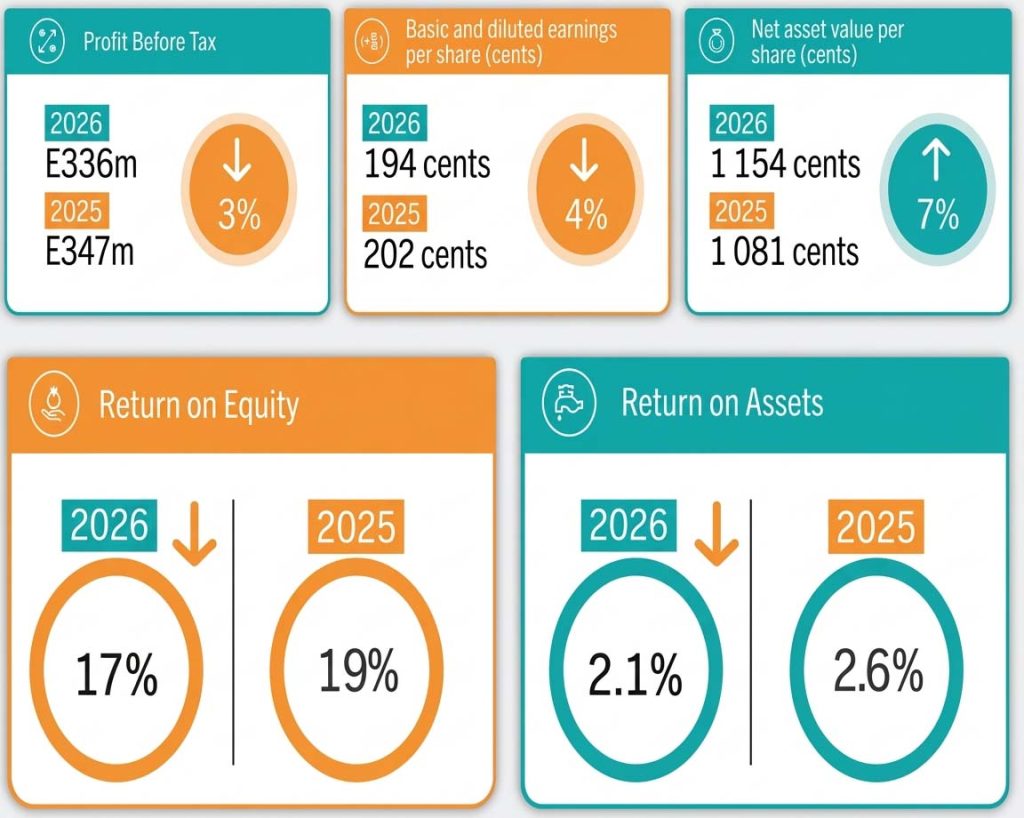
MBABANE – FNB Eswatini’s profit before tax declined by 3 per cent to E335.7 million in the year ended June 30, 2026.
This was despite a 9 per cent increase in total income, as higher impairment charges and operating costs weighed on earnings.
The bank’s latest audited abridged financial statements show that income from operations increased from E1.097 billion in the previous financial year to E1.196 billion, representing growth of about E99 million.
However, this improvement was not enough to translate into higher pre-tax earnings, with profit before tax falling from E346.7 million in 2025 to E335.7 million in 2026.
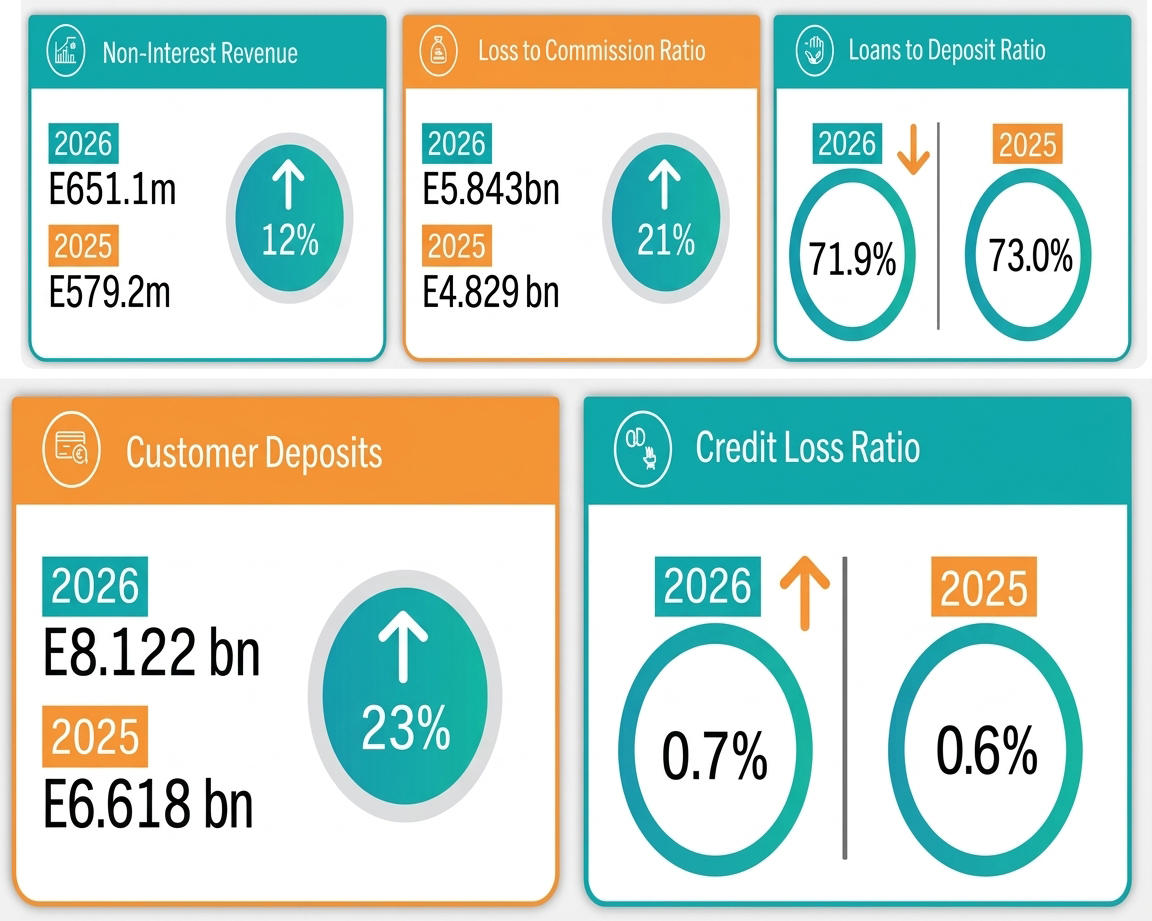
The results show that FNB Eswatini continued to expand its underlying banking business during the year, with strong growth in lending, customer deposits, net interest income and non-interest revenue.
At the same time, the cost of supporting that growth increased significantly, particularly charges relating to shared support functions, while impairment charges on advances also rose.
Net interest income before impairments increased by 8 per cent during the year, reaching E584.6 million from E542.2 million previously.
Interest and similar income increased from E969 million to E1.060 billion, while interest expense and similar charges rose from E426.8 million to E475.3 million.
The stronger net interest performance was supported by continued growth in the bank’s advances and optimisation of its earning assets.
FNB Eswatini reported that lending activity remained strong across key portfolios, contributing positively to income growth.
The bank’s non-interest revenue was another major contributor to the growth in income.
Non-interest revenue increased by 12 per cent from E579.2 million in 2025 to E651.1 million in 2026.
According to the bank, the increase reflected continued growth in transactional activity and increased adoption of its digital channels.
FNB Eswatini said it remained focused on delivering innovative and convenient solutions to meet changing customer needs, while supporting greater diversification of its revenue streams.
While the bank generated more income, its operating and administration expenses rose considerably.
Operating and administration expenses increased from E709.4 million to E814.5 million, an increase of approximately E105.1 million or nearly 15 per cent.
The bank attributed the increase primarily to a 24 per cent year-on-year rise in support costs, reflecting higher charges from shared support functions.
This cost increase was significant enough to offset much of the additional income generated during the year and contributed to the decline in profit before tax.
The pressure on earnings was also evident before tax and indirect tax.
Income before indirect tax declined from E388 million to E381.9 million, while indirect tax increased from E41.3 million to E46.1 million.
After income tax, profit for the year stood at E257.7 million, compared with E268.8 million in 2025, representing a decline of about 4 per cent.
The bank also recorded other comprehensive income of negative E5.5 million, relating to re-measurements on defined benefit post-employment plans. As a result, total comprehensive income fell to E252.2 million from E268.8 million.
Another factor affecting earnings was the increase in impairment charges on advances.
Impairment of advances rose from E28.9 million in 2025 to E40.1 million in 2026.
This meant that, although net interest income before impairments increased by 8 per cent, net interest income after impairment of advances rose to E545.2 million from E518.1 million.
The bank said its credit loss ratio increased marginally from 0.6 per cent to 0.7 per cent.
Despite the increase, FNB Eswatini described impairment levels as well controlled and reflective of the resilience of its lending portfolio, adding that it continued to maintain disciplined credit risk management and collection practices.




















1 Comment