

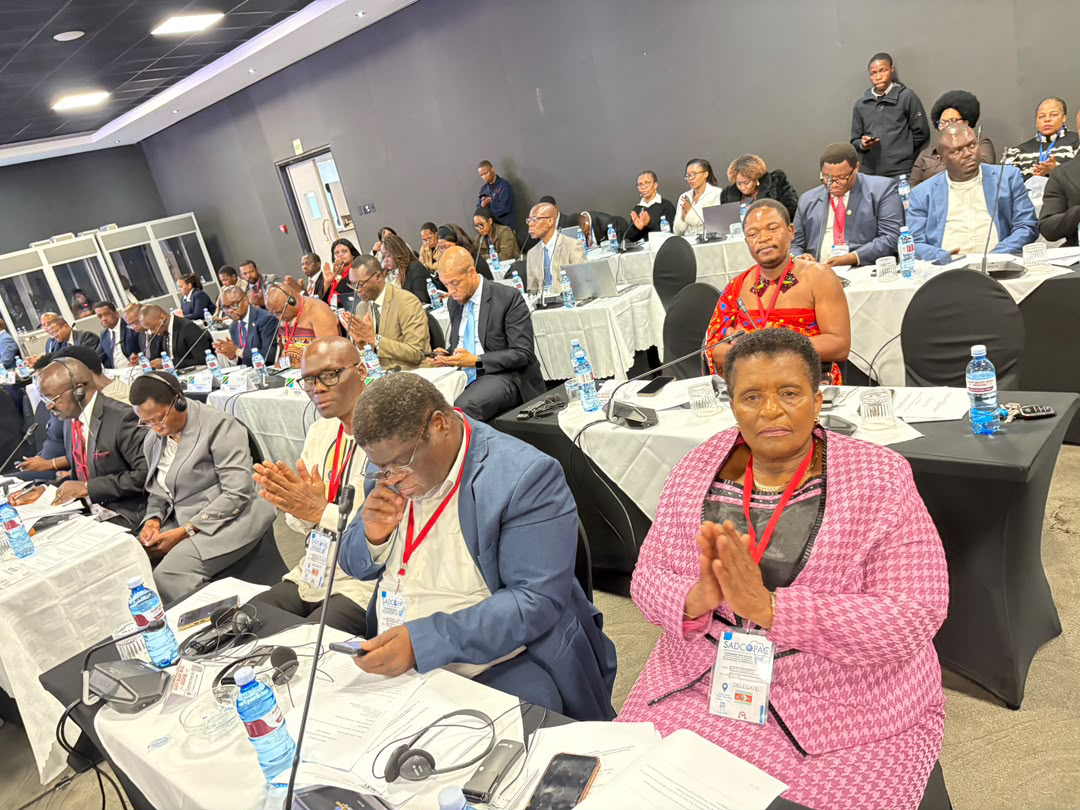
EZULWINI – Political turbulence is threatening to undermine the effectiveness of public accounts committees (PACs), with changes in leadership, partisan pressures and executive interference capable of weakening oversight of public resources.
SADCOPAC Technical Advisor and Consultant, John Makamure warned that when political volatility enters the oversight space, accountability can quickly become a casualty.
He said PACs were central to ensuring that public officials and institutions entrusted with state resources remained answerable for how those resources were managed.
“Resilience is more than survival,” Makamure said, stressing that a resilient PAC must remain credible, independent and effective despite shifting political winds.
He said the challenge was particularly important because PACs operated within political institutions, making them vulnerable to the same political pressures that could affect other parliamentary processes.
According to Makamure, changes in political leadership could disrupt oversight by affecting committee membership, leadership and institutional priorities.
Partisan interests could also influence how legislators approached investigations, while executive interference could undermine efforts to scrutinise government departments and State-Owned Enterprises.
“When politics becomes volatile, oversight is weakened,” he said.
Makamure said PACs should therefore be deliberately designed and empowered to withstand political storms instead of allowing changes in the political environment to determine the strength of public accountability.
He identified institutional memory, professionalism, impartiality, transparency and public engagement as critical elements of resilient oversight.
Makamure said one of the biggest safeguards against political volatility was the preservation of institutional memory.
He proposed that PACs document oversight practices and lessons learnt while developing standardised procedures for areas such as debt scrutiny, audit follow-up and risk monitoring.
He said newly appointed committee members should also be trained to ensure that changes in membership did not result in the loss of institutional knowledge or weaken established oversight practices.
A professionally competent and non-partisan parliamentary secretariat, he added, was equally important in maintaining continuity when political leadership changed.
“Resilience is the ability of PACs to remain credible, independent, and effective regardless of shifting political winds,” he said.
Another safeguard, according to Makamure, was ensuring that PACs retained control over their own investigative agendas.
He said parliamentary rules should allow committees to examine appropriated accounts as well as other accounts placed before Parliament that the committee considered necessary to investigate.
This, he said, would prevent the Executive from dictating or restricting which issues could come under parliamentary scrutiny.
He cited the United Kingdom House of Commons as an example where the Public Accounts Committee can continue its work and hold hearings despite parliamentary adjournment.
Such arrangements, Makamure said, ensured that government accountability did not come to a halt simply because Parliament was in recess.
Makamure further called for stronger collaboration between PACs and supreme audit institutions, including offices of Auditors-General.
He said parliamentary hearings should be evidence-based and firmly grounded in audit findings.
This would help committees focus on documented financial and governance concerns rather than allowing political considerations to dominate their deliberations.
PACs should also establish effective follow-up mechanisms to track whether government ministries implement committee recommendations and take corrective action.
He said periodic reporting on corrective measures would ensure that PAC recommendations did not simply become part of parliamentary records without resulting in improvements in public administration.
Transparency, Makamure said, was another important defence against political volatility.
He encouraged PACs to hold open hearings, publish reports promptly and engage civil society organisations, the media and citizens.
Public visibility, he argued, could make it more difficult for political interests to suppress or quietly abandon important accountability matters.
He also encouraged PACs to document and publicise attempts at interference, while building relationships with civil society and development partners to strengthen their ability to resist undue political pressure.
Makamure said SADCOPAC had an important role to play in helping member states strengthen the resilience of their PACs.
Although SADC PACs share constitutional oversight responsibilities, he noted that their institutional strength and safeguards vary considerably.
Some committees have stronger institutional protections, while others continue to face challenges relating to compliance, capacity and independence.
He said regional cooperation through SADCOPAC could provide an avenue for sharing best practices, developing common accountability standards and strengthening oversight across the region.
“Your duty is to entrench safeguards, strengthen professional capacity, and foster regional cooperation through SADCOPAC,” Makamure said.
He said resilient PACs were ultimately essential to resilient democracies because effective oversight should remain a constant force for integrity and good governance rather than becoming vulnerable to political cycles.
“Let us all commit ourselves to building PACs that are resilient, credible, and unshakable — because resilient PACs mean resilient democracies,” he said.















Leave a comment