

The burial of Chief Justice Bheki Cuthbert Moses Maphalala last Saturday brought to an end the life and judicial career of the first liSwati to occupy the country’s highest judicial office.
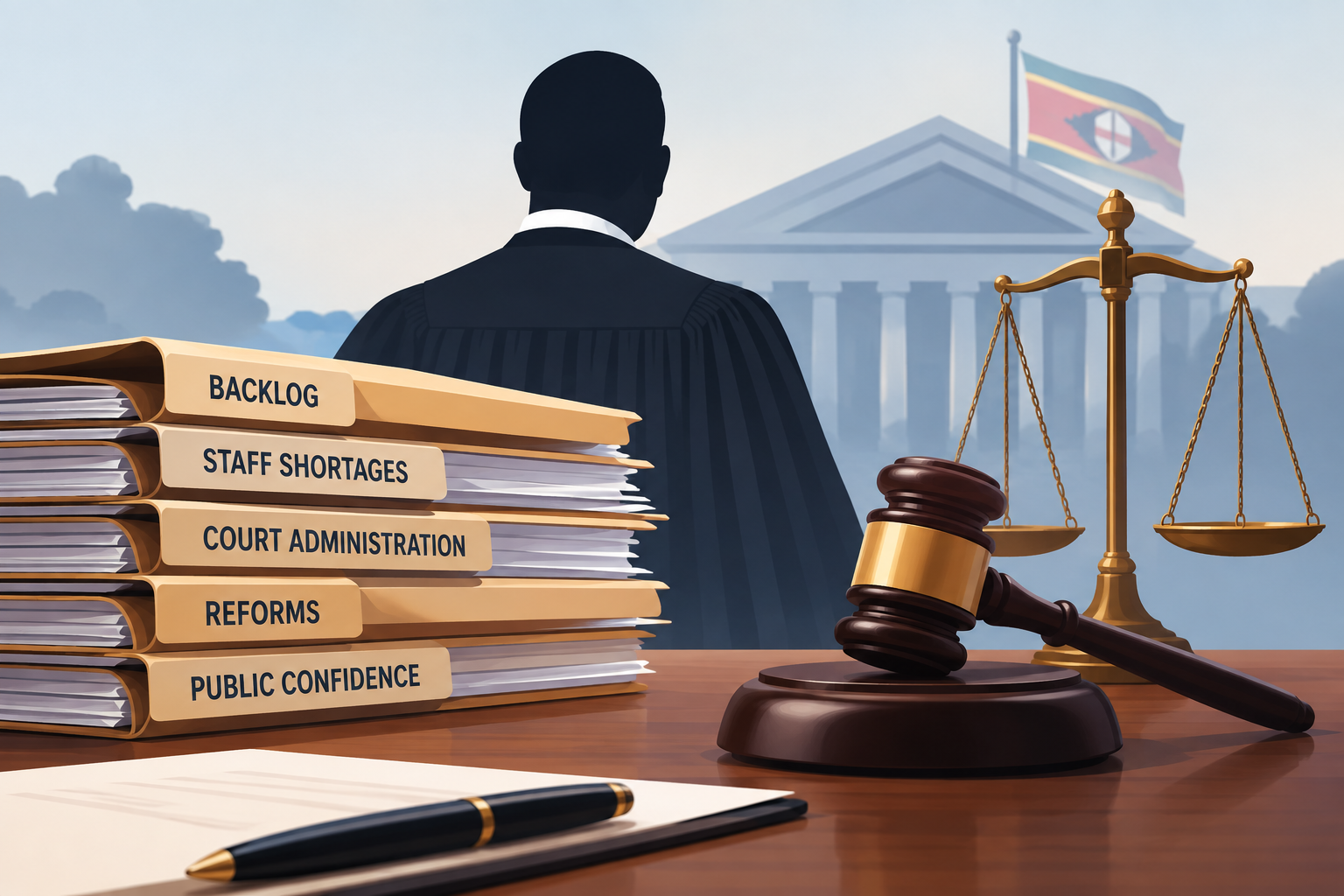
Maphalala was accorded a State funeral at Lawuba, following a memorial service that brought together the country’s political, judicial and legal leadership, as well as ordinary emaSwati. He served as chief justice for almost 11 years and was the longest-serving person to hold the office. As the country mourns his passing, however, attention will inevitably turn to the person who will inherit his robes and, more importantly, the considerable responsibilities attached to the office. The incoming chief justice will not be inheriting a Judiciary starting with a clean sheet. He will inherit a system already carrying a substantial backlog of cases, shortages of judicial officers and other staff, questions around conditions of service, concerns about court administration, a major reform agenda and, perhaps most importantly, a public confidence deficit that has been aggravated by a series of disturbing reports involving the administration of justice. Maphalala himself inherited some of these challenges. The question facing his successor is whether the new chief justice can move the Judiciary from repeatedly identifying its problems to demonstrating that those problems are being systematically resolved.
the most immediate item on the new chief justice’s table will be the backlog.
In July last year, The Times of Eswatini reported that the Judiciary was preparing a five-year strategy to deal with a backlog of more than 29 000 civil and criminal cases. The proposed strategy included the establishment of a Criminal Case Clearing Committee and greater co-operation among judges, magistrates, prosecutors, police and Correctional Services. Some cases had reportedly remained unresolved for a decade or more. The problem is not confined to the figure of 29 000. The new chief justice, therefore, faces a basic question of capacity: How does the Judiciary dispose of thousands of outstanding matters while ensuring that speed does not come at the expense of justice?
Then there is the integrity question
Perhaps no recent issue has done more to test confidence in the court system than the investigation into alleged fraudulent court orders and manipulation of court records. In February this year, the Times of Eswatini reported that five court clerks had been arrested in a widening investigation involving alleged fraudulent court orders, missing files, manipulation of official court files and other conduct. The allegations included the alleged issuing of false liberation warrants and forged documentation linked to the release of an inmate. The Judicial Service Commission subsequently suspended five clerks with full pay pending disciplinary proceedings. The cases involved allegations including fraud, defeating the ends of justice, forged documentation, false liberation warrants and alleged tampering with or theft of criminal dockets.
These are allegations before the courts or disciplinary processes and must be treated as such.
But the wider institutional question cannot be ignored. A court order is supposed to represent the authority of the court. A warrant of liberation can result in a person being released from custody. A court file is an official record upon which decisions affecting people’s lives can depend. When allegations emerge that such documents can be manufactured, manipulated or fraudulently obtained, the issue goes beyond the individual clerk or officer accused.
It raises questions about the controls surrounding the entire system. Who has access to court stamps and seals? Who can generate or authenticate an order? How are orders transmitted to correctional institutions? How are files tracked? What audit trail exists? How quickly can a suspicious order be detected? These are the kinds of questions the new chief justice will have to confront.
And the public will want to see that the answer is not simply the arrest of a few junior officers.
The Master’s Office is another major file
The incoming chief justice will also inherit the unfinished business arising from the Office of the Master of the High Court. A Judicial Commission of Inquiry was established in January 2024 to investigate allegations of impropriety, maladministration and abuse of power in the Master’s Office, including issues concerning deceased estates, the Guardian’s Fund, the appointment and supervision of executors and the administration of the office. The report, eventually released in August 2026, ran to 487 pages and contained 42 recommendations addressing weaknesses in the administration of deceased estates and the functioning of the office. Among the recommendations reported by this publication was a lifestyle audit for employees. The Judiciary has said the report addresses accountability, oversight, legislative reform, supervision of executors, records management, decentralisation of services, staff development, security of records and computerisation of the Master’s Office.
The new chief justice will, therefore, not only have to receive the report as an inheritance from his predecessor. He or she will have to decide how its recommendations are translated into action.
A commission of inquiry can identify weaknesses. The difficult part is implementing the remedy.
The magistrates are also waiting
There is another issue that cannot be pushed to the bottom of the pile: The welfare and remuneration of magistrates. In July 2025, the JSC visited courts across the country, specifically to obtain submissions from magistrates, assistant masters and commissioners of the Small Claims Court on their terms and conditions of service. Maphalala also highlighted a shortage of permanent posts across the courts and the Master’s Office, covering judges, magistrates and other essential positions.
Parliament subsequently became involved after a motion called for government to address what was described as low remuneration and generally poor terms and conditions of service for magistrates. The Speaker later stressed that Parliament’s role was oversight rather than interference with the Judiciary. This is an important distinction.
The independence of the Judiciary cannot mean that the institution operates without adequate resources. At the same time, concerns about resources cannot become a justification for interference with judicial decision-making. The new chief justice will have to navigate that constitutional line carefully. In November 2025, the Times of Eswatini reported that court registrars, who perform largely administrative functions, but also have certain semi-judicial responsibilities, were earning more than some judges following the civil service salary review.
The report put the gross salary of registrars on Notch 1 at E76 000, while some High Court and Industrial Court judges were earning close to E74 000. The matter prompted concern among those close to the Judiciary, while Finance Minister Neal Rijkenberg said government was looking into the disparity. That is an institutional management issue for the incoming chief justice and the bodies responsible for judicial remuneration. A Judiciary expected to attract and retain experienced legal professionals must also confront the question of whether its remuneration structures are coherent and sustainable.
The country has already seen reports involving missing files, alleged manipulation of dockets and allegations concerning fraudulent court documents.
There have also been disputes involving the integrity of records outside the courts
In July 2026, for example, the High Court ordered the deletion of a marriage certificate after it emerged that an official marriage register had been altered using correction fluid to change the recorded property regime of a deceased person’s marriage.
That particular matter involved the civil registration system and should not be conflated with the criminal allegations involving court clerks.
But taken together, such cases demonstrate why the integrity of public records is fundamental to the administration of justice. The new chief justice will have to push for systems in which records cannot simply disappear, be altered without detection or be relied upon without a verifiable audit trail. The Judiciary has already started moving in that direction. In March 2026, it held change-management sessions for the Integrated Electronic Case Management System.
The new chief justice will also inherit an infrastructure problem
In September 2025, the JSC embarked on a nationwide inspection of court infrastructure, examining courtrooms, offices, digital recording systems, security installations and accessibility across the country’s courts. The inspection included the Supreme Court, High Court, Industrial Court, Commercial Court and magistrates courts. This may appear mundane compared with corruption allegations or constitutional disputes. It is not. Justice is administered in physical spaces. Poor infrastructure, inadequate recording facilities, weak security and limited access can all affect the quality and speed of justice.
The question for the new chief justice will, therefore, be whether the Judiciary can modernise its physical and technological infrastructure while dealing with its immediate workload.
There is another warning sign that Maphalala himself raised
In December 2025, the Times of Eswatini reported that only 23 of 65 candidate attorneys had passed the Bar examination. Maphalala called for tutorials during articles to improve candidates’ chances of passing the examination. The quality of the legal profession matters to the Judiciary because courts do not operate in isolation. Judges need competent advocates. Prosecutors need adequate resources. Legal practitioners need proper training. Court administrators need skills. The public needs access to competent legal representation. A weak link anywhere in that chain eventually appears before a judge. All these issues ultimately converge on one question: Do people trust the justice system? That trust cannot be commanded. It is built when court orders are genuine, files are secure, cases are heard within reasonable periods, judgments are delivered without unnecessary delay, judicial officers are properly appointed and qualified, court staff are accountable, and disciplinary processes are seen to work. The new chief Justice, therefore, inherits more than a list of administrative problems.
important relationship the incoming chief justice will have to rebuild is that between the Judiciary and the Law Society of Eswatini
This is not a relationship that can be treated as ceremonial. The Law Society is one of the principal stakeholders in the administration of justice. Its members appear before the courts every day, represent accused persons and litigants, and experience first-hand the practical difficulties within the justice system.
The new chief justice will have the constitutional responsibility of leading the Judiciary. But the larger task will be institutional: Restoring confidence while protecting judicial independence, improving efficiency without sacrificing fairness and ensuring accountability without allowing accountability to become interference. That is the table awaiting the new chief justice. It is a crowded one. And the country’s justice system cannot afford for the files to remain there indefinitely.


















Leave a comment