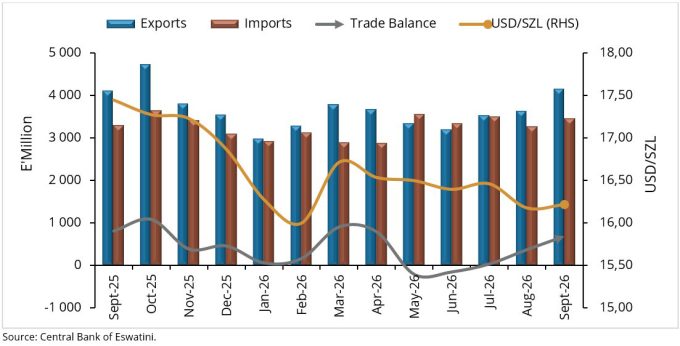
MBABANE – Eswatini’s exports rose by 14.1 per cent to E4.2 billion in September 2026, driven by stronger sugar and soft drink concentrate receipts, widening the country’s trade surplus to E687.9 million.
According to the Central Bank of Eswatini’s Recent Economic Developments: August/September 2026 report, the improved trade position reflected exports growing faster than imports during the month, with sugar products recording particularly strong gains as shipments to most African markets increased.
The September performance represented a significant improvement from the E372 million trade surplus recorded in August 2026, highlighting the continued importance of the country’s leading export commodities in generating foreign exchange and supporting its external trade position.
Soft drink concentrates remained Eswatini’s leading export product, while sugar and sugar products recorded the strongest annual growth among the country’s four primary export commodities.
The Central Bank reported that the four main export categories, soft drink concentrates, sugar and sugar products, textile and textile apparel, and wood and wood articles, collectively accounted for 84 per cent of total exports during September.
Sugar exports surge 43.4 per cent
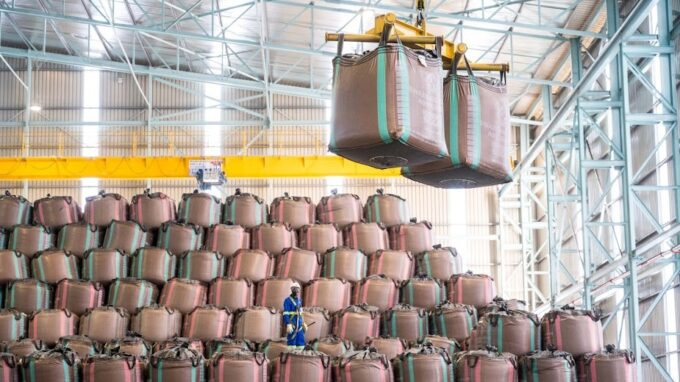
MBABANE – Sugar and sugar products recorded a notable increase in export earnings during September, rising by 24 per cent month-on-month to E1 billion.
The performance was even stronger when compared with September 2025, with sugar exports increasing by 43.4 per cent year-on-year, supported by higher export volumes to most African markets.
The growth strengthened sugar’s contribution to the country’s export receipts and reinforced the importance of the sugar industry in Eswatini’s participation in regional markets.
The sector’s export performance also comes against the backdrop of increased sugar production recorded earlier in the year. According to the Central Bank’s report, food processing grew by 27 per cent year-on-year in the second quarter of 2026, compared with 11.6 per cent in the first quarter. This was largely supported by a 53.5 per cent increase in sugar production, following an increase in the area under harvested sugar cane and improved sucrose and sugar yields.
The figures point to the importance of agricultural production and processing in supporting export-oriented manufacturing, with stronger output creating scope for increased sales into regional markets.
Meanwhile, soft drink concentrates continued to dominate Eswatini’s export basket, generating E1.8 billion in September 2026.
Export receipts from the product increased by 12.2 per cent compared with August, supported by higher production. However, earnings remained 5.7 per cent below those recorded in September 2025.
Despite the annual decline, concentrates remained the country’s largest individual export product, accounting for a substantial share of the month’s total export earnings.
The figures demonstrate the significance of the concentrates industry in Eswatini’s external trade, particularly given its established links with regional markets.
The product was among the principal exports to several African destinations, including Kenya, Mozambique, Zimbabwe, Tanzania and Nigeria. These markets also imported sugar and other products from Eswatini, illustrating the importance of regional demand to the country’s export performance.
The report indicated that Kenya accounted for 4.3 per cent of total exports in September, with concentrates, sugar and edible preparations among the products shipped to the market.
Mozambique accounted for 3.6 per cent of exports, including beverages, concentrates and animal feed, while Zimbabwe represented 3.4 per cent, with concentrates, noodles and wood among the main products supplied.
Tanzania accounted for 2.8 per cent of exports, including sugar and concentrates, while Nigeria represented 1.8 per cent, with concentrates and sugar among its principal imports from Eswatini.
The figures underline the role of regional trade in sustaining demand for the country’s processed products and agricultural commodities.