As Eswatini grapples with high temperatures and rain scarcity, which is already felt in the Lowveld, as the media has reported that some cattle are already affected, let us think aloud about how government will address this imminent crisis in the midst of a high cost of living due to fuel hikes triggered by geopolitical crises, high levels of poverty, unemployment and deepening inequality among the majority of emaSwati.
In fact, as meteorological models signal the potential return of severe El Niño-induced weather disruptions across Southern Africa, Eswatini faces a critical crossroads. Climate variability is no longer just an environmental issue; for the kingdom, it represents an imminent socio-economic shockwave.
With households already strained by a staggering cost of living, high unemployment and widespread poverty, government preparedness cannot rely on traditional reactive crisis management. Action must be swift, strategic and socially targeted.
Current status, projected strength
The 2026–2027 El Niño event is actively underway and is forecasted by major meteorological agencies, including NOAA’s Climate Prediction Centre (CPC), the World Meteorological Organisation (WMO) and the South African Weather Service (SAWS), to be one of the strongest on record. There is an estimated 75 per cent chance that conditions between October and December 2026 could match or exceed the strongest historic ‘Super El Niño’ events on record (such as 1997/98 and 2015/16).
The El Niño phenomenon presents a severe climate threat to Southern Africa, characterised by prolonged dry spells, heatwaves and below-average rainfall. For the countries in Southern Africa, where a significant portion of rural households relies on rain-fed subsistence agriculture, El Niño is not merely a weather pattern, it is a major socio-economic crisis.
During past major events, such as the 2015/16 El Niño drought, tens of thousands of cattle perished and widespread crop failures plunged thousands into severe food insecurity, with dry regions like the Lowveld and parts of Shiselweni taking the heaviest blow.
What should be govt’s response?
To prevent history from repeating itself, the Government of Eswatini, led by key bodies like the National Disaster Risk Management Authority and the Deputy Prime Minister’s Office, should establish a multisectoral platform where critical ministries, donors, parastatals and non-State actors can prepare a comprehensive multisectoral response, as was done by the Disaster Task Force in the 90s under the leadership of the late Babe Mshamndane Sibandze (may his soul rest in peace).
Key actions to protect vulnerable
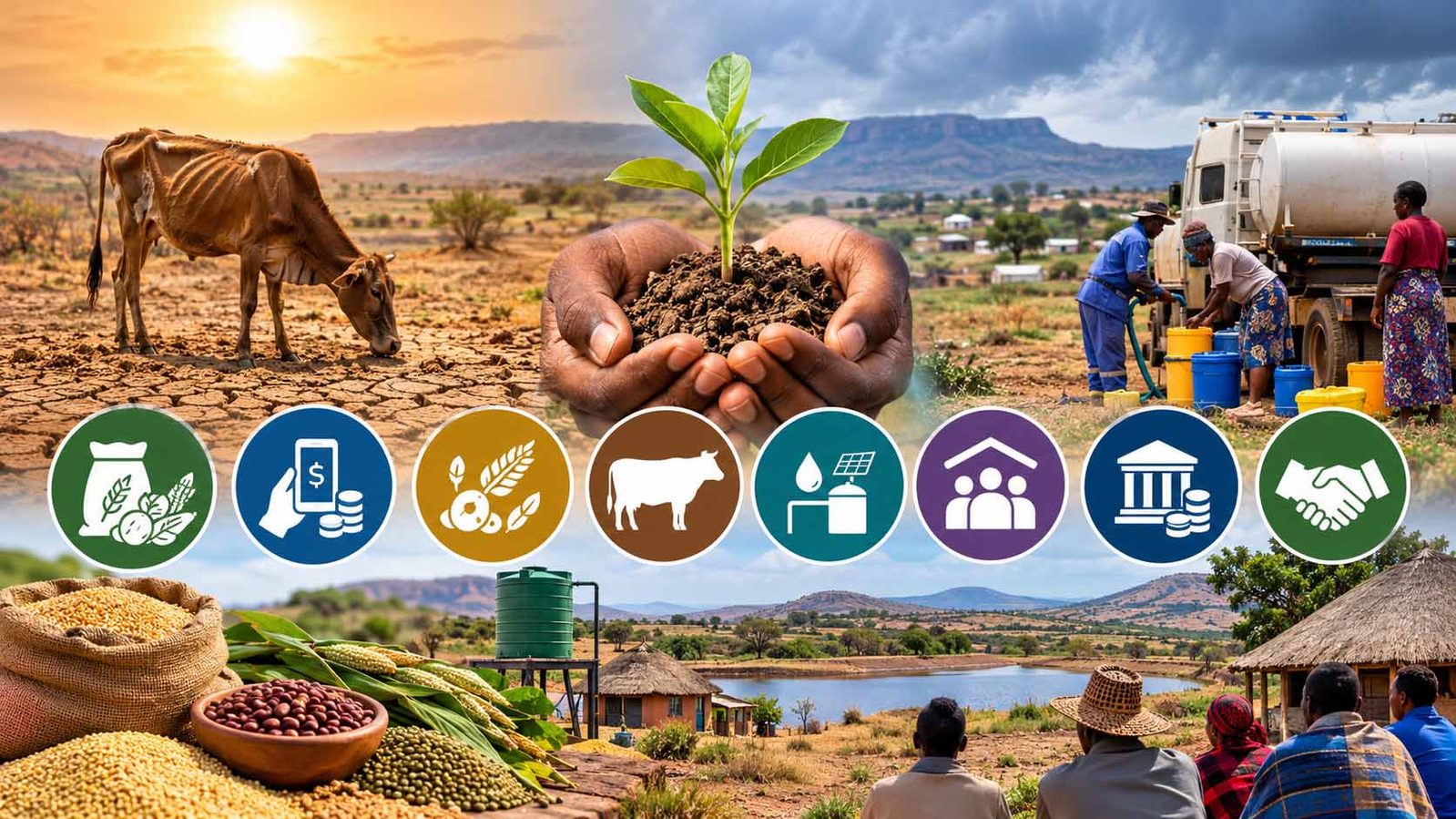
There is a need to scale up social safety nets. This includes emergency food assistance that will provide a lifeline for impoverished households facing crop failure. There is a need to undertake emergency cash transfers through mobile money platforms to allow poor households to buy essential goods locally without distorting market dynamics.
National entities, such as the National Agricultural Marketing Board (NAMBoard) and the National Maize Corporation (NMC), should ensure that Eswatini has enough food stock to prevent local food shortfalls and artificial price spikes.
School feeding programmes should be strengthened and expanded to guarantee that children receive at least one balanced meal daily, preventing malnutrition and dropouts during drought spells.
Government should continue to subsidise inputs, shifting to climate-smart agricultural models which will help vulnerable farmers. This includes subsidised drought-resistant seeds, such as sorghum, millet and cowpeas, rather than relying solely on water-intensive white maize. To protect livestock, which is key for emaSwati households, interventions should include subsidised emergency fodder, drilling community boreholes equipped with solar pumps and creating protected grazing zones.
There is a need for government, NGOs and donors to promote affordable rainwater harvesting techniques, small earth dams and drip-irrigation kits for household garden plots.
Securing water access and sanitation
Drought rapidly depletes groundwater reserves, creating severe sanitation risks in informal and rural settlements. There is a need to deploy water bowsers to remote communities, health facilities and schools experiencing complete drying. Also key is accelerating the repair and maintenance of non-functional boreholes and community pumps prior to the peak dry season.
Need to create awareness about impending disaster
Forecasts are only useful if rural communities can understand and act on them in real time. Communities should establish their own working groups through tinkhundla (regional centres) and traditional structures (bucopho and tindvuna) to deliver community-based responses, including water harvesting and planting relevant seeds to withstand drought.
Allocation of resources
It is worrying that government cash flow problems persist, yet the need for integrated disaster risk financing, where disaster contingency funds are made available to the National Risk Management Authority, is critical.
Development partners
It is clear that government needs support from partners. With the current weakening of global aid due to raging wars, it is a concern whether international partners will provide the necessary support.