

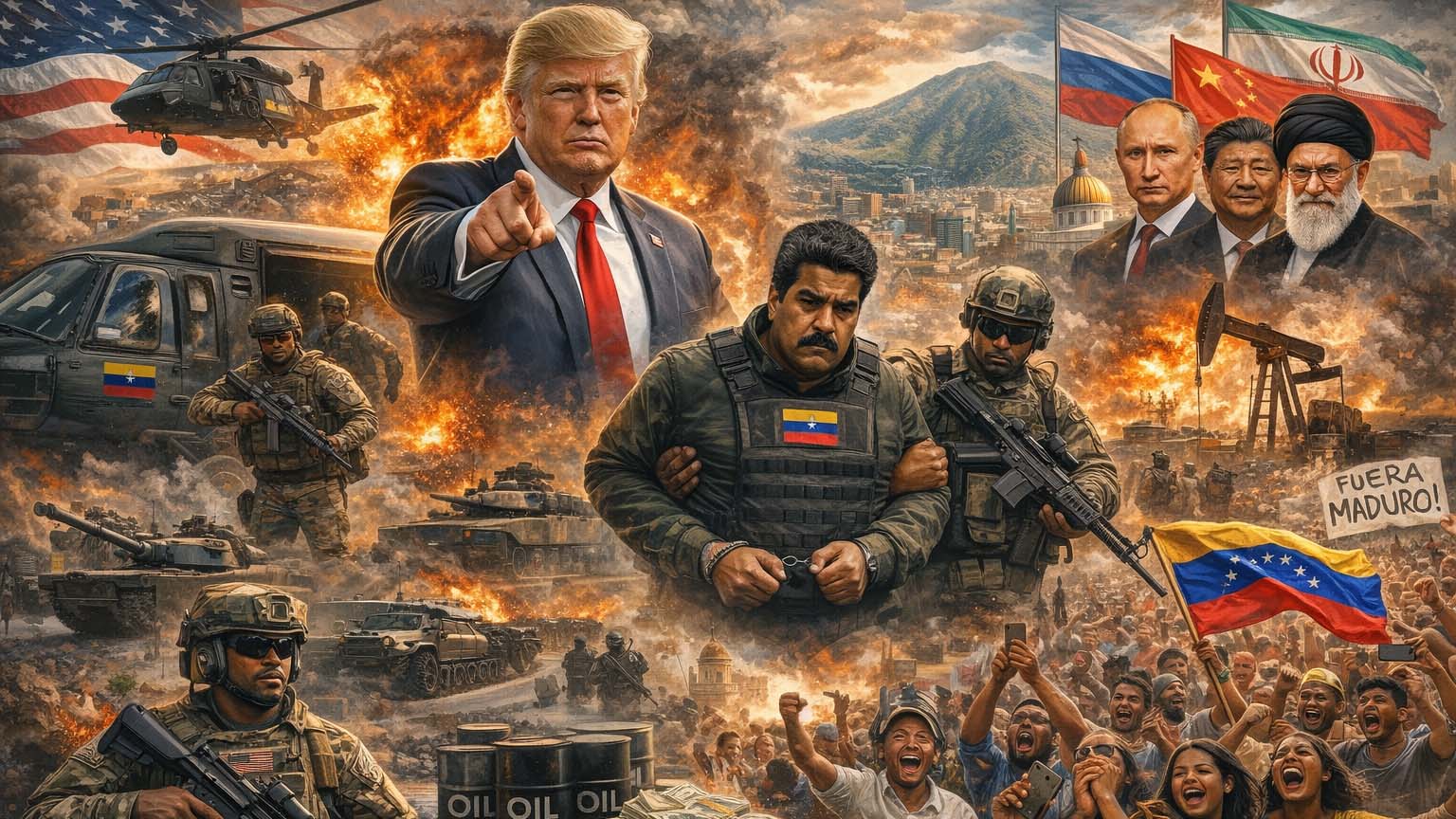
Donald Trump jolted the world from its festive lull this past week with the ‘capture’ and removal of Venezuelan President Nicolás Maduro. The reaction has been, as expectected, immediate and polarised, with criticism quickly settling on the assertion that the United States has acted out of a desire to secure oil. While Venezuela’s vast energy reserves have remained an undeniable factor, reducing the episode to the US ‘wanting oil’ has offered an incomplete and overly simplistic reading. Events in Caracas have unfolded within a complex web of domestic collapse, regional security concerns and geopolitical rivalry that demands broader examination.
Venezuela has long been recognised as the holder of the world’s largest proven oil reserves, producing close up to three billion barrels per day. By the time surrounding Maduro’s removal, production had collapsed, infrastructure had been degraded and ordinary citizens had endured shortages, hyperinflation and mass migration. These conditions had coincided with allegations of manipulated elections, repression of opposition figures and erosion of State institutions. The crisis had already been firmly established before any decisive external action occurred. To frame intervention as solely resource-driven ignores alleged years of governance failure and humanitarian distress that had placed Venezuela under sustained international scrutiny.
Over and above domestic decline, allegations surrounding Maduro himself have featured prominently in United States assessments. For years, his administration had been accused of involvement in drug trafficking networks supplying narcotics into the United States, with claims that senior figures had either facilitated or profited from these routes. While Maduro had consistently denied such accusations, they had remained a persistent feature of American security discourse. Alongside these claims were allegations of deepening political and strategic ties with Washington’s adversaries, notably China, Russia and Iran. Energy agreements, military cooperation, financial support and diplomatic alignment had all been cited as evidence of Caracas drifting into a hostile geopolitical orbit. Such allegations, whether ultimately proven or not, have not been matters that United States policymakers could easily ignore, particularly within the context of hemispheric security. Especially in its own backyard. To dismiss United States action purely through the lens of Trump’s personality or oil interests has risked obscuring institutional calculations that have extended beyond any one individual.
Some commentators have alluded to past interventions such as Iraq or Libya to argue that the United States has historically pursued regime change in oil-rich States. These comparisons have been raised in defence of the claim that Venezuela fits a familiar pattern. However, such references, while cautionary, are still insufficient on their own. Each intervention has emerged from distinct political and security contexts. Invoking earlier conflicts without sustained engagement with the specifics of Venezuela only offers rhetorical comfort, rather than analytical clarity. The Venezuelan case has been shaped not only by resource wealth, but by allegations of criminal activity, regional destabilisation and alignment with hostile powers. The European Union’s response to the ‘capture’ has shown this complexity. Statements from Brussels have been measured and cautious. Statements stressed ‘restraint’, respect for international law and Maduro’s illegitimacy, avoiding language that locks Brussels into a rigid position. This restraint has been informed by broader global pressures. The war in Ukraine has reshaped energy, supply chains and strategic alliances, leaving European States cautious about deepening transatlantic rifts. As a result, criticism has been calibrated, rather than confrontational, acknowledging concerns over sovereignty while recognising the destabilising factors present within Venezuela itself.
Within Venezuela, public reaction has been interesting. Independent media footage and citizen reporting have shown some citizens welcoming Maduro’s removal after years of hardship and repression. Others have expressed anxiety over foreign involvement and uncertainty about the country’s future direction. This fractured response has reflected the depth of suffering experienced by the population and the absence of trust in political institutions. The people’s reaction on the ground cannot be ignored – tears of joy. The situation has, in essence, resisted any portrayal of uniform national sentiment.
Geopolitical rivalry has remained central to the unfolding events. Alleged cooperation between Caracas, Beijing, Moscow and Tehran has raised alarms in Washington, particularly in relation to energy security, military presence and ideological influence within the Western Hemisphere. In this environment, US action, possibly, has not been driven by oil alone, but by concerns over strategic balance and security proximity. While such concerns have not automatically justified intervention, they have explained why Venezuela has been viewed as more than a domestic political problem.
Post-Maduro prospects have also weighed heavily on analysis. History has shown that leadership removal alone has not rebuilt institutions or economies. Venezuela has faced weakened public services, decayed infrastructure and sanctions-related constraints. Though Trump has said US would run the country for now, a statement that has drawn criticism over sovereignty. These realities have underscored that the issue has never been as simple as resource acquisition.
Ultimately, criticism that has focused solely on Trump’s appetite for oil fails to engage with the full picture. Venezuela’s crisis has been shaped by internal collapse, allegations of criminal activity, alignment with rival powers and strategic anxieties that have accumulated over years. Any meaningful assessment requires examination of all sides, rather than reliance on a single narrative. Only through such holistic scrutiny can the situation in Caracas be properly understood. In sum, ‘think, while you still can’, as someone once said.













Leave a comment