

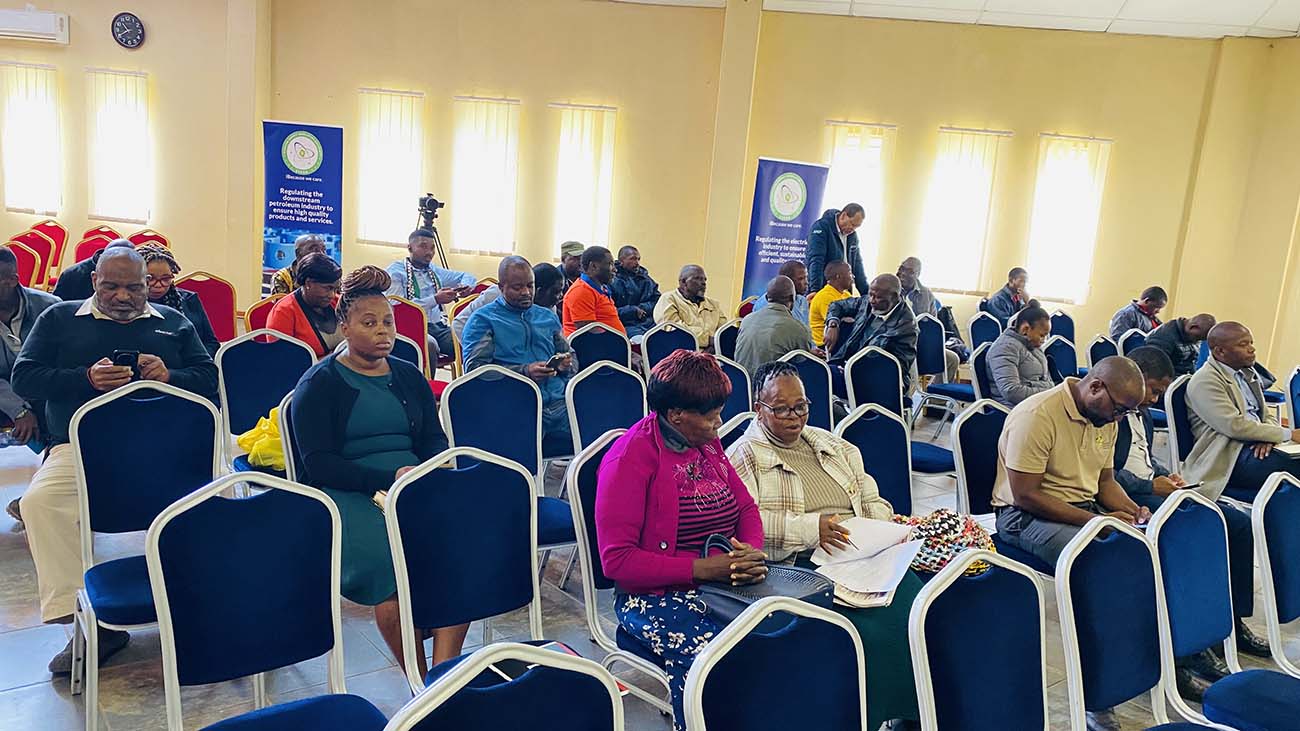
NHLANGANO – Poor attendance marked the electricity tariff consultation held at Bethesda Church in Nhlangano, with residents attributing the low turnout to public fatigue.
Despair and a growing belief that tariff hikes are implemented regardless of public submissions were also attributed to the low numbers.
The tariff hike proposal public hearings are being hosted by the Eswatini Electricity Regulatory Authority (ESERA) in conjunction with the Eswatini Electricity Company (EEC).
Nhlangano-stationed Pensioners Association representative Ntombi Dlamini pointed out that it was unfortunate that many people failed to attend a consultation dealing with an issue that directly affected their daily survival.
“When I tried to raise this issue and encouraged people to attend the consultations, many of my colleagues and acquaintances accused me of financially abusing them,” said Ntombi.
She explained that even when she contacted pensioners ahead of the consultation to remind them to attend, the response was largely negative.
“They told me that these consultations are harassment, and by pressuring them to attend I was abusing them because they cannot afford the proposed electricity hike,” she said.
According to Ntombi, this sentiment explained the poor attendance at the meeting.
“I attend these consultations regularly, but today there is an evident poor turnout because people are now shunning these sessions,” she said.
She stressed that pensioners were adamant that they would not cope should the proposed tariff hike be implemented.
Ntombi lamented the meagre monthly income some pensioners received, stating that it was already insufficient to meet basic needs, even before factoring in increased electricity costs.
“If the little we earn is already pinched just to make ends meet, where will we get money for more expensive electricity units?” she asked.
She described the proposed tariff hike as ‘adding salt to the wound’.
“We can barely roam the forests to collect firewood because of our old age. We rely mostly on electricity, so this hike is a serious let-down,” she said.
Ntombi further questioned why the Eswatini Electricity Company (EEC) continued to operate independently if it was failing financially.
“If the company is failing to operate as a standalone entity, why is it not returning fully under government control?” she asked.
She added that if government insisted on EEC remaining State-owned but operationally independent, then it should subvent the company to protect citizens.
She illustrated the depth of the affordability crisis by citing that the lowest-paid pensioner receive E1 500 per month.
“We assessed subscriptions and tried to find ways to cushion ourselves, but it became clear that once electricity tariffs are hiked, this country risks becoming a ‘dark city’,” she warned.
Worth noting is that the EEC has applied for an average electricity tariff increase of 20.67 per cent for the 2026/27 financial year.
The proposed increase was announced by the Eswatini Energy Regulatory Authority (ESERA), which confirmed that Eswatini Electricity Company (EEC) has formally submitted a tariff adjustment application for review in line with the Energy Regulatory Act and the Electricity Act.
*…
Hikes killing people – senior citizen
MBABANE – A senior citizen Babe Mhlungwane questioned whether EEC had ever compared the salaries of ordinary citizens with the proposed electricity hikes.
“By implementing this hike, the company is killing the people of this country,” he said.
He accused EEC of repeatedly approaching citizens who were already in economic distress.
“When you come to us in the dire state of death we are in and still ask for more money, you are saying even in our suffering we must continue contributing to EEC’s survival,” he said.
Mhlungwane said it was evident that EEC was failing to generate sufficient electricity locally and was overly reliant on imports.
“If the company is procuring so much electricity, then we are in serious trouble because procurement will not stop anytime soon,” he said.
He warned that the burden would always fall on the ordinary liSwati.
He further proposed that competition be introduced into the electricity sector.
*Full article available on Pressreader*















Leave a comment