

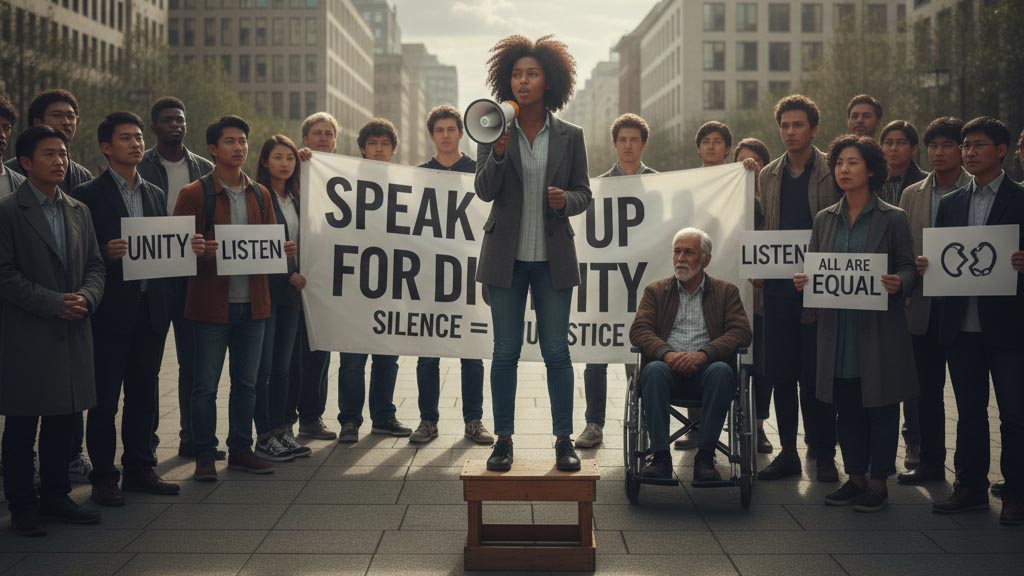
Silence is often mistaken for neutrality. In reality, silence can be one of the most powerful forces sustaining injustice. When discrimination is normalised through careless language, selective outrage, or quiet acceptance, it does not remain contained to one group. It spreads, reshapes institutions and ultimately weakens society as a whole.
Discrimination rarely begins with violence or exclusionary laws. It starts with words that go unchallenged, jokes that are dismissed as harmless and policies that quietly single out certain people as less deserving of dignity or protection. Over time, what once seemed extreme becomes ordinary. What once shocked us becomes background noise. This is the true danger of silence; it lowers our collective threshold for harm.
In many societies, including our own, discrimination is often justified through culture, religion or tradition. These are powerful forces that shape identity and community, and they deserve respect. However, when they are used to excuse exclusion or humiliation, they lose their moral grounding. Culture should protect people, not wound them. Faith should offer compassion, not permission to harm. When discriminatory practices are defended as ‘normal’ or ‘just the way things are,’ society stops asking the most important question: Who pays the price?
The cost is paid first by those directly targeted, people pushed to the margins because of who they are, how they look, or what they believe. They experience fear, isolation, and limited access to opportunities that others take for granted. Still, the cost does not stop there. When discrimination is tolerated, it reshapes public institutions. Schools become places of fear rather than learning. Workplaces reward conformity instead of talent. Public discourse becomes narrower, harsher and less honest.
Silence also corrodes accountability. When leaders make discriminatory statements and face little resistance, it sends a message that power is more important than principle. This creates a dangerous precedent: There is also an economic and developmental cost. Societies thrive when people are allowed to contribute fully and safely. Excluding groups from education, employment, or public participation wastes talent and innovation. It creates dependency instead of empowerment and resentment instead of cohesion. No country can afford to sideline sections of its population and still claim to be building a strong future.
Perhaps, the most damaging cost of silence is what it does to our shared sense of humanity. When discriminatory language becomes normal, empathy shrinks. People begin to measure whose pain matters and whose does not. This moral hierarchy erodes social trust, the invisible glue that holds communities together. It is often said that people fear speaking out because they do not want to be controversial or misunderstood. However progress has never come from comfort. Many of the rights and freedoms now considered ordinary were once dismissed as disruptive or unnecessary. They were secured because individuals and communities refused to stay quiet when silence was easier.The responsibility to challenge discrimination does not belong only to activists or affected communities. It belongs to educators who shape young minds, faith leaders who guide moral reflection, journalists who frame public narratives, and citizens who participate in everyday conversations. Small acts such as questioning harmful language, supporting inclusive policies, refusing to laugh along, all matter more than we realise.
The question facing society is not whether discrimination exists. It does. The real question is whether we are willing to accept the cost of our silence.
Breaking silence is not about shouting the loudest. It is about choosing courage over comfort and dignity over indifference. The future will not judge us only by what we believed, but by what we allowed to become normal.
If schools are to prepare learners for life beyond the classroom, they must model fairness, empathy, and respect for human dignity. An education system that excludes some children can never truly succeed. Safe, inclusive schools are not a threat to values; they are the foundation of a just and humane society.














Leave a comment