

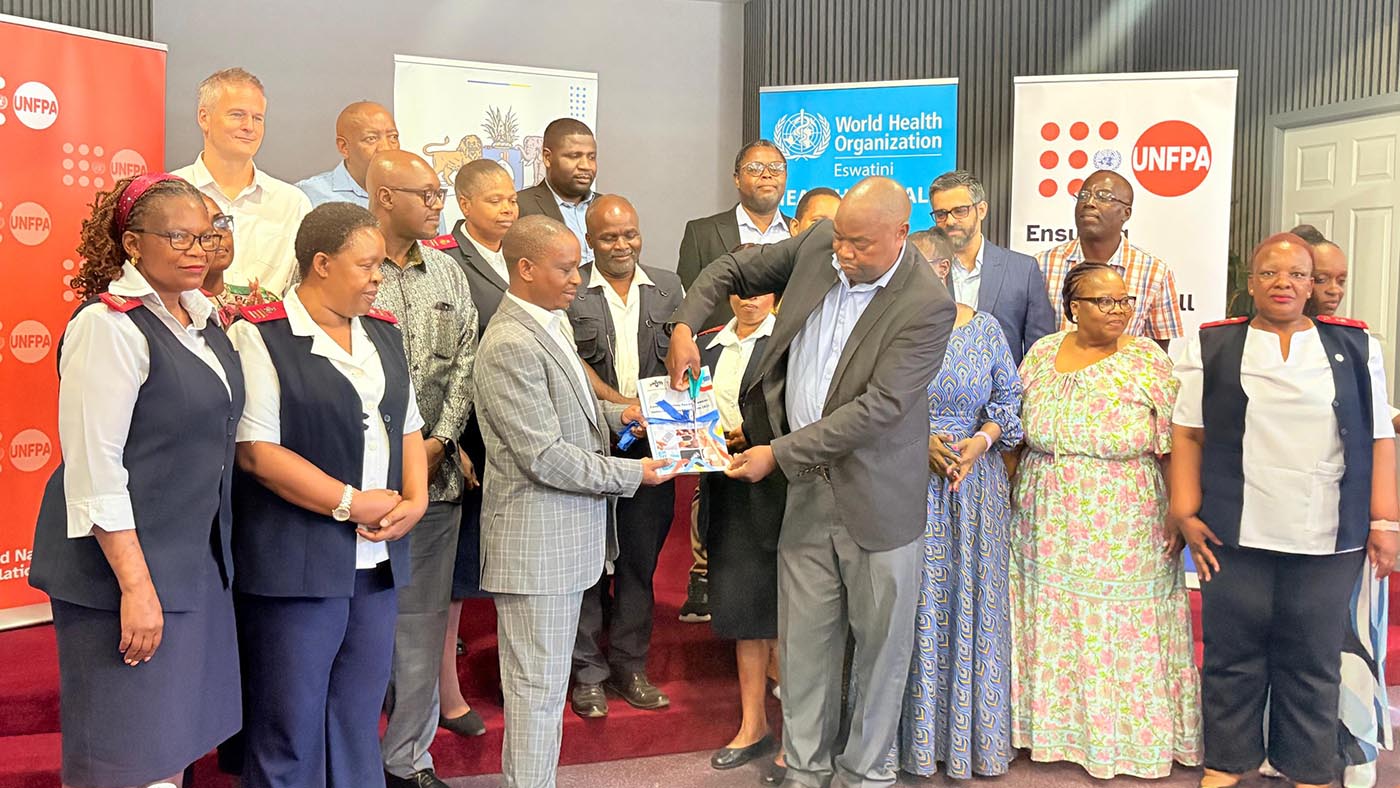
MBABANE – The Ministry of Health has launched eight new Sexual and Reproductive Health (SRH) strategic documents for nationwide implementation, strengthening service delivery across all four regions.
The dissemination event, held at Bethel Court, marked a step in harmonising reproductive health interventions, improving quality of care and institutionalising best practice within the health system.
Senior Medical Officer for Public Health, Dr Adman Shabangu, said the documents would be distributed to health workers countrywide to ensure equitable access to services.
“These documents go deeper into issues affecting the public, particularly conditions that are common but not adequately addressed,” he said.
Among the key publications is the Sexual, Reproductive, Maternal, Neonatal, Child and Adolescent Health and Nutrition (SRMNCAH) Strategy for 2024–2028.
Dr Shabangu explained that the strategy provides a comprehensive framework for improving health outcomes across the life course. He said the plan aligns with the National Health Sector Strategic Plan and global commitments, emphasising integration, person-centred care, equity and measurable results.
The ministry also unveiled new Post-Abortion Care Guidelines aimed at standardising high-quality services at all levels of care to ensure dignity, timely management and proper support for women requiring such services.
Another document focuses on Self-Care Guidelines, which are intended to empower individuals and communities to take charge of their sexual and reproductive health. These cover family planning, maternal and neonatal health, prevention and management of sexually transmitted infections (STIs), mental health and other cross-cutting reproductive health issues.
A National Condom Strategy was also introduced to strengthen Eswatini’s response to ongoing HIV, STI and unintended pregnancy challenges. Dr Shabangu noted that with HIV prevalence at 24.8 per cent and unmet family planning needs at 20.4 per cent, the strategy prioritises improving condom availability, accessibility and correct usage across all population groups.
The Family Planning Addendum seeks to expand the contraceptive method mix, providing a broader range of choices while reinforcing rights-based access, particularly for women living with HIV.
Complementing this is the Hormonal IUCD Introduction Plan, which serves as a national roadmap for the phased introduction of the contraceptive. The plan outlines implementation activities, capacity building, supply chain integration, demand generation, monitoring mechanisms and resource requirements.
The Youth-Friendly Services Standard Assessment Report was also presented. Dr Shabangu said the findings would guide improvements in adolescent-responsive services and support the creation of health facilities that are safe, confidential and appealing to young people.
The eighth document, the Postnatal Care Guidelines, strengthens the continuum of care following childbirth, addressing critical periods experienced by mothers and newborns to improve survival and overall health outcomes.
In closing, Dr Shabangu urged health workers to internalise the new policies, integrate them into programme planning and advocate for their full implementation.
“These documents must not remain on shelves. They must translate into better services and meaningful impact for emaSwati,” he said.
Ministry Calls for Urgent Awareness on Sexual Health Products
MBABANE – The Ministry of Health has called for urgent and widespread dissemination of information on the correct use of sexual and reproductive health commodities available in the country’s health institutions.
This comes amid growing concern over the unregulated access and use of certain medications, including contraceptives, without proper guidance from qualified health professionals.
Programme Director for Sexual and Reproductive Health at the Ministry of Health, Mgcineni Ndlangamandla, said the ministry was in the process of launching comprehensive guidelines to regulate the importation and distribution of specific medicines.
“The guidelines will not only guide the ministry, but all healthcare providers, including those in the private sector,” said Ndlangamandla.
He clarified that while the sale of some over-the-counter products was not illegal, there was a pressing need for consumers to be transparent with healthcare workers about what they were using.
“It is very important that once you buy and use such medication, you inform your health practitioner. This is so that any treatment administered thereafter does not work against the effects of the medication you have already taken,” he said.
Ndlangamandla singled out emergency contraceptives as one of the areas of concern. He cited the example of ellaOne, a commonly used morning-after pill that is readily available in private pharmacies.
According to the programme director, some emaSwati have reported unintended pregnancies despite using the pill correctly. In many instances, this is due to drug interactions or failure to disclose its use when seeking further medical care.
“The effectiveness of some emergency contraceptives can be reduced by other medications. If a patient does not disclose that they have taken a morning-after pill, the treatment they receive later may compromise its effectiveness,” he explained.
Ndlangamandla further raised concern about the level of knowledge among some pharmacy staff, particularly in private facilities.
“It is important that we empower pharmacists and pharmacy assistants. In some private pharmacies, you find that there are employees who do not have adequate training to pass on critical information to clients. Strengthening guidelines and building capacity will help address these gaps,” he said.
Beyond regulation, the ministry believes that public education remains key. Ndlangamandla noted that many citizens are unaware that emergency contraceptives are available free of charge at government health facilities.
“Initially, these pills were intended strictly for emergency medical use in hospitals. However, the ministry expanded access to ensure that all emaSwati can obtain them at public facilities at no cost,” he said.
He added that lack of information continues to drive confusion, misuse and unnecessary health risks.
“People often do not know where to go when faced with health challenges. Disseminating correct information will empower them to make informed decisions and utilise available services appropriately,” he said.
The forthcoming guidelines are expected to strengthen oversight on the importation and distribution of selected medicines, while also reinforcing collaboration between public and private healthcare providers.
The ministry maintains that access to reproductive health commodities must go hand in hand with accurate information, professional guidance and responsible use.




















Leave a comment