

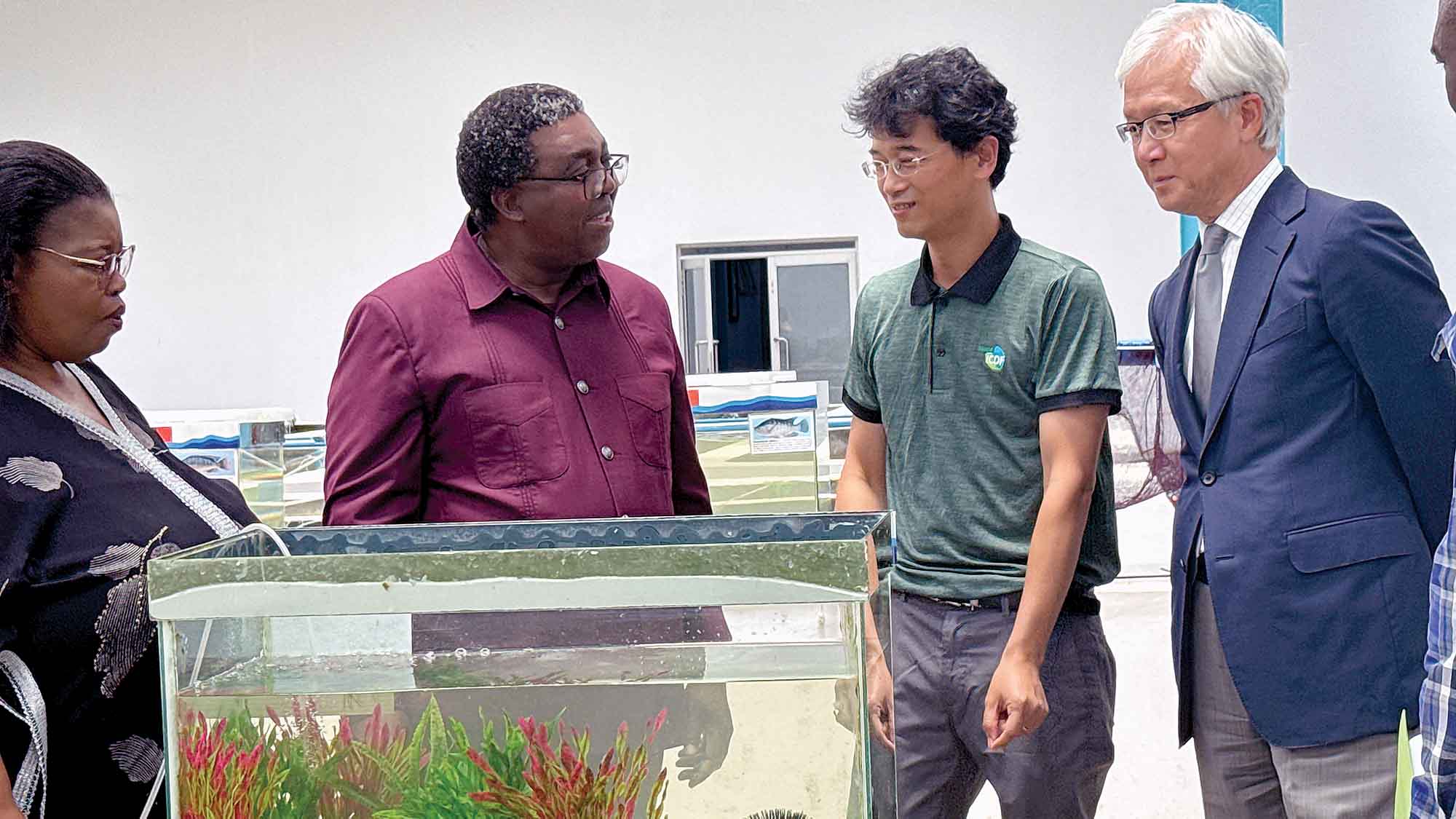
Eswatini has taken a decisive step towards strengthening food security and diversifying protein sources, with the official launch of Phase II of the Aquaculture Project, held on Friday, January 23, 2026, at the Aquaculture Research and Production Centre in Malkerns.
The inception meeting brought together 28 participants from key stakeholder institutions, underscoring the growing importance of aquaculture in the country’s agricultural and economic landscape.
Timely solution to rising protein costs
Addressing the gathering, Principal Secretary (PS) in the Ministry of Agriculture Sydney Simelane highlighted that the ministry has reached a point where the value of the aquaculture project is unmistakable, particularly at a time when the beef industry has been severely impacted by outbreaks of foot-and-mouth disease, driving meat prices upward.
He noted that even prior to the outbreak, the health sector had been encouraging the consumption of white meat as a healthier protein alternative.
He reaffirmed the ministry’s commitment to the project, pledging continued partnership to ensure its sustainability and long-term benefits for the people of Eswatini.
To support this, Simelane announced plans to deploy additional staff to the Aquaculture Research and Production Centre and increase the number of aquaculture extension officers across the regions, acknowledging the scale of work that still lies ahead.
Phase I successes lay a strong foundation
Reflecting on the achievements of Phase I, as presented by Aquaculture Project Manager Samuel Liu, the PS commended the Republic of China (Taiwan) for introducing modern aquaculture technologies to Eswatini. Initially, the project supplied Mozambique tilapia, which required approximately 10 months to reach harvest. Through innovation, improved fish species with stronger genetic traits were later introduced, reducing the production cycle to just five months.
This breakthrough means farmers can now achieve at least two production cycles per year, an advancement that significantly improves productivity and income potential, while motivating broader participation in fish farming.
Taiwan reaffirms long-term partnership
Speaking at the event, Minister of the Republic of China (Taiwan) Embassy, Chin-Lin Tsuei reaffirmed Taiwan’s commitment to working closely with Eswatini to ensure a stable supply of high-quality fingerlings, alongside strengthened technical support and extension services. He emphasised that these efforts are not only aimed at commercialising aquaculture, but also at reinforcing national food security.
Beyond aquaculture, the Taiwan Technical Mission continues to support several complementary initiatives, including fruit tree production and market support, goat industry improvement, women’s micro-enterprise development, strengthening vocational skills certification and non-communicable disease prevention programmes.
The minister further revealed that the centre is conducting breeding trials on various species, including freshwater lobster, freshwater bass, African catfish and the conservation species Orange-fringed largemouth bream (Chetia brevis), a move that broadens the future potential of aquaculture in Eswatini.
Smart technology, expansion in Phase II
Samuel Liu reported that Phase I saw the successful establishment of the Aquaculture Research and Production Centre, which produced 450 000 fingerlings distributed to 125 fish farmers nationwide. Building on this success, Phase II will focus on expanding fingerling production while introducing smart agriculture technologies to enhance efficiency and productivity.
Among these innovations is an automatic water quality monitoring system, capable of delivering real-time data directly to mobile phones and computers at the centre, allowing for faster, data-driven management decisions.
Liu also highlighted Eswatini’s vast water resources, noting that cage culture trials were initiated in three dams during Phase I. In Phase II, more farmers will be introduced to cage culture practices. Additionally, irrigation canals present new opportunities for pond construction, with water returning to the canals enriched with nutrients–ensuring no wastage.
A key milestone in Phase II is the transition from subsistence fish farming to commercial aquaculture. This shift is expected to significantly boost fish production while opening doors to value-added products such as fish fingers and fish cakes, which will be processed and stocked on supermarket shelves.
Closing the meeting, Senior Aquaculture Officer in the ministry Boy Mavuso announced the successful establishment of a revolving fund account for the project. Revenue generated from fingerling sales will be deposited into this account to sustain the ongoing operations of the Aquaculture Research and Production Centre, ensuring the project’s longevity and financial resilience.

















Leave a comment