

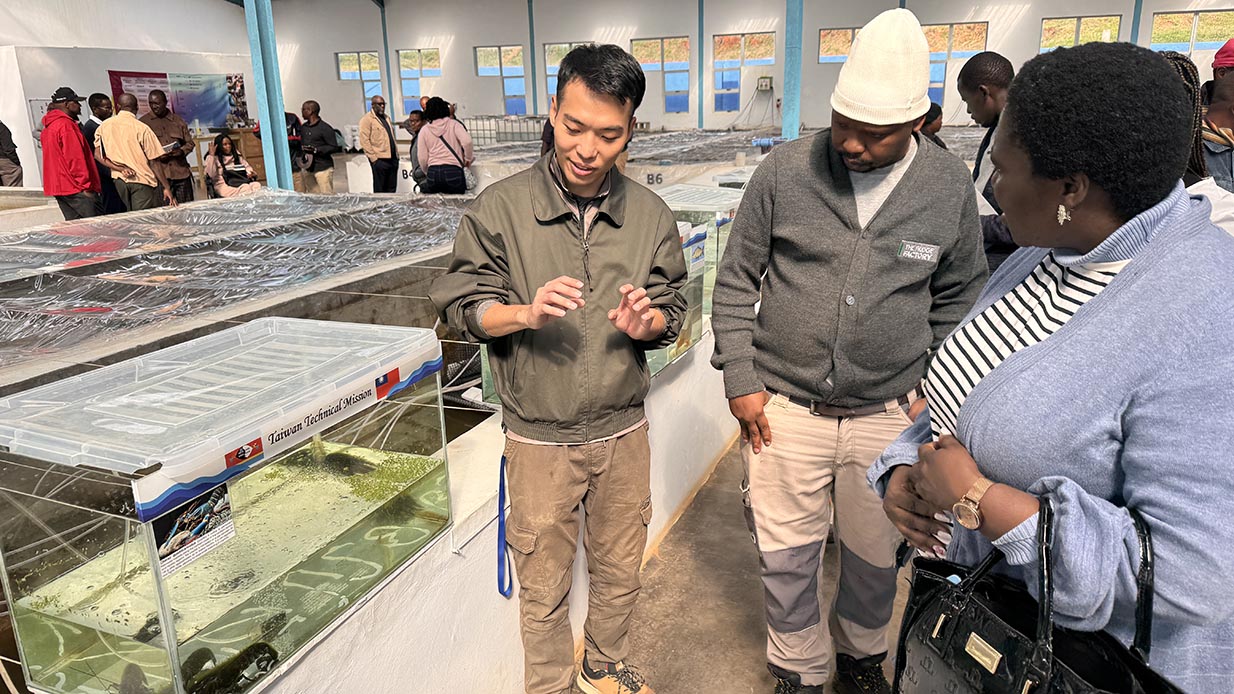
A growing wave of interest in fish farming is taking hold in the Manzini Region following a successful beginner aquaculture training programme that equipped 37 aspiring fish farmers with practical skills to start their own fish production enterprises.
The training, held at the Malkerns Aquaculture Research and Production Centre, was organised through a partnership between the Ministry of Agriculture and the Taiwan Technical Mission. Participants spent several days learning the fundamentals of fish farming from industry experts, gaining knowledge that could help transform household incomes while contributing to Eswatini’s food security.
From assessing suitable pond sites to understanding water quality management and fish nutrition, farmers received guidance on every stage of fish production. Aquaculture expert Samuel Liu delivered a presentation, teaching participants how to evaluate land, test soil water retention, manage pond conditions and ensure fish receive the right nutrition for healthy growth.
“Success in fish farming begins with choosing the right site and managing water properly,” Liu explained. “Good management practices result in healthier fish, better growth and higher-quality products for the market.”
Farmers also attended presentations by Aquaculture Assistant Picaso Nkumane, who highlighted the enormous potential of aquaculture in Eswatini. He outlined the sector’s role in poverty alleviation, nutrition security and income generation while introducing participants to the different fish species produced at the Centre.
Nkumane also stressed the importance of mono-sex fingerlings, proper feeding programmes and maintaining optimal water quality through careful monitoring of temperature, oxygen levels and pH.
The Chief of the Taiwan Technical Mission Mars Shiue praised the farmers for investing in knowledge and skills that could open new economic opportunities. “Training is the first step towards success,” he said. “Fish provide high-quality protein and are becoming increasingly important, especially during the current foot-and-mouth disease outbreak, which has affected other livestock sectors. Fish farming offers a reliable alternative source of protein because fish are not affected by the disease.”
He added that aquaculture is particularly suited to changing climatic conditions, noting that fish farming can continue to provide food and income even during periods of drought.
Acting Senior Agricultural Officer Boy Mavuso from the ministry encouraged participants to seize the opportunity presented by the rapidly growing aquaculture sector. They pointed out that Eswatini still imports large quantities of fish despite strong local demand.
With fresh locally produced fish now fetching between E70 and E85 per kilogramme, fish farming is increasingly being viewed as a profitable enterprise with significant growth potential.















Leave a comment