LOBAMBA – “What we have received is 8.5 per cent and not 85 per cent”.
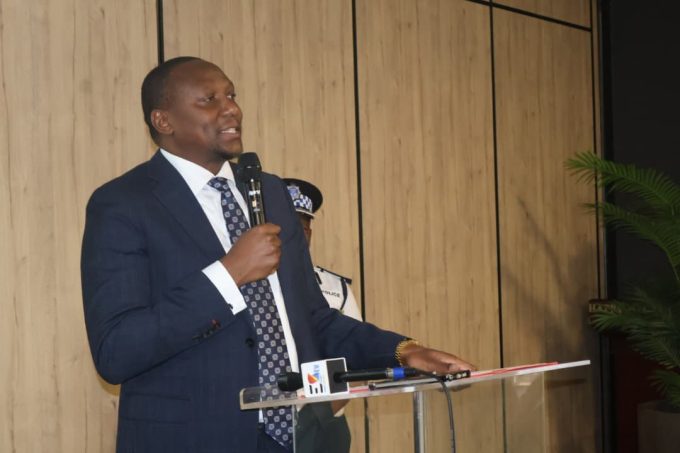
This was a submission that was made by Mahlangatja Member of Parliament, Mgucisi Dlamini during the portfolio committee debate of the Ministry of Public Service First Quarter Performance Report for the Financial Year 2026/2027 yesterday.
During the debate, the MPs mounted a scathing attack on government over the implementation of the 2025 Salary Review, arguing that the much publicised 85 per cent salary adjustment had left many civil servants and public office bearers disappointed after receiving what they described as significantly lower increases than expected.
At the centre of the debate was the contention that the figures communicated to the public did not correspond with the actual amounts reflected in employees’ salaries.
MPs argued that the disparity had created confusion and frustration among civil servants, many of whom had expected a far greater adjustment following government’s announcement on the implementation of the salary review recommendations.
Mahlangatja MP Mgucisi Dlamini said the figures simply did not add up, insisting that what employees had received was nowhere near the 85 per cent that had been communicated.
“There is something that did not go right. We may not be accountants, but there is a difference between 85 per cent and 8.5 per cent. What we have received is 8.5 per cent and I think this should be corrected. There is only one mathematics. The minister must look into this because emaSwati, including us as politicians, are disappointed,” he said.
His sentiments were echoed by several MPs, who said they had received numerous complaints from civil servants in their constituencies questioning how the calculations had been done.
LaMgabhi MP Sicelo Jele said the increases received by many employees were too small to make any meaningful difference, particularly for legislators who were often called upon to assist vulnerable families within their communities.
He noted that legislators continued to shoulder significant social responsibilities and had expected a more substantial adjustment.
Attention also turned to the welfare of lower-paid government employees, particularly those in job grades A and B.
Nkhaba MP Hope Shiba said cleaners, groundsmen and other workers in the lowest salary bands had approached him seeking clarity after receiving what they regarded as disappointing adjustments.
He urged the ministry to explain how the figures had been calculated, saying many workers now felt neglected despite assurances that the salary review would improve their conditions of service.
Shiselweni Region MP Lindiwe Mamba also questioned what plans government had for civil servants earning below E5 000 per month.
She acknowledged the ministry’s decision to allow appeals against the salary review outcomes, but wanted to know whether additional interventions were being considered for employees whose salaries remained below a reasonable living wage.
The issue of income inequality within the public service was further raised by MP Tsembeni Magongo, who questioned whether sufficient financial expertise had been applied during the salary review process.
Magongo argued that while percentage increases might appear fair on paper, they inevitably widened the gap between higher and lower earners.
She observed that an 85 per cent increase on a salary of E2 000 could never compare with the same percentage applied to a salary of E500 000, despite both employees facing the same cost of living.
She appealed to those responsible for the review to find ways of narrowing rather than widening the income gap, noting that everyone bought necessities from the same shops, with food prices in some rural areas even exceeding those in urban centres.
Portfolio Committee Chairperson Manzi Zwane also questioned how employees earning below E5 000 could be expected to cope, asking whether future salary reviews would specifically address the plight of lower-income earners.
However, one of the strongest submissions came from Mayiwane MP Khungankosi Dlamini, who accused government of neglecting the very employees who kept the public service functioning.
He described workers in job grades A and B as ‘the forgotten backbone of the public service’, arguing that cleaners, drivers, messengers and other support staff continued to receive salaries that did not reflect the value of the work they performed.
“A country is not judged by how much its leaders are paid. It is judged by how it treats the people who make it productive. It is disappointing that many of these workers still earn around E3 000. These are the people who keep the government machinery running,” Dlamini said.
He also highlighted concerns affecting road overseers within the Ministry of Public Works and Transport, claiming that promised salary grade adjustments had not materialised as expected.
Dlamini further raised the plight of government night watchmen, alleging that many worked long hours, including weekends and public holidays, without receiving overtime payments.
According to the MP, some had spent years waiting for the matter to be resolved, with others having already retired or died before seeing any improvements.
He also alleged that government had opted to outsource some security services to avoid paying overtime benefits that would have become due under the salary review framework.
The MP extended his criticism to the treatment of members of the country’s security forces, arguing that their welfare should remain a national priority given the critical role they played in maintaining peace and stability.
He also challenged assurances that employees dissatisfied with the review could lodge appeals, arguing that the appeals process would not adequately address the concerns of those at the bottom of the salary scale.
“You cannot have someone earning E2 000 or E4 000 and then claim they are being paid well. What is being done to these people is simply wrong. Government must go back and fix this,” he said.