
EZULWINI – Regional banking systems have remained sound and well-capitalised despite mounting economic pressures, but Central Banks must remain vigilant through proactive supervision and early intervention to safeguard financial stability.
This was the message delivered by Central Bank of Eswatini (CBE) Governor Dr Phil Mnisi yesterday during the opening of the Committee of Central Bank Governors (CCBG) Subcommittee on Banking Supervision and Financial Stability meeting, being hosted by the Central Bank of Eswatini from yesterday, ending today.
The two-day regional meeting has brought together heads of banking supervision, financial stability experts and Central Bank officials from across the Southern African Development Community (SADC) to deliberate on emerging financial sector risks, regulatory reforms and regional cooperation.
Dr Mnisi said although banks across the region had demonstrated resilience in the face of uneven economic growth, tight external financing conditions, exchange rate volatility and the lingering effects of successive global shocks, these favourable conditions should not be taken for granted.
“Despite economic pressures like uneven growth, tight external financing conditions, exchange rate volatility and the lingering effects of successive global shocks, regional banks remain sound and well-capitalised, a condition that requires ongoing supervisory vigilance and early intervention to maintain,” he said.
He warned that the increasing interconnectedness of banking systems across Southern Africa meant financial shocks could quickly spread beyond national borders, making regional cooperation more important than ever.
According to the governor, banking groups now operate across multiple jurisdictions while sharing markets and financial infrastructure, meaning supervisors can no longer rely solely on domestic information when monitoring risks. Instead, he said there is a need for stronger supervisory colleges, continuous information sharing and early consultation among regulators before local challenges escalated into broader regional risks.
Dr Mnisi also acknowledged the important role played by the South African Reserve Bank and its Prudential Authority in supervising banking groups operating across the region. However, he stressed that formal cooperation agreements alone are insufficient unless they result in practical supervisory outcomes, timely information sharing and coordinated responses to emerging risks. He said effective banking supervision depends less on sophisticated regulatory frameworks and more on decisive and timely intervention anchored on internationally recognised Basel standards.
According to Dr Mnisi, Basel standards should be applied proportionately depending on an institution’s size, complexity and risk profile while maintaining high supervisory standards across the sector.
The governor said attention should now shift from drafting regional regulatory frameworks towards implementing them consistently.

Two key priorities for meeting
EZULWINI – Governor of the Central Bank of Eswatini Dr Phil Mnisi identified two key priorities for delegates over the two-day meeting.
The first is ensuring consistent implementation of Basel standards, IFRS 9 expected credit loss requirements and risk-based supervisory approaches across member countries to avoid regulatory gaps that could expose the regional financial system to vulnerabilities.
The second priority is enforcing recently adopted cybersecurity and climate-related financial risk guidelines as financial services continue to become increasingly digital.
Dr Mnisi noted that while digital financial services and mobile money had significantly expanded financial inclusion, they had simultaneously introduced operational, cyber and third-party risks requiring supervisors to strengthen oversight over outsourced services such as cloud computing and payment processing.
He further observed that growing adoption of artificial intelligence in credit assessments, fraud detection and customer service was introducing fresh supervisory challenges around transparency, data governance and consumer protection.
On climate-related financial risks, the governor said although regional standards had now been established, supervisors still needed to build technical capacity, improve data collection and develop examination methodologies capable of measuring institutions’ compliance with the new requirements.
As part of strengthening Eswatini’s own financial resilience, Dr Mnisi highlighted several initiatives undertaken by the Central Bank of Eswatini. These include finalising the country’s Green Finance Taxonomy to guide sustainable financing, developing Climate Risk Management and Recovery Planning Guidelines, establishing a dedicated Resolution Function within the Financial Stability Unit and progressing work towards operationalising the country’s Deposit Protection Fund later this financial year.
… Central Banks to assess developments
EZULWINI – The meeting provides an important platform for member Central Banks to assess developments in banking supervision, exchange experiences and strengthen regional collaboration.
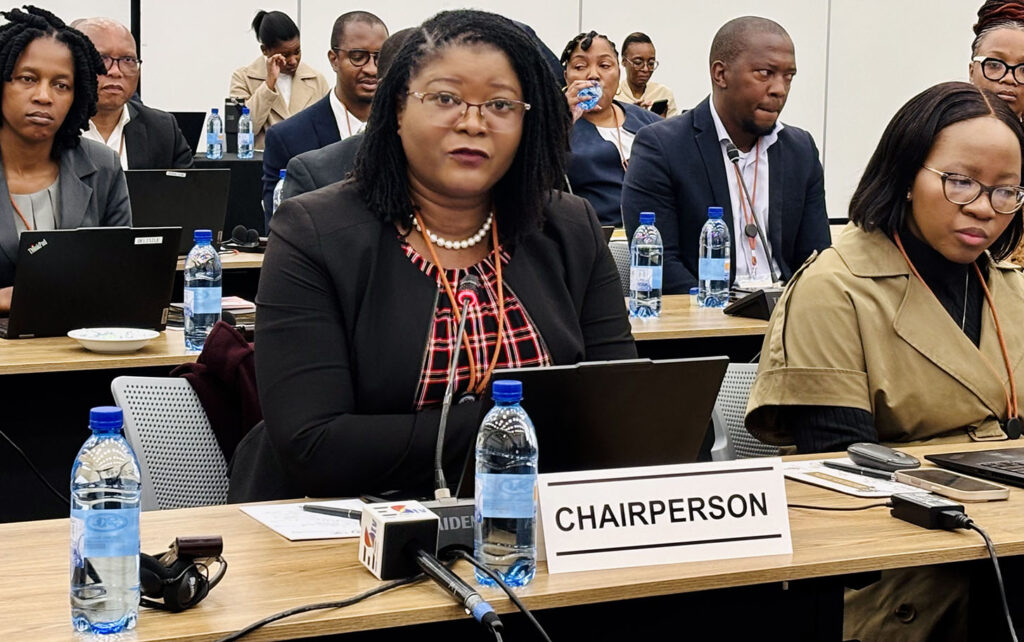
These were sentiments by Chairperson of the CCBG Banking Supervision and Financial Stability Subcommittee and Bank of Zambia Director of Prudential Supervision, Lyness Mambo. She said as financial systems became increasingly interconnected and exposed to evolving risks, regulators need to continue acting with clarity, consistency and determination. “Our agenda is both timely and substantive,” she said.
Among the key issues under discussion are implementation of IFRS 9, development of regional credit information systems, responses to illegal investment schemes, adoption of regulatory and supervisory technology, harmonisation of regulatory frameworks and strengthening information-sharing arrangements. Delegates will also examine the implications of emerging technologies and cybersecurity risks, with a dedicated panel discussion expected to focus on strengthening cyber resilience as digital financial services continue to expand across the region.
Mambo said the meeting would further review progress under the 2024–2026 CCBG Strategy covering financial stability assessments, crisis management, digital financial services, cybersecurity and climate-related financial risks, while also considering the proposed 2026–2030 strategy.
She welcomed the governors’ approval of regional cybersecurity and climate-related financial risk frameworks, describing the milestone as a significant achievement for the subcommittee and the region.
The two-day meeting is expected to produce recommendations that will inform future decisions of the SADC Committee of Central Bank Governors and strengthen financial sector resilience across the region.