MBABANE – When the 12th Parliament assumed office in 2023, an ordinary Member of Parliament (MP) was earning a basic monthly salary of E51 105.
Today, that same lawmaker earns E83 000, a staggering increase of E32 000 in just three years.
However, the true hidden value of this inflated basic salary lies in the ex gratia allowance. Often colloquially referred to as a ‘handshake,’ an ex gratia payment is a voluntary financial sum made as a gesture of goodwill, paid to parliamentarians upon the expiry of their term in office.
Under the current calculations, each MP is now entitled to an ex-gratia payout of E996 000. For context, when they first took office in 2023, this end-of-term handshake stood at E613 255 per legislator.
To grasp the sheer scale of this financial commitment, one must look at the numbers. There are 107 parliamentarians, including Cabinet ministers. Should none of the current politicians be re-elected or reappointed, the Minister for Finance, Neal Rijkenberg, would have needed to set aside a conservative estimate of E65 618 285 in ex gratia allowances, based on the basic salaries of 2023.
It must be said that this is merely a baseline figure as Cabinet ministers earn considerably more. By 2026, Rijkenberg will need to budget a staggering E106.572 million for these payouts, an increase of E40.953 million in just three years. Crucially, this figure excludes the roughly 33 members of traditional councils, who earn a similar basic salary and would further inflate the final bill. Should the government implement a Cost-of-Living Adjustment (CoLA) in the next two years, the handshake allowance for each MP could easily breach the E1 million mark.
To understand how we arrived here, one must look back at the exact pay structure that was implemented when these politicians first took their seats in 2023.
Governed by a ‘single spine’ salary structure to ensure alignment across all three arms of government, salaries were tied to the secretary to Cabinet. The prime minister’s basic salary was set exactly 50 per cent higher than the secretary to Cabinet’s, with all other politicians paid on a sliding ratio of the premier’s wage.
When they assumed office, the financial hierarchy was stark. At the apex, the prime minister earned an annual salary of E1 022 097, translating to a monthly pay packet of E85 174.75. Close behind was the deputy prime minister, taking home E970 993 a year or E80 916.08 per month.
On an equal footing, the presiding officers, Cabinet ministers and the attorney general each commanded an annual package of E868 783, which equated to a monthly salary of E72 398.58. Further down the pecking order, a regional administrator earned E63 881.00 a month, while a deputy presiding officer received E59 622.33. As mentioned, but necessary for emphasis, an ordinary MP earned E51 104.83 a month. At the grassroots tier of the political structure, Tindvuna Tetinkhundla earned E9 369.16 monthly and a Bucopho Betinkhundla (constituency councillors) took home E7 665.66 a month.
The dramatic upward shift in these figures was directly triggered by the recent salary review for civil servants. According to Article 2.1.3 of Finance Circular No. 2 of 2023, the salaries of parliamentarians are inextricably linked to those of civil servants.
The rationale is that all arms of government must work in tandem to drive the State’s development strategy, with the civil service acting as the primary driver. Consequently, the circular mandates that while politicians’ terms must be attractive enough to recruit suitably qualified individuals, they must remain fair in comparison to civil servants and sustainable within the prevailing economic climate.
For the record, it was not the Royal Commission chaired by Mvuselelo Fakudze that forged this link between politicians’ and civil servants’ salaries. The Commission found the structure already in place upon assuming office. However, as Minister Rijkenberg pointed out three weeks ago, the issue is now firmly on the table for the Commission to review.
Under the strict terms of the 2023 Circular, it must be said that the ex gratia itself is defined as a once-off, pre-tax payment equal to exactly 12 months’ basic salary, payable to all parliamentarians and designated office bearers at the end of the 12th Parliament. Should a politician fail to serve their full five-year term, the payment will be prorated to reflect their actual time in office. Furthermore, should a parliamentarian or office bearer be dismissed for misconduct or incompetence, they will forfeit the handshake entirely.
Benedict Xaba, the Clerk-to-Parliament, could not weigh in on the matter. He is the controlling officer for Parliament.
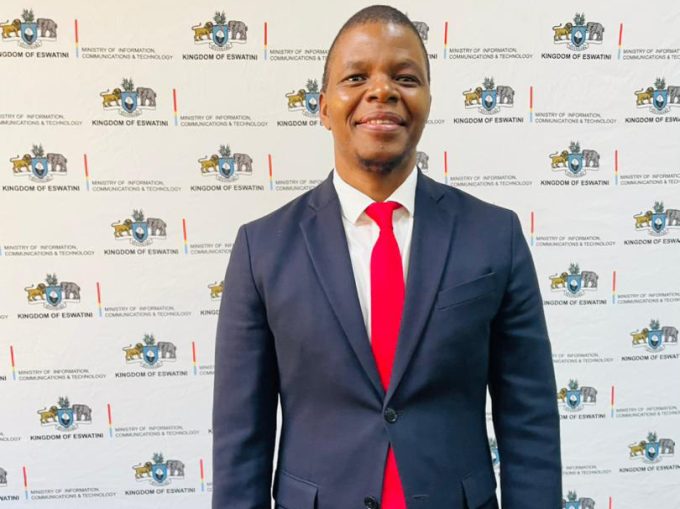
On Monday, Minister for Finance Neal Rijkenberg told the Times of Eswatini that the country’s increasing debt and wage bill were within manageable and sustainable thresholds.
The minister provided historical context to justify the aggressive review.
He pointed out that over the past nine years, civil servants experienced approximately three years of zero salary increases, with other Cost-of-Living Adjustments (CoLAs) falling below the inflation rate. Consequently, he said the wage bill had not kept pace with inflation, necessitating the recent upward adjustment.
To truly understand the current wage bill, the minister urged a comparison with the figures from 2018, the year he assumed office. At that time, he said the wage bill stood at a staggering 42 per cent of total government expenditure, a figure he noted was the second highest in the world. Through stringent financial management prior to the recent salary review, the minister explained that government successfully reduced this ratio to 32 per cent. Despite the recent high percentage increase, he said the wage bill has only risen to 33 per cent of expenditure, remaining significantly lower than the 2018 baseline.
Looking to the future, Rijkenberg outlined a strategy of containment.
The objective over the coming years is to gradually reduce the wage bill as a percentage of expenditure, he assured.
While acknowledging that this will be a slow process, he stressed that the ultimate national target is to bring the wage bill down into the 20s, with 25 per cent being the ideal and sustainable benchmark for the country.
On another note, Rijkenberg addressed concerns over the nation’s financial trajectory, outlining the strategic rationale behind the borrowing and the historical context of the salary adjustments.
While acknowledging that the national debt has been increasing over the years, the minister was keen to refine the narrative, suggesting that ‘skyrocketing’ is the wrong word to describe the trajectory. He emphasised that the upward trend was directly tied to government’s ambitious capital budget.
“We have been doing many capital projects, so at least the reason why the debt is going up is good reasons,” Rijkenberg said.
He highlighted infrastructure developments, including road networks and the International Convention Centre (ICC). However, he pointed out that the primary drivers of the debt are major dam infrastructure and water projects, which he noted are already yielding ‘very good dividends for the country.’
Addressing the sustainability of this debt, Rijkenberg pointed to the annual debt sustainability report submitted alongside the national budget, which provides a comprehensive analysis of the country’s financial standing. “Our debt is not yet in unsustainable territory,” he stated.
The minister anchored this assessment to the Southern African Development Community (SADC) protocol, which recommends that African nations do not exceed a debt threshold of 60 per cent. While recent reports have placed the country’s debt at around 44 per cent, he noted that his quarterly report indicated a figure around 40 per cent.
Looking ahead, he outlined the projections within the medium-term fiscal framework.
He said the debt is expected to peak at approximately 50 per cent by the time the current capital projects are completed, assuming Gross Domestic Product (GDP) growth remains at current levels. Should GDP growth exceed expectations, this peak will be lower, he said.
The minister confirmed that the medium-term goal is to reduce this figure back down to 45 per cent, where it will ideally settle.
Rijkenberg was candid about the challenges posed by the current debt levels, clarifying that the issue is not a risk of default, but rather the opportunity cost of interest repayments.
“It is not about defaulting on debt. It is about just spending more money on interest repayments,” he explained. “This year, we’re almost spending E4 billion on interest repayments and that is the problem with debt.”
He affirmed that government does have the funds to service the debt, but noted that the E4 billion could be far better utilised on pressing capital projects or domestic issues. As the debt figure rises, he said so too will the interest burden, requiring constant vigilance and careful management until the figure begins its downward trajectory.