

History will confirm that more often than not, when commissions of inquiry are established in the country, there is always a hype and excitement. This is usually followed by sensational submissions and testimonies from those affected in one way or another, by the matter being probed. A few weeks or months pass, then there is radio silence.
Only until someone remembers that there was a very important national matter being investigated is there movement from the relevant office. The report of that investigation is released, generating a flurry of comments and debate from the general public. Then there is radio silence once again.
The report gathers dust on the shelves of some obscure office within the establishment that commissioned the investigation, and life goes on in the Kingdom of Eswatini, until the next time an issue becomes controversial and another commission of inquiry is launched. The process is repeated over and over again while the investigations cost the taxpayer millions of Emalangeni while the issues being investigated are never resolved or addressed. If there were any victims or survivors, justice is rarely ever dispensed. One hopes this will not be the case after the release of the report of the Judicial Commission of Inquiry into Allegations of Impropriety, Maladministration and Abuse of Power At the Office of the Master of the High Court. We all followed the proceedings with keen interest when the Justice Majahenkhaba Dlamini-led Commission started its investigations.
The commission began by listening to submissions from emaSwati who had various complaints about various forms of treatment they received at the different Master of the High Court offices in the four regions of the kingdom. We were there when those affected poured their hearts out, when they presented sorrowful accounts of their experiences with the Master’s office and as some cried bitterly while outlining their matters. It was painful to listen to the various accounts of how beneficiaries of deceased estates were frustrated, usually for years, without the estates they had an interest in being wound up.
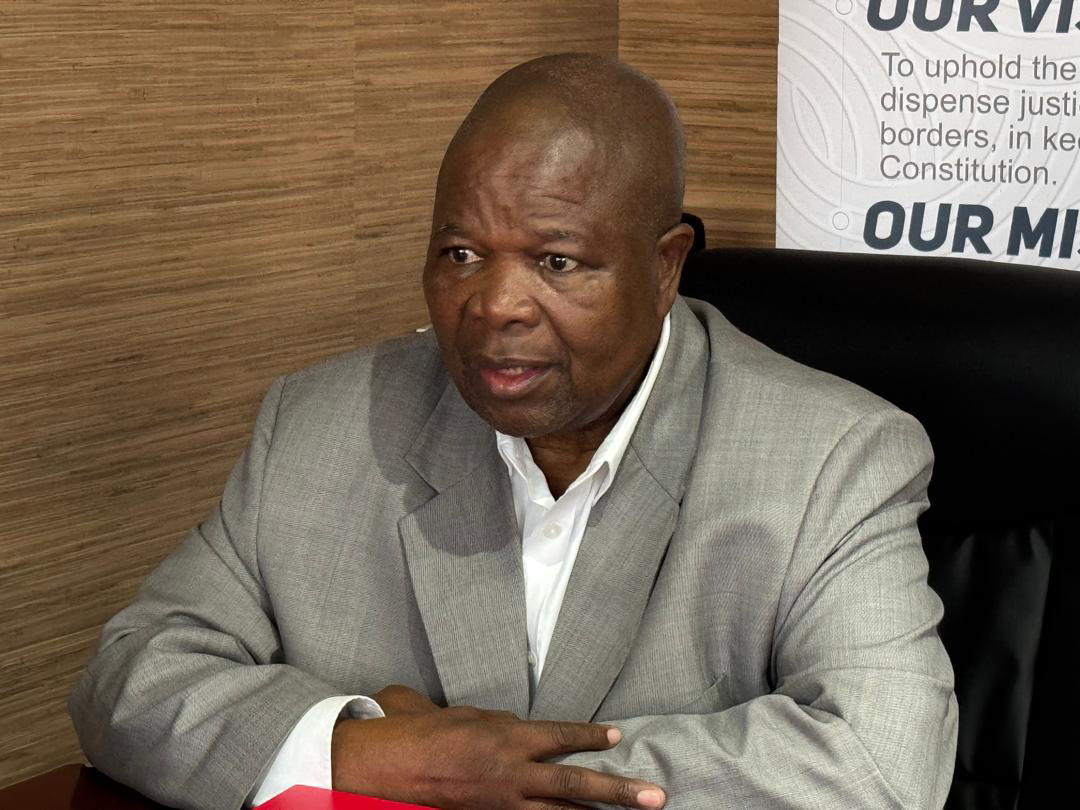
Chief Justice Bheki Maphalala finally released the report of the Judicial Commission of Inquiry on Friday, raising the curiosity of many emaSwati. Publication of the report was described as an important step towards transparency, institutional accountability and the continued improvement of services provided by the Office of the Master of the High Court.
The Judiciary encouraged members of the public and interested stakeholders to access the report, which is available online and acquaint themselves with the commission’s findings and recommendations. Certainly, the findings and recommendations are the most crucial aspect of the report now because the hearings were public. Based on those numerous, and sometimes harrowing submissions, we all have a general idea of what goes on within the hallowed corridors of the tainted Master’s office.
What we want to know is: what is going to be done about it? The report released by CJ Maphalala on Friday says based on the Commission’s findings, ‘it is difficult to say that the office of the Master is or is not clean’. It says there are some isolated instances of deviation and corruption that call for stringent attention by the master, by way of further inquiry to establish the full scale of the irregularity.
Delays in the processing of payments to beneficiaries within the statutory period of six months is the main bone of contention for beneficiaries. It being a 499-page document, I must admit that it was not possible to read all of it at a go. However, I did note that the Judicial commission refrained from making blanket findings and recommendations. Instead, it dealt with issues on a case-by-case basis and made recommendations based on specific challenges faced by the parties involved.
Under the estate of the late King Maja II for example, the commission recommended that there was a need for a uniform way of handling chiefs’ estates and maintenance of their surviving wives. “Ideally, chiefs’ spouses should have their assets registered in their own names so that the new chief should not be burdened with separating the estates,” read the report in part.
Again, having examined evidence presented in the estate of the late Abednego Kuseni Hlophe, who had two wives, the commission recommended that legislation was necessary to regulate the distribution of property, including and/or especially the marital home, in customary law unions. The Hlophe matter is still pending before traditional authorities. It was observed in the estate of the late Luke Mlungu Mbingo, who had three wives and various assets like property and cattle, that the Master’s office does not have a system in place to follow up on estate files. This leads to lengthy delays in winding up estates.
Recommendations included that the Master’s office should have a legal advisor to attend to legal matters and to represent it in court under the guidance of the attorney general. The commission felt that it would also be important to learn from other jurisdictions on how they have addressed capacitation of Master’s offices in handling complex legal matters. It was further recommended that the master needs to have a case management system for proper case management processes and follow-up. In the estate of the late Alpheus Mthethwa, it was found that the deceased had children born out of wedlock.
It appeared that the unnamed assistant master conspired with these children, not only to remove the surviving spouse as executor (in favour of one of the children) but also to disinherit her by declaring that her marriage to the deceased had not been proved. This was despite that her in-laws confirmed it to have occurred.
Over 30 cattle were quickly distributed among the three children born out of wedlock, having been collected from the dip tank and sold ‘en bloc’. Here, the commission recommended that the police conduct further investigations.
The report also reveals that funds held in the Guardian Fund, for at least five deceased estates, had been misappropriated. They included that of the late Charles Mashesha Nhlengetfwa and four others. There are actually various parts of the report where the involvement of the police is recommended.
The Madlanga Commission in South Africa has seen arrests even as it continued sitting. Are we going to see the same around here or will it be business as usual in Eswatini? We wait .















Leave a comment