

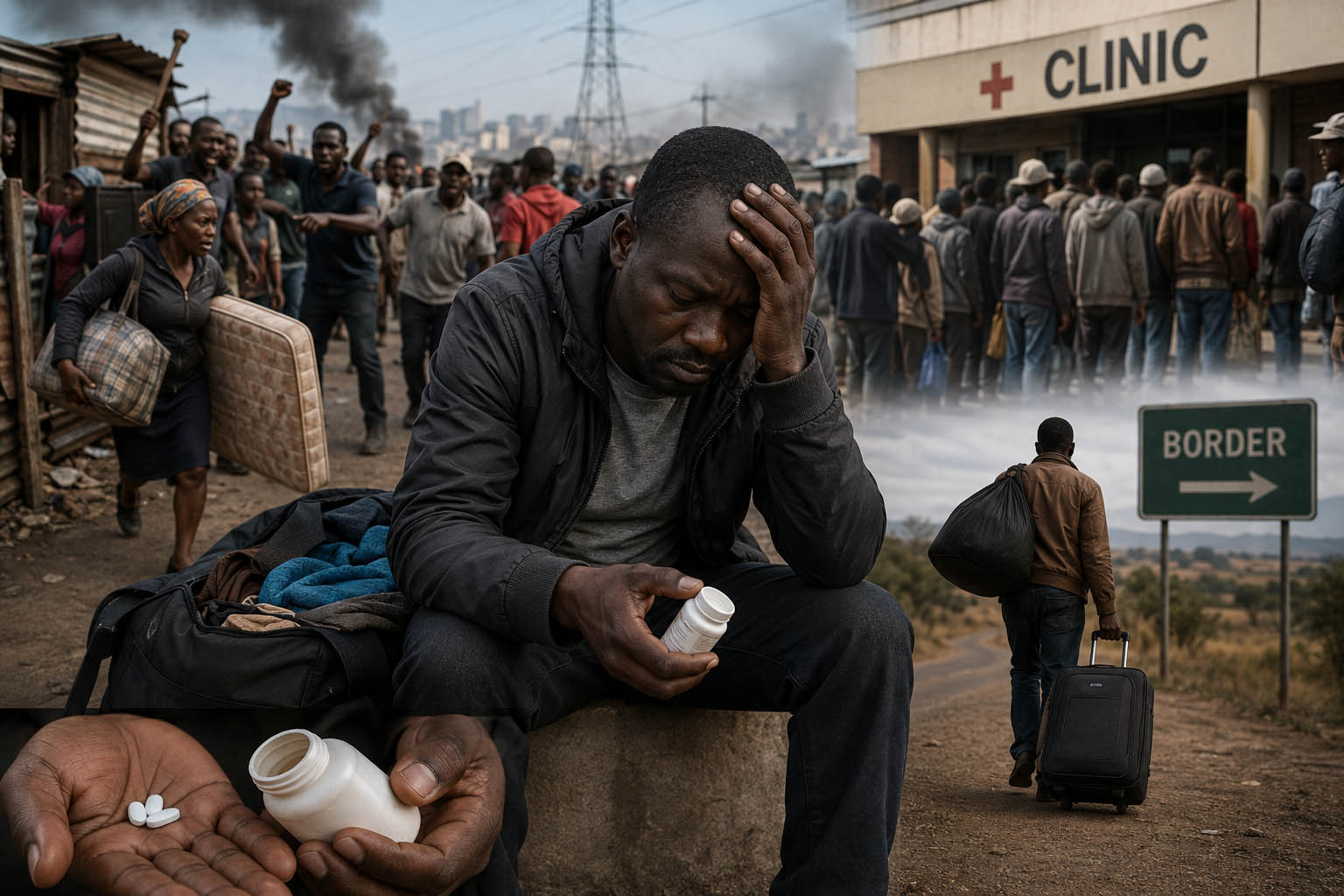
Every time another foreign national is chased from a home, a business is abandoned, a family is scattered or a sick person is left wondering whether they will survive, one question should be asked: Who exactly, is winning?
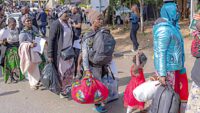
The latest reports from South Africa provide an uncomfortable answer. Nobody is. The consequences of anti-foreigner hostility are no longer confined to slogans, protests or political speeches. They are reaching into homes, livelihoods and hospital corridors, forcing people who have spent years building lives in South Africa to flee with little more than the clothes on their backs.
A Malawian man identified as Joseph, who had worked in South Africa since 1995, was forced to flee after people came to his home telling him to leave. In the chaos, he left behind his antiretroviral medication. By the time he reached safety, he had gone weeks without treatment. Another Zimbabwean, Freedom Moyo, who had lived and worked in South Africa since 2009, reportedly left after his health deteriorated because he could not access his ARVs.
Doctors Without Borders has warned that documented migrants are also fleeing, despite having legal papers, because intimidation, violence and threats have made remaining unsafe. Many of those leaving have lost homes, jobs and incomes built over years. Some are now returning to countries where they may have no employment waiting for them and limited means to rebuild what they have lost. Then there is the cruel irony of the health consequences. South Africa has spent decades building one of the world’s largest HIV treatment programmes. Treatment works when people can access it consistently. But what happens when fear makes someone abandon their medicine? What happens when a person is forced out of their home, separated from their clinic and left to navigate an unfamiliar health system across a border?
It is not only the individual who suffers. Interrupted treatment can have consequences for families, communities and public health systems. MSF has already reported helping people whose access to HIV and other chronic medication was disrupted by anti-migrant violence.
So to those who cheer the idea of an Africa in which every foreigner is pushed out, the question is simple: Are you proud of this?
Are you proud when a person who has worked for three decades suddenly has nowhere to sleep? Are you proud when someone living with HIV leaves behind life-saving medication because they are running for their safety? Are you proud when a person who has contributed labour, paid rent, traded, built relationships and raised children in a country is reduced to a stranger who must prove that they deserve to exist?
Eswatini does not get to watch this crisis from a safe distance. The region is interconnected by families, transport routes, trade and livelihoods. We have already seen the human cost reach our doorstep with the recent death of a liSwati driver who was transporting Malawian nationals. His death showed that hostility towards foreigners does not stop with the person being targeted. It can reach those transporting them, sheltering them, employing them or simply trying to get them home. First, someone is labelled a problem. Then they are chased from a shop, workplace or home. Then they lose income. Then a family loses its livelihood. Then a sick person loses access to treatment. Then a driver, trader, landlord, employer or relative becomes caught in the consequences.
Eventually, everyone pays.
None of this means immigration problems should be ignored. South Africa has every right to enforce its immigration laws and deal with people who break them. But there is a world of difference between lawful enforcement and collective punishment because of nationality.
The South African Government itself has acknowledged that migration must be addressed through lawful, peaceful and constitutional means. That distinction matters because once mobs become immigration officers, nationality becomes a sentence. Also, history should have taught the region better.
Africa knows the brutality of exclusion, the humiliation of being told that you do not belong and the destruction that follows when people are ranked according to identity. The tragedy is that some are now reproducing those same instincts against fellow Africans. The question, then, is not whether South Africa has an immigration problem. It does.
The question is whether violence against foreigners solves it. It does not. It merely creates more displaced people, more broken businesses, more traumatised families, more interrupted medical treatment and more opportunities for tragedy.
The people celebrating the expulsion of foreigners should look carefully at what they are celebrating because when the dust settles, there may be no victory to claim. Only people who have lost their homes. People who have lost their income. People who have lost access to medicine. People who have lost their dignity, along with people like the liSwati driver who have lost their lives.
That is not a victory. That is a regional tragedy.














Leave a comment