

Madam,
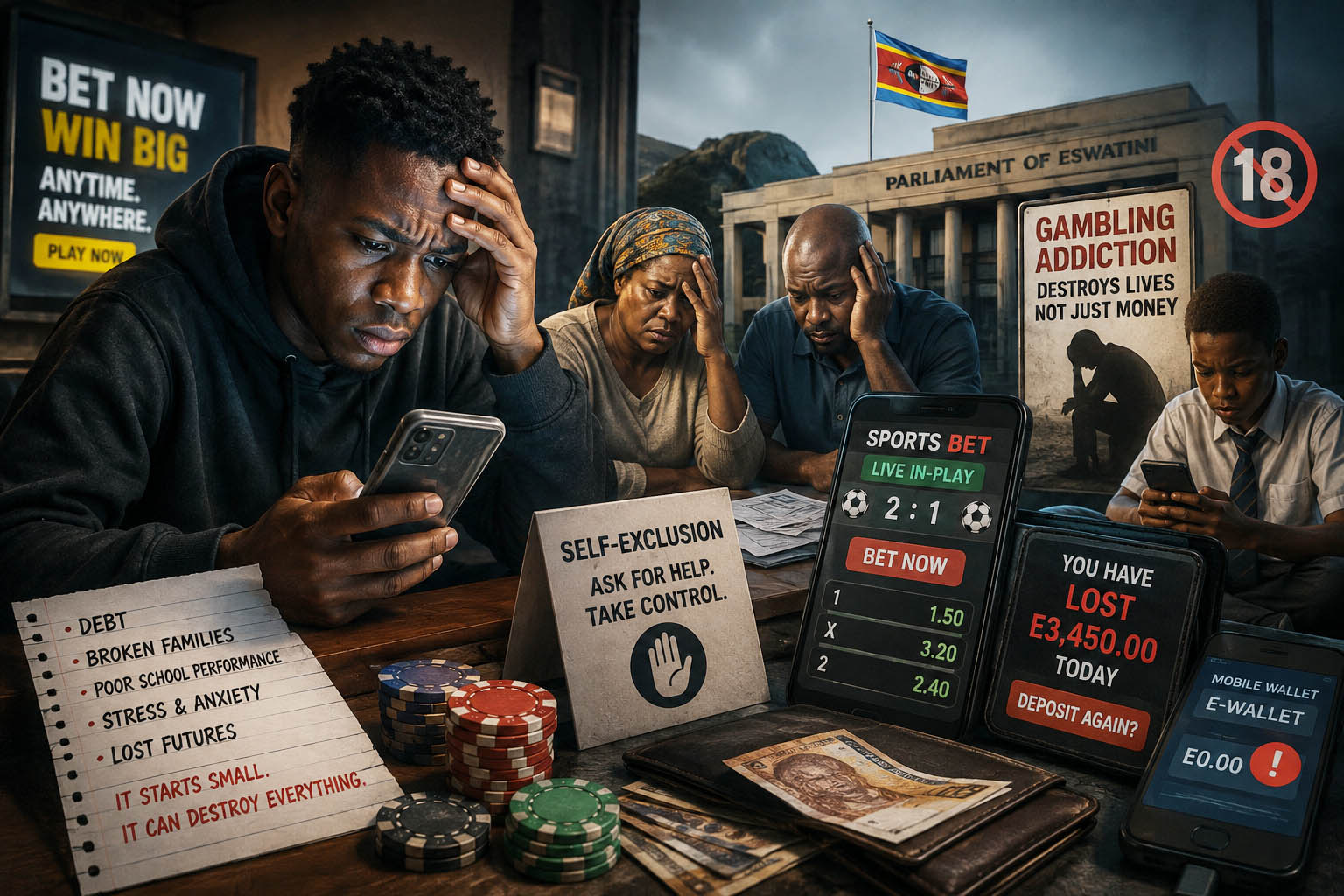
There is a crisis quietly unfolding in Eswatini, one that does not command headlines as loudly as it should, yet continues to seep into homes, schools and livelihoods with devastating consequences. Online gambling has moved far beyond being a peripheral pastime. Today, it is increasingly part of everyday life, accessible through the smartphone in a person’s hand and the mobile wallet in their name. Its growth is moving faster than our ability to understand and contain the social damage it can cause. Recent revelations in Parliament should, therefore, concern us all.
One of the most telling concerns raised recently is the number of punters who have asked to be excluded from gambling. Parliament heard that only a very small number of people have taken this step, despite growing concerns about gambling addiction and its consequences. This should make us pause. If gambling is increasingly accessible and addiction is becoming a concern, why are so few people voluntarily asking to be excluded? Is it because people are unaware that self-exclusion exists? Are they ashamed to admit that they have lost control? Or have we normalised gambling so much that people no longer recognise when casual entertainment has become a serious problem?
Self-exclusion exists for a reason. It is an important intervention for people who recognise that gambling has become harmful to them. But when only a handful of punters ask for help, we need to question whether the system is sufficiently visible, accessible and trusted. The contradiction is difficult to ignore. Government continues to collect revenue from gambling while Parliament is increasingly confronted with concerns about addiction, debt, underage gambling and families suffering the consequences. Revenue is important; however, revenue cannot become the measure by which we judge whether the gambling industry is working for society.
The real question is what happens to the people behind those figures. Parliament has already heard concerns about people losing substantial amounts of money and spending long hours at betting establishments. There have also been disturbing reports of young people accessing gambling platforms and, in some cases, taking money from their guardians to fund gambling habits. This is not simply a question of poor financial discipline. Addiction can change behaviour, damage relationships and destroy a person’s ability to make rational decisions about money.
Even more worrying is the exposure of children to gambling. Government has acknowledged loopholes that allow minors to access betting platforms through mobile wallets registered in the names of adults. Plans to address secondary wallets and strengthen controls are welcome, but they demonstrate how quickly technology can outpace regulation. The smartphone has effectively put a betting shop in the pocket of anyone with a mobile device and access to mobile money. For a school-going child, the barrier to entry is dangerously low. Gambling is no longer necessarily about physically walking into a casino or betting shop. It can happen quietly at home, in a bedroom, during lunch or late at night. Parents may not know what their children are doing until money disappears, school performance changes or behavioural problems emerge.
The Gaming Control Act of 2022 provided an important foundation, but the gambling environment has changed rapidly, particularly with the expansion of online platforms. Government’s ongoing work to finalise regulations must, therefore, be treated as an urgent national responsibility. There must be stronger age verification for online gambling and operators should face meaningful consequences when they fail to prevent minors from accessing their platforms.
Eswatini must decide what kind of gambling industry it wants: One measured primarily by licences, levies and revenue or one also judged by how effectively it protects citizens, particularly children and vulnerable people, from harm. We should not wait until gambling addiction becomes a crisis that every family can see before we decide to take it seriously.
Khulile














Leave a comment