


MANZINI – The Eswatini Stock Exchange (ESE) has unveiled an ambitious new corporate strategy, Kwakhanya 2030
The strategy seeks to reposition the bourse as a national engine for wealth creation, business expansion and economic transformation.
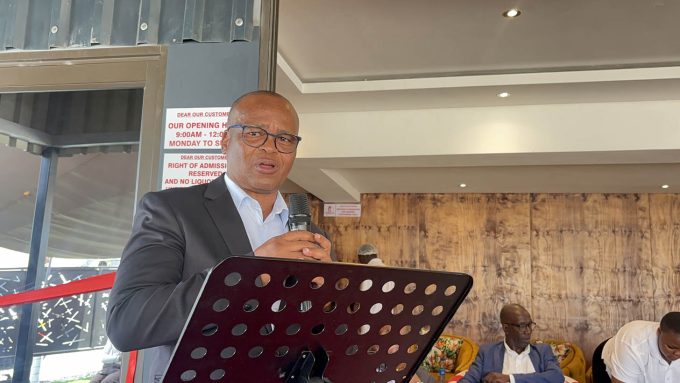
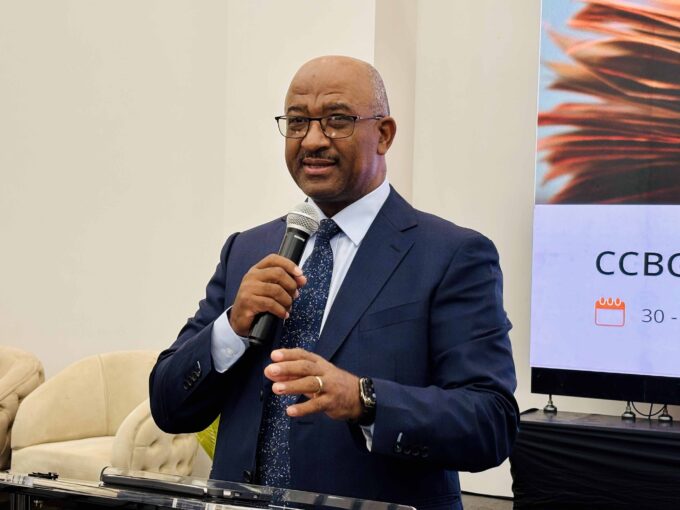
ESE Chief Executive Officer Simanga Mdluli unveiled the strategy during the exchange’s business seminar held at the Eswatini International Trade Fair (EITF) last Thursday under the theme, ‘Unlocking Business Growth through Capital Markets.’ The seminar brought together business leaders, investors and capital-market experts to examine how businesses could use capital markets to raise funding, expand operations and create wealth. Mdluli said Kwakhanya, meaning illumination, had been deliberately chosen to symbolise a new dawn for Eswatini’s capital markets and a future in which investment opportunities would become more visible and accessible to emaSwati.
“Today, I want to speak about a future we call Kwakhanya 2030. That is the name we have given to our corporate strategy,” Mdluli said.
“Kwakhanya means illumination. It resembles a new dawn. It speaks to a brighter future.” He said the strategy was built around a fundamental change in how the country viewed the stock exchange. Rather than being seen simply as a place where shares are traded, Mdluli said the ESE should become a national platform for wealth creation, providing businesses, investors and ordinary citizens with greater opportunities to participate in economic growth.
Under Kwakhanya 2030, Mdluli said the ESE wanted to create a future where entrepreneurs could raise capital to grow their businesses, pension funds could deploy capital productively and young people could begin investing directly from their mobile phones.
He said businesses should have alternatives to traditional bank financing, while citizens should be able to participate directly in the success of the economy. Ultimately, he said, the objective was to create an environment where all emaSwati could become stakeholders in the nation’s prosperity.
The strategy, therefore, seeks to broaden the role of the capital market beyond its conventional functions and position it as part of the country’s wider economic development architecture.
Mdluli, however, cautioned that this transformation could not be achieved by the stock exchange on its own.
“This is a national project,” he said.
“This is a collective responsibility, where multiple relevant stakeholders must work together for this common goal of developing Eswatini’s capital market.”
He subsequently outlined the responsibilities he believed various stakeholders should assume if Kwakhanya 2030 was to become a reality.
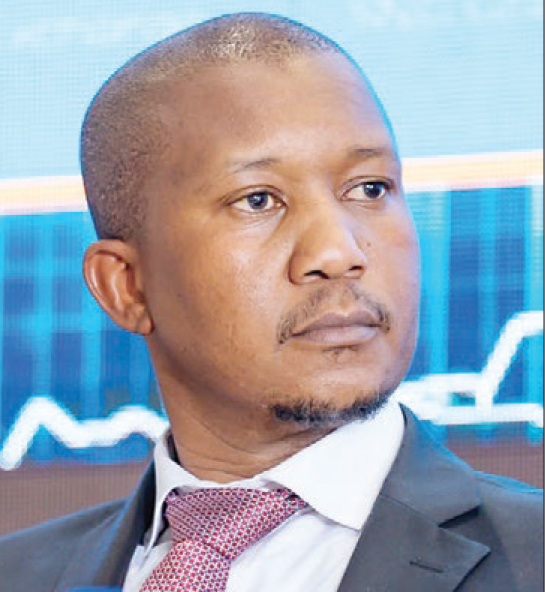
ERS urged to introduce incentives
MANZINI – ESE CEO Simanga Mdluli called on the Eswatini Revenue Service (ERS) to introduce targeted tax incentives aimed at encouraging investment and increasing participation in the capital markets.
One of the proposals was the introduction of Tax-Free Investment Accounts, which he said could broaden participation among retail investors and encourage a stronger culture of saving and investing. He said such accounts would provide ordinary citizens with an opportunity to build long-term wealth through investment. Mdluli also called on the ERS to support the development of tax incentives for companies that choose to list on the ESE. The argument is that companies should have stronger incentives to consider the stock exchange when seeking expansion capital, rather than relying predominantly on conventional sources of finance.
He further called for support for sustainability-focused investment, saying capital should increasingly be channelled towards investments that support future generations.
Turning to policymakers and legislators, Mdluli called for an acceleration of reforms required to modernise Eswatini’s capital markets.
He said the country needed an enabling environment capable of encouraging innovation, investment and entrepreneurship. “The world will not wait for us. We must move with purpose and urgency,” he said.
Mdluli said regulatory and legislative reforms would be essential if Eswatini was to build a capital market capable of supporting the changing needs of businesses and investors.
He argued that the country could not afford to approach capital-market development as a peripheral issue when economies globally were increasingly relying on sophisticated mechanisms to mobilise and allocate capital.
The Ministry of Finance, he said, should continue prioritising capital-market development as a pillar of national economic transformation.
Mdluli made a broader argument for why the development of the ESE should matter to government. “Every thriving economy has strong mechanisms for mobilising capital,” he said.
He argued that a strong stock exchange should not be viewed as a luxury. Instead, it should be regarded as economic infrastructure.
“A strong stock exchange is not a luxury. It is economic infrastructure. It is as important as roads, electricity, telecommunications and water,” Mdluli said. His argument effectively placed capital markets alongside the physical and digital infrastructure needed to support economic activity.
A deeper market, he suggested, could provide another mechanism through which savings are converted into productive investment and businesses gain access to the funding required to expand.
Mdluli also recognised the role of the Central Bank of Eswatini in building the infrastructure required to support a more sophisticated capital market.
He thanked the Central Bank for its continued partnership and support, saying modern financial infrastructure would be critical to developing deeper, more liquid and efficient markets.
“Together, we can create a financial ecosystem that serves all emaSwati,” he said. The message was that capital-market development could not take place in isolation from the broader financial system.
For the ESE to become more accessible and efficient, the supporting financial infrastructure must also evolve.


















Leave a comment