

The message looks genuine. The profile picture belongs to someone you know. The caller sounds professional. The offer appears too good to ignore.
Then, before you have had time to think, your money is gone.
Online scams are becoming increasingly sophisticated in Eswatini, with criminals exploiting WhatsApp, social media, mobile money, online banking and even video calls to deceive unsuspecting people. The most dangerous part is that scammers do not necessarily rely on technology alone. They rely on human emotions such as fear, excitement, trust and urgency.
Here are some common scams and the warning signs to look out for:
The ‘your account has been hacked’ scam
Imagine receiving a call from someone claiming to be from your bank. They tell you suspicious activity has been detected on your account and that you must immediately provide your card number, PIN, password or OTP to secure your money.
It sounds frightening, but this is exactly what scammers want.
In June 2026, the Eswatini Communications Commission (ESCCOM) warned about criminals using WhatsApp and other online calling platforms while impersonating bank officials, police officers and security personnel.
Red flag: Anyone demanding your PIN, OTP, CVV or banking password is a potential scammer. Legitimate institutions will not ask for these details over a call.
The hacked WhatsApp account scam
A friend sends you a message: ‘Please help me with E500. I will pay you back.’ Because it is someone you know, you may send the money without questioning it.
But their WhatsApp account may have been taken over. Cases reported have involved scammers gaining control of WhatsApp accounts after victims clicked suspicious links disguised as competitions, voting requests or giveaways. The criminals then impersonate the account owner and approach their contacts for money.
Red flag: If a friend suddenly asks for money, call them directly before sending anything.
The fake competition or prize
‘You have won E10 000!’ All you need to do is pay a small processing fee. Stop.
ESCCOM has previously warned about fake competitions where victims are told they have won prizes and are then asked to provide personal information or make payments before receiving their supposed winnings.
Red flag: If you have to pay money to receive a prize you never entered for, it is almost certainly a scam.
The fake payment scam
This one particularly affects people selling goods online. A buyer sends what looks like a payment notification and asks you to release the goods. Later, you discover that the money never entered your account.
Red flag: Never rely on a screenshot or SMS sent by the buyer. Check your actual bank or mobile money balance before handing over goods.
The ‘police officer’ scam
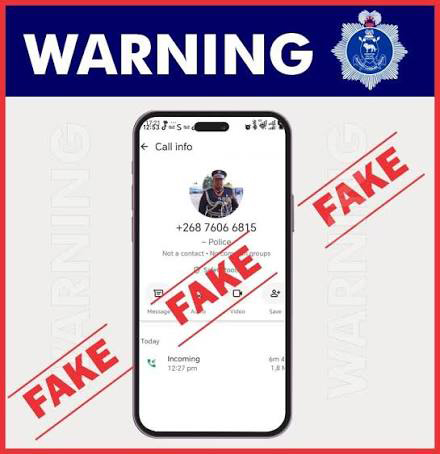
Scammers are becoming bolder. In 2025, REPS warned about criminals impersonating police officers, using fake police insignia and even caller identification tricks to appear legitimate.
More recently, REPS also warned about ‘hitman’ scams in which victims are falsely told that someone has hired a killer to murder them, followed by demands for money.
Red flag: Fear and urgency are powerful manipulation tools. Do not panic or pay. Verify the claim independently and report it.
THE GOLDEN RULE: STOP, CHECK, VERIFY
Before clicking a link, sending money or sharing information, pause.
Ask yourself: Do I know this person? Did I expect this message? Why am I being pressured to act immediately? Can I verify the information independently? Never share your PIN, OTP, password or card security details. Do not click suspicious links and do not allow embarrassment to stop you from reporting a scam.
Scammers only need one moment of trust. You need one moment of caution.


















Leave a comment