

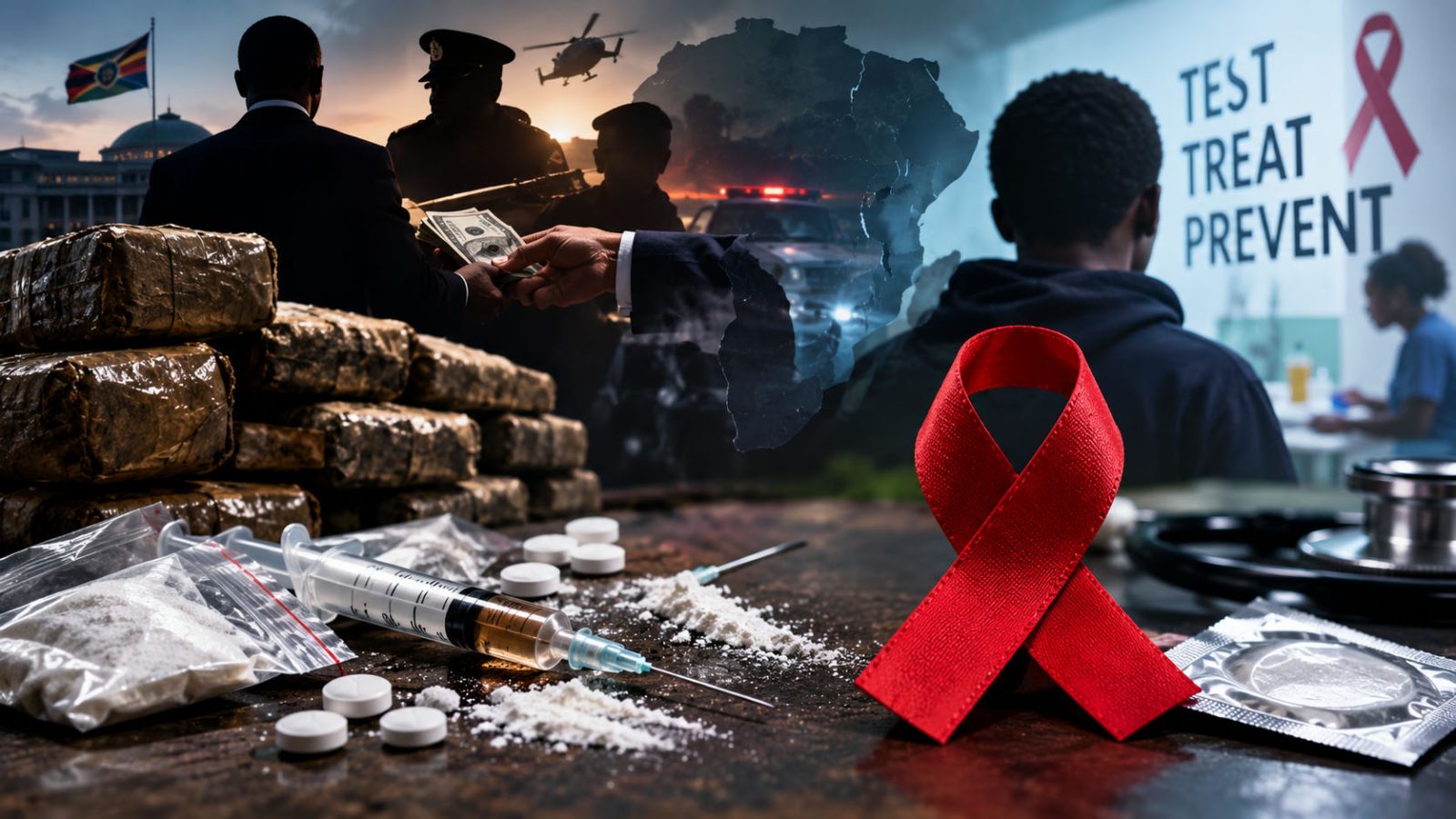
When I saw the CNN report that Fiji had declared a national HIV emergency, my first reaction was disbelief. How are we still talking about new HIV infections in 2026, let alone numbers so high that a country has had to declare a national emergency?
HIV is not some mysterious new disease that caught humanity unprepared. Few diseases have been taught about, campaigned against and discussed for as long as HIV and Aids. There have been countless awareness campaigns, government programmes, NGOs, community organisations, school lessons, condom distributions and medical advances. There are now medicines that can prevent HIV transmission and treatment that allows people living with the virus to live long lives.
Still, here we are. Fiji’s numbers are sobering. The country recorded 2 016 newly diagnosed HIV cases in 2025, up 27 per cent from 1 583 in 2024. Its government has now declared a national emergency, with estimates putting HIV prevalence at about one in every 60 adults, compared with one in 167 five years ago. The explanation, however, makes the story even more uncomfortable. Fiji’s outbreak is being fuelled heavily by injecting drug use. WHO reported earlier this year that 48 per cent of people starting HIV treatment in 2024 were people who inject drugs. UNAIDS has also reported that, among newly diagnosed people receiving treatment, about half had contracted HIV through sharing needles. So perhaps the question is not simply: How can people still be getting HIV? Maybe it is: What happens when an old epidemic collides with a new social crisis? That is what should concern us. For decades, much of the HIV response understandably concentrated on sexual transmission. People were told about condoms. They were encouraged to know their status. Communities were educated about how HIV is transmitted and how it is not transmitted. Pregnant women were tested. Treatment became increasingly available. The arrival of antiretroviral therapy transformed HIV from what was once regarded as a death sentence into a manageable chronic condition for those who can access and take treatment.
Still, epidemics change. Fiji’s experience shows that prevention cannot simply keep repeating yesterday’s message when today’s transmission is being driven by something else. The country declared an HIV outbreak in January 2025, but health authorities have faced difficulties introducing needle and syringe programmes. WHO has described unsafe injecting practices and gaps in access to harm reduction services as major factors in the outbreak.
That brings the conversation back to drugs.
We cannot discuss a drug-fuelled HIV outbreak as though the drugs simply appeared in communities by magic. Behind every packet, tablet, powder or needle is a supply chain. There are people producing, transporting, distributing and protecting an extremely lucrative illegal market.
And this is where corruption becomes a public-health issue. The ongoing Madlanga Commission in South Africa has offered disturbing testimony and allegations concerning criminality and the infiltration of law-enforcement structures. The commission has heard evidence relating to drug seizures and the disappearance of about 541kg of cocaine from a Hawks facility, while other testimony has concerned alleged links between police, organised crime and the drug trade. These are matters still subject to investigation and findings; allegations heard by a commission are not proof of guilt. But the lesson is difficult to miss: If criminal networks can penetrate institutions responsible for stopping them, the consequences do not end with drug offences. They spill into communities, families, hospitals; eventually they can spill into the statistics of an HIV epidemic.
Africa knows this story painfully well. There can hardly be a Swati family that has not known someone who died from HIV-related illness or whose life was touched by the epidemic. Eswatini’s own experience made HIV prevention and treatment a national priority because the human cost was impossible to ignore.
South Africa’s history also contains painful examples of how dangerous misinformation around HIV could be. Former Health Minister Manto Tshabalala-Msimang became associated with promoting nutrition and foods such as garlic, beetroot and African potato in discussions around HIV, while former Deputy President Jacob Zuma caused outrage in 2006 after telling a court he had showered after unprotected sex with an HIV-positive woman because he believed it would reduce his risk. He later apologised for having unprotected sex and said he should have acted more responsibly.
Those episodes belong to another era. Today, scientific knowledge about HIV is far clearer. Which makes Fiji’s situation more sobering, not less.
We cannot simply conclude that people have not been educated enough. Sometimes the problem is that the environment around people has changed faster than the response. Knowledge matters. Medicine matters. Education matters. So do policing, border controls, addiction services, mental-health support, treatment access, community organisations and honest institutions.
Fiji’s emergency cannot be viewed from Africa as something happening on a distant Pacific island. It is a warning about what happens when one public-health problem feeds another.
We spent decades learning how to fight HIV. The next challenge is making sure organised crime, drug markets, corruption and gaps in healthcare do not create the conditions for the virus to reclaim ground that humanity fought so hard to take.














Leave a comment