MANZINI – Matsapha Town Council has borrowed E31.7 million from Standard Bank Eswatini to rehabilitate 3.2km of key industrial roads as the town faces growing traffic pressure and an infrastructure backlog.
The long-term loan, secured in April 2025, financed the rehabilitation of King Mswati III Street and Matalatala Street, two major routes serving Matsapha’s industrial area.
According to Council’s 2025/26 Annual Report, the loan is repayable over 60 months at the Prime interest rate.
The borrowing increased Council’s total debt from E450 000 in March 2025 to E26.5 million by March 2026.
The road project went beyond resurfacing, with the works including drainage improvements, street furniture and pedestrian walkways, particularly along Matalatala Avenue.
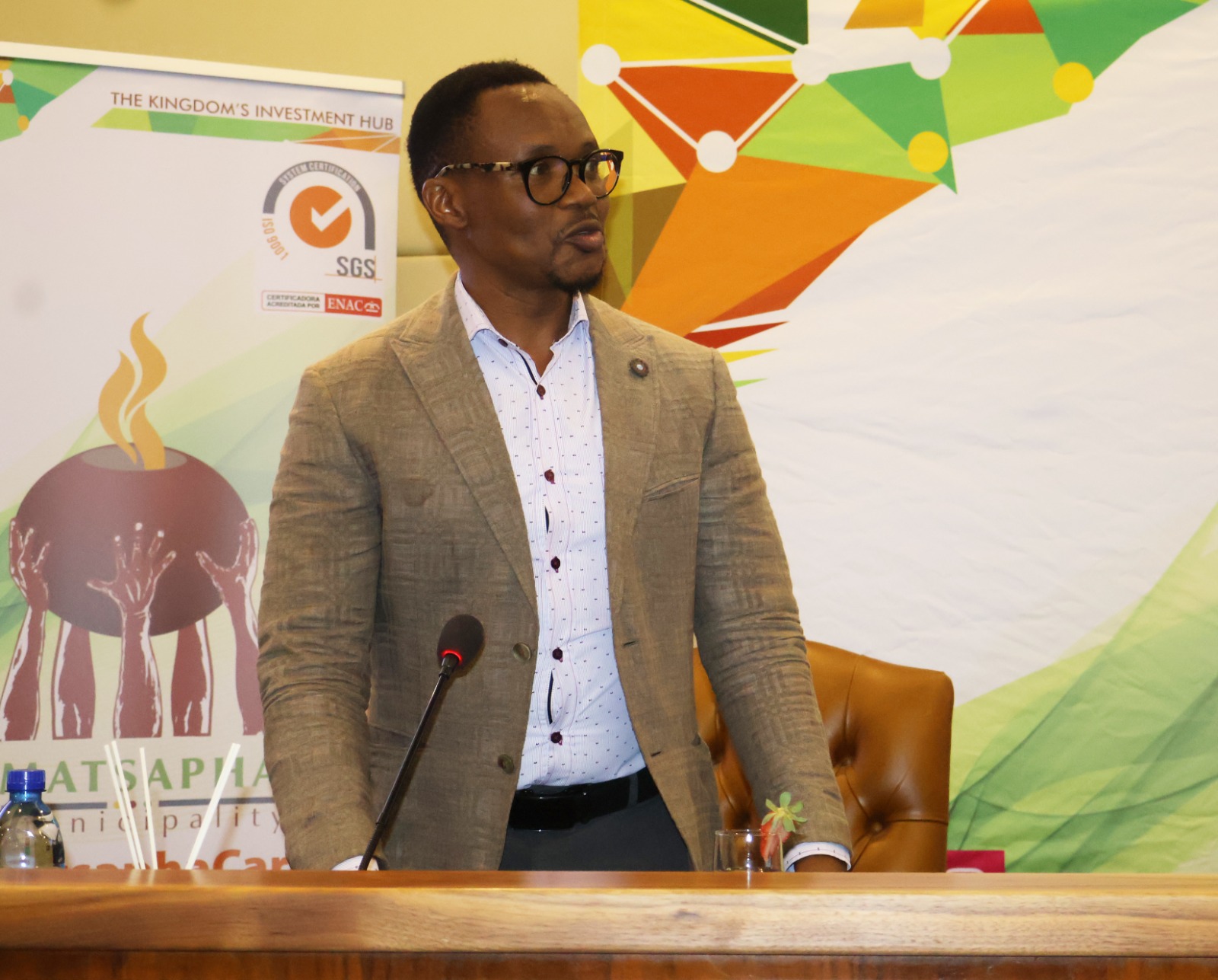
Chief Executive Officer (CEO) Sizwe Dlamini said infrastructure development and maintenance remained a key priority, with more resources being directed towards road rehabilitation and patching.
King Mswati III Street, formerly King Mswati III West Avenue, starts at the junction with Conco Street near the Conco premises, passes Smithco Building and ends at the railway crossing beyond Logico warehouses.
Matalatala Street, formerly 1st Avenue, begins at the junction with Lomawa Street, formerly Simunye Street, near the Eswatini Post Office.
The route passes Eswatini Wire, Cashbuild, the new Umbuluzi Valley, the Eswatini Electricity Company depot, AG Thomas premises and Eswatini Meat Industries before ending at the railway line.
The project also included rehabilitation of the Ludvonga and Matalatala Streets intersection near Eswatini Beverages.
According to the report, the rehabilitated roads were opened to all traffic in August 2025, almost a month ahead of the planned completion date.
At the time of reporting, the contractor was completing minor ancillary works, including road edges and landscaping.
The investment significantly increased the value of Council’s road infrastructure.
Additions to roads during the year amounted to E27.8 million, while a further E6 million was transferred from Work in Progress.
After depreciation of E7 million, the net book value of roads increased from E20.9 million to E47.7 million.
Roads now account for more than half of Council’s total property, plant and equipment, valued at E89.7 million.
Dlamini said the project was undertaken against a backdrop of growing traffic congestion and an infrastructure backlog.
He said Council continued engaging national government and other stakeholders to mobilise financial support and strategic partnerships.
“We continued to engage with national government and various key stakeholders with an aim to mobilise financial support and strategic partnerships, to address the traffic congestion and infrastructure backlog,” he said.
Dlamini said Council was optimistic that the engagements would help improve mobility in the town.
Matsapha has an 83km road network, meaning the rehabilitated 3.2km represents about four per cent of the total network.
The rehabilitated roads, however, are among the town’s key industrial routes and carry significant volumes of heavy trucks and logistics vehicles.
The pressure on the road network is reflected in Council’s maintenance expenditure.
During the financial year, Council spent E826 237 on road maintenance and signage, E412 575 on drainage maintenance and E461 000 on street-lighting maintenance.
A further E862 734 was spent on street-lighting electricity, while E273 248 went towards painting material and E242 863 towards traffic-light maintenance.
The road project forms part of Council’s broader plans to position Matsapha as a liveable and sustainable investment municipality.
Other capital commitments contained in the report include E421 845 for a Hazardous Waste Facility and E132 207 for ablution facilities under the Silent Park Project.
Council also committed E245 528 towards the construction of Silent Park ablution facilities.
Beyond roads, Council continued maintaining its refuse truck fleet and investing in information technology infrastructure aimed at improving data security and operational efficiency.
Dlamini said the infrastructure investment formed part of efforts to strengthen the municipality.
“We are building a stronger Matsapha through resilient infrastructure, responsive service delivery and strategic partnerships that translate our vision into meaningful progress for our people and our economy,” he said.