

Madam,
Have you ever asked yourself why a leader who demands results, challenges old ways of doing things and keeps people on their toes can sometimes attract criticism? Perhaps the answer lies in an uncomfortable truth about leadership: Productive leadership is not always comfortable leadership.
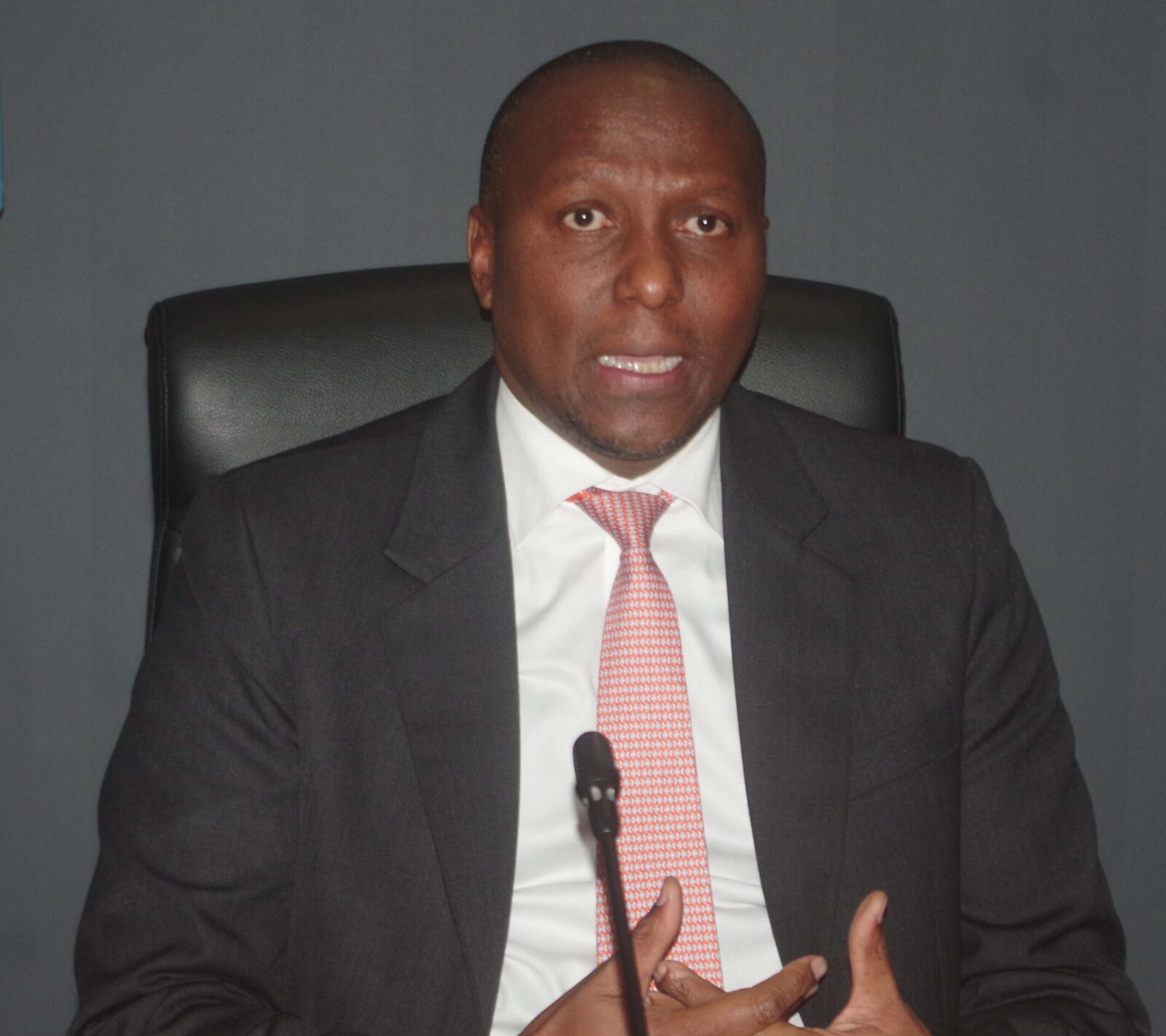
This is a question worth considering when looking at the leadership of Eswatini’s Prime Minister, Russell Mmiso Dlamini. Since his appointment as prime minister in November 2023, Dlamini has presented himself as a leader focused on performance, accountability, reform and getting government institutions to work more effectively.
He was appointed by His Majesty King Mswati III on November 3, 2023. His approach has increasingly been described as ‘disruptive leadership’. Importantly, this is not merely a label applied by commentators: Dlamini himself has embraced the description, arguing that outdated systems sometimes need to be challenged rather than protected simply because they have existed for a long time.
In September 2026, he specifically called for outdated government systems that were slowing the growth of the tourism sector to be disrupted. That approach naturally creates pressure. A leader who constantly asks: What have we achieved? What can we do better? Why are we still doing things this way? is likely to make some people uncomfortable.
Government departments, officials and institutions accustomed to established routines may find demands for greater efficiency and accountability challenging. But demanding performance is not necessarily about attacking people. It can also be about demanding that public institutions remember who they ultimately exist to serve: The people of Eswatini.
A leader shaped by experience
Dlamini did not enter the Prime Minister’s Office without a background in public administration and development. Before becoming prime minister, he served as the first Chief Executive Officer of the National Disaster Management Agency (NDMA), now the National Disaster Risk Management Authority. His professional profile records extensive experience in sustainable development, administration and organisational leadership.
During his time at the NDMA, he was involved in national responses to major challenges, including the 2015/16 drought, the COVID-19 emergency and Tropical Cyclone Eloise. That background helps explain why his leadership often places emphasis on planning, systems, preparedness, execution and measurable results.
A person who has spent years managing institutions and responding to national emergencies is likely to look at government differently from someone whose experience has been primarily political. For such a leader, problems are not simply things to debate indefinitely. They are problems that require a plan, resources, people and implementation.
Keeping people on their toes
One of the defining features of Dlamini’s leadership appears to be his insistence that government should not simply continue doing things because they have always been done that way. His recent comments about tourism illustrate this approach. He argued that the sector could not continue with ‘business as usual’ and called for outdated systems to be dismantled where they were preventing growth.
The same attitude has appeared in discussions about government budgeting. In March 2026, Dlamini told the House of Assembly that the country’s budget process was flawed and required reform to improve planning and service delivery. He also acknowledged the reality of limited resources and the difficult choices government faces when different ministries compete for finite funds. That is an important aspect of leadership: Recognising problems openly rather than pretending everything is perfect.
Accountability also means answering difficult questions
Perhaps one of the more revealing moments in the debate over Dlamini’s leadership style came when Parliament considered a motion questioning his approach to leadership. Rather than simply dismissing the matter, Dlamini provided responses to the issues raised and defended his understanding of ‘disruptive leadership’. Contemporary reporting noted that the parliamentary motion questioned matters including his leadership approach, Cabinet responsibility and its implications for service delivery.
Whatever one’s view of his leadership style, the episode demonstrates an important principle: A leader should be prepared to explain his decisions. Dlamini has subsequently called on Parliament to embrace constructive politics and focus on nation-building rather than allowing political disagreements to descend into personal conflict. Why does a productive leader attract criticism?
It would be too simplistic to say that everyone who criticises the prime minister simply dislikes productivity. Political criticism can come from legitimate differences over policy, priorities, methods or results. At the same time, it is also reasonable to ask whether change itself can create resistance. When a leader pushes institutions to perform differently, some people may prefer the predictability of the old system. Reform creates uncertainty. Accountability creates scrutiny.
Higher expectations create pressure. And pressure is precisely what leadership sometimes requires.
Dlamini has also publicly linked criticism of his administration to his anti-corruption efforts. In May 2026, he said he had faced criticism for intensifying the fight against corruption and described corruption as an obstacle to development and service delivery. That distinction matters. A healthy democracy and political system should allow citizens to question leaders, just as leaders should be able to challenge institutions and demand better performance.
Sometimes the person who keeps everyone on their toes is not necessarily trying to make their lives difficult. Sometimes he is trying to make sure that everyone remembers that there is work to be done.
And in government, where decisions affect an entire nation, the demand for better performance should never be treated as a trivial matter. The challenge now is for the administration to demonstrate that its disruptive approach can consistently translate into better governance, stronger institutions and tangible improvements in the lives of emaSwati. That, ultimately, is where leadership meets accountability.
Thabani Mathabela














Leave a comment