

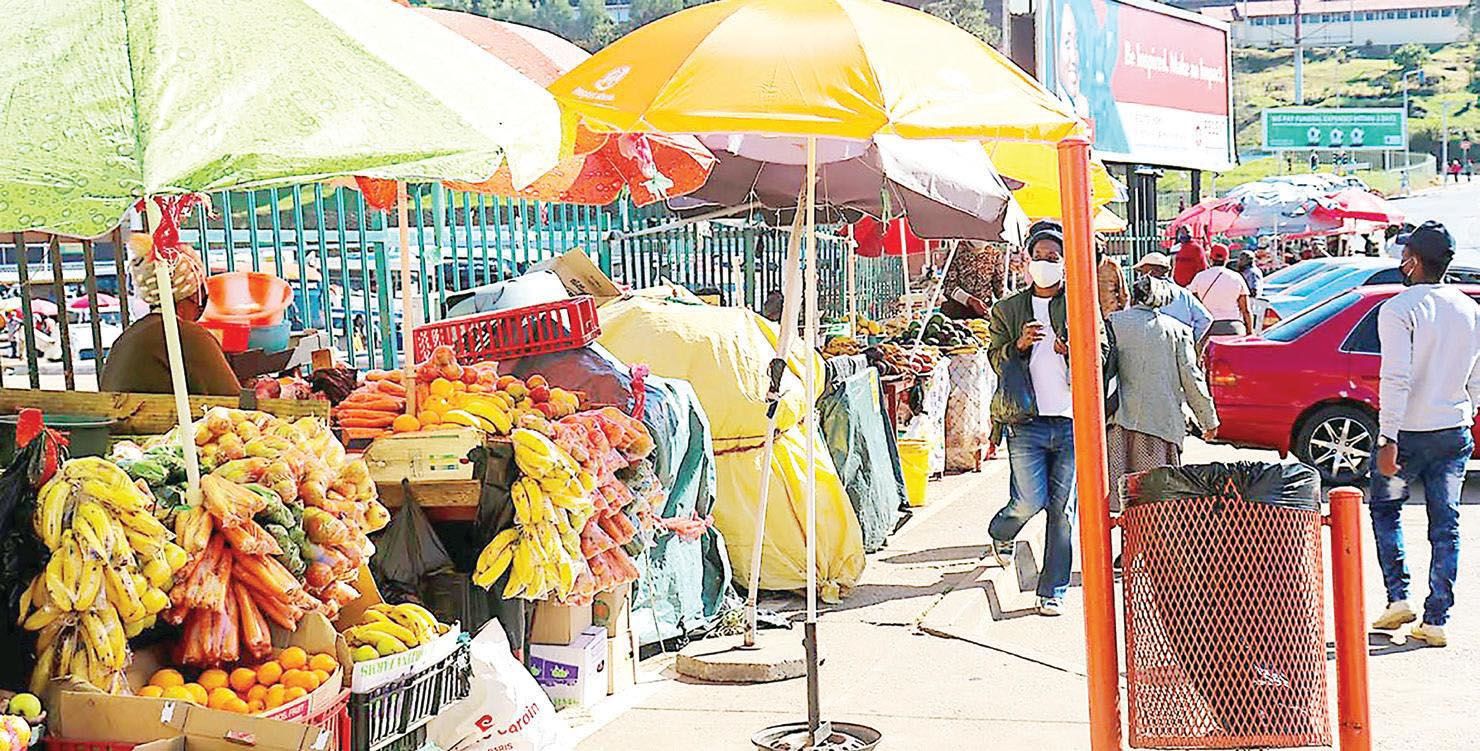
MBABANE – The African Development Bank says formalising Eswatini’s informal sector could broaden the tax base, improve productivity and expand access to finance without raising tax rates.
The informal sector contributes an estimated 38.4 per cent of Eswatini’s gross domestic product (GDP) and accounts for approximately 61.9 per cent of total employment, highlighting both its importance as a source of livelihoods and the structural challenges it presents to economic development.
This is according to the African Development Bank’s (AfDB) Eswatini Country Report 2026, which identifies the formalisation of informal economic activity as an important opportunity to strengthen domestic resource mobilisation, financial inclusion, productivity and long-term fiscal sustainability.
The report notes that informality is particularly prevalent among young people, women and rural populations, reflecting limited opportunities in the formal economy and the dominance of small-scale, low-productivity enterprises.
While the informal economy provides livelihoods for a significant proportion of households, the AfDB says its scale also constrains the country’s ability to mobilise domestic revenue and finance development priorities.
From a fiscal perspective, the report says the large size of the informal economy limits the number of businesses and workers captured within the formal tax system.
Eswatini’s domestic tax revenue stands at approximately 15.8 per cent of GDP, which the AfDB attributes in part to a narrow tax base, substantial tax expenditures and weaknesses in enforcement capacity.
With a significant share of economic activity taking place outside the formal tax net, revenue growth is constrained. This limits government’s capacity to finance development priorities without increasing tax rates.
The challenge is further compounded by the number and scale of tax exemptions and incentives, which the report says further erode the revenue base.
The AfDB argues that bringing even a portion of the 61.9 per cent of workers engaged in informal employment into the formal economy could substantially increase tax revenues without necessarily increasing tax rates.
However, the report cautions that formalisation should not simply be approached through enforcement.
Instead, it recommends a gradual and incentive-based approach that reduces the costs of entering the formal economy while providing tangible benefits to businesses and workers that formalise.
Beyond taxation, the AfDB identifies informality as a constraint on financial intermediation and productivity.
A large proportion of informal businesses operate outside formal financial systems, limiting their access to credit, insurance and savings products.
Many informal enterprises are also absent from formal credit registers and lack verifiable financial records or collateral. This makes it difficult for financial institutions to assess their creditworthiness and provide financing for expansion.
As a result, businesses remain small and have limited capacity to invest in technology, increase production or integrate into formal value chains.
The dominance of cash-based transactions also reduces financial transparency and limits the development of credit markets.
The report says registered enterprises, by contrast, are better positioned to access finance, markets and business support services, potentially allowing them to expand, improve productivity and create employment.
Formalisation could, therefore, support structural transformation by enabling small businesses to move from subsistence and low-productivity activities towards more productive commercial operations.














Leave a comment