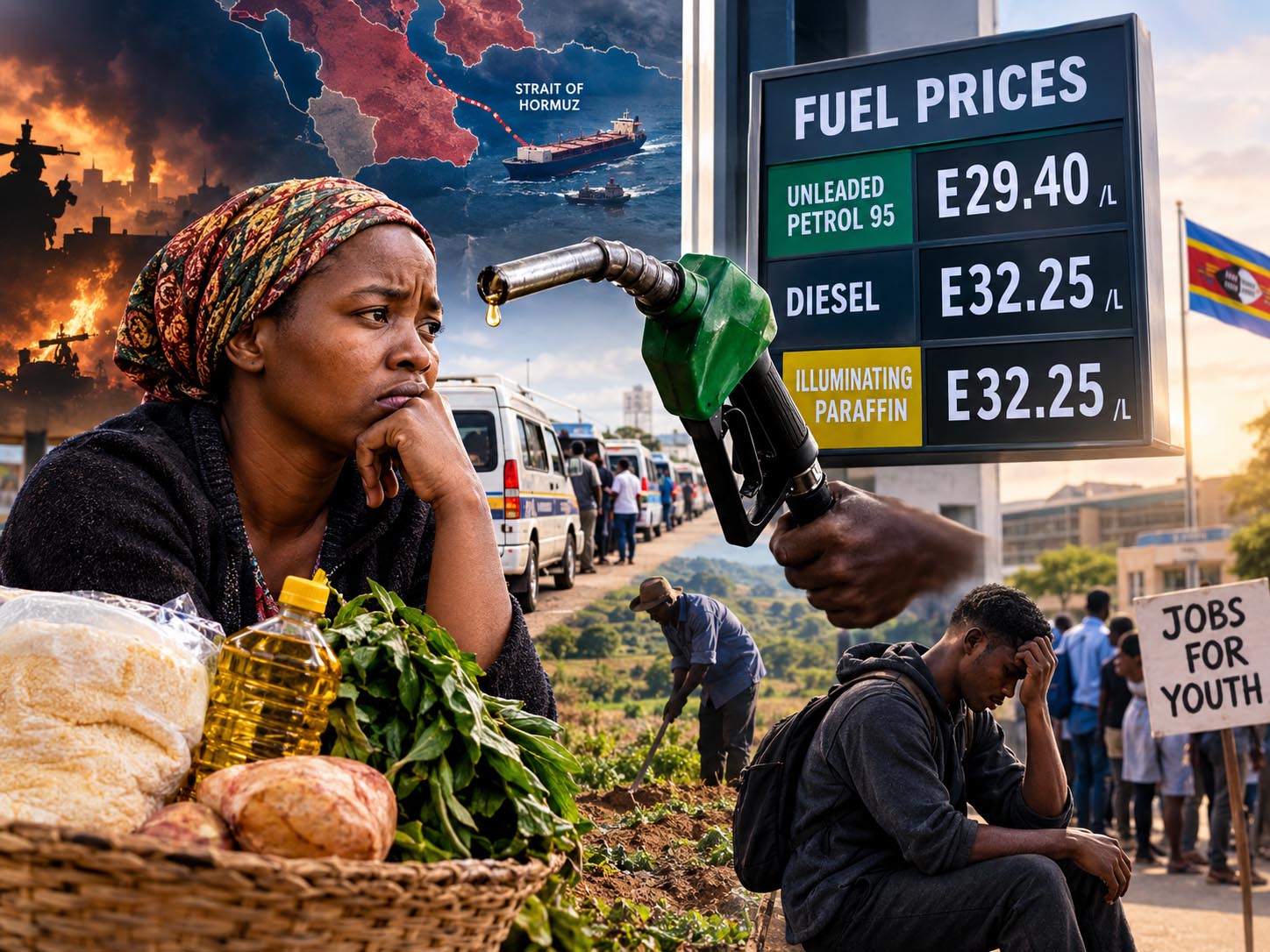
Itis disheartening that wars that Eswatini and other governments in Africa and worldwide have nothing to do with, their impact is felt beyond the combat zone.
In an unexpected move, the Ministry of Natural Resources and Energy announced a massive fuel price increase. This announcement has indeed sent shockwaves through the Kingdom of Eswatini, threatening to push an already vulnerable populace deeper into poverty, as well as further deepen inequality. Government announced an unprecedented increase of E3.43 per litre for petrol, diesel and illuminating paraffin. This adjustment brings Unleaded Petrol 95 to a record high of E29.40 per litre and Diesel to E32.25 per litre.
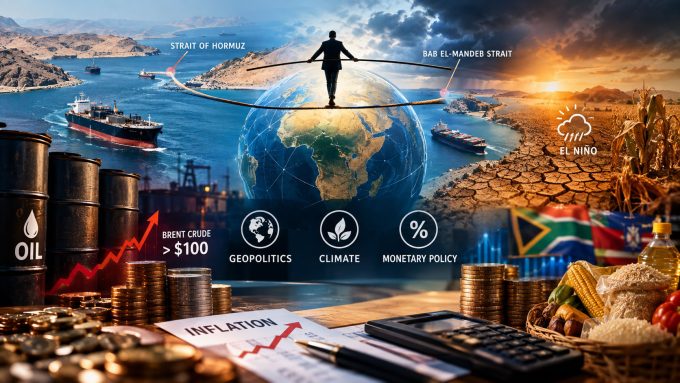
Government has defended the necessity of the hike, citing severe global supply shocks, geopolitical tensions in the Middle East and shipping risks through the Strait of Hormuz. Officials noted that the administration spent over E613 million from the Strategic Oil Reserve Fund to absorb early global shocks, but the compounding external market pressures made this massive retail increase unavoidable. Long-term projects, such as the construction of the Phuzumoya Strategic Oil Reserve, aim to establish energy security, but these initiatives provide no immediate relief to families currently struggling to afford illuminating paraffin for basic cooking and lighting. We appreciate government’s effort to cushion consumers and regret that resources are exhausted, which leaves struggling emaSwati, including small businesses, worse off.
For a nation where nearly half the population lives beneath the poverty line and where one in three citizens is unemployed, this dramatic surge represents far more than an administrative adjustment; it is an economic catastrophe for the majority of emaSwati who are struggling to make ends meet.
The immediate consequence of the hike is the compounding strain on everyday costs. In Eswatini, where public transport and commuter taxis are essential lifelines for rural and urban labourers alike, fare increases are inevitable. For workers earning low wages, transport costs will absorb an even greater share of their disposable income, forcing agonising choices between commuting to work or buying food. Furthermore, the steep rise in diesel directly inflates the overhead operations of agricultural production and wholesale logistics.
For smallholder farmers whose resources for farming are already overstretched, the question in farmers’ minds is: Will farming costs be within reach? This is further exacerbated by the early warning that the worst El Niño phenomenon, which often triggers drought, is anticipated during this planting season. In a country heavily reliant on imported goods, retailers and food chains are expected to pass these freight costs directly to consumers, triggering a devastating wave of food price inflation. Compounding this crisis is the reality that the spike in fuel arrives when the job market is at its lowest ebb as well. Youth unemployment hovers at catastrophic levels of about 56 per cent. We are all aware that the small and medium-sized enterprises (SMEs) are struggling to keep their doors open, as government cash flow problems have affected small businesses that have already delivered services to government but have not been paid. Industry groups like Business Eswatini have previously warned that skyrocketing operational overheads will force business closures and redundancies, exacerbating the unemployment crisis. In fact, when businesses face narrower margins, they restrict hiring and freeze wage adjustments, shutting down any path of economic mobility for thousands of young people entering the labour market annually. Speaking with an NGO executive director on the petrol increase, he stated: “NGOs will be forced to park their vehicles as the exponential increase was never budgeted for.”
This will certainly affect project implementation and those who will bear the brunt are the poor and vulnerable groups in Eswatini. With a government already struggling to deliver services due to cash flow challenges, the impact on services, including policing, health delivery, among others, will be severely strained. As fuel prices continue to climb, the gap between the cost of living and the earning power of ordinary emaSwati widens to an unsustainable margin. Without targeted social safety nets or immediate structural interventions to stabilise the cost of consumer staples, this massive energy shock risks permanently standardising deeper poverty across the nation. This situation is untenable and a recipe for tensions between the citizens and government.
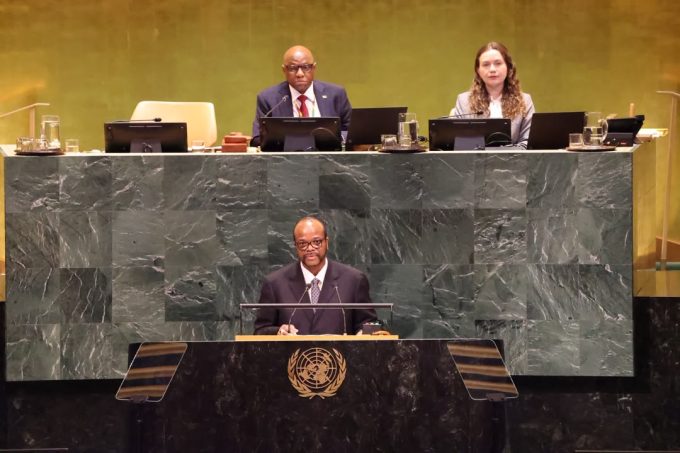
It is disheartening that Africa is endowed with resources, including oil, but is also equally affected by the crisis brought about by the Strait of Hormuz and the other pipeline affected by the Houthi–Saudi Arabia conflict. It is also disheartening that the United Nations General Assembly has not resulted in a durable solution to this global crisis.
There was hope when we heard the United States of America and Iran held some talks and that Iran had also presented a plan to the US Government that would pave the way for the Strait of Hormuz to open.