

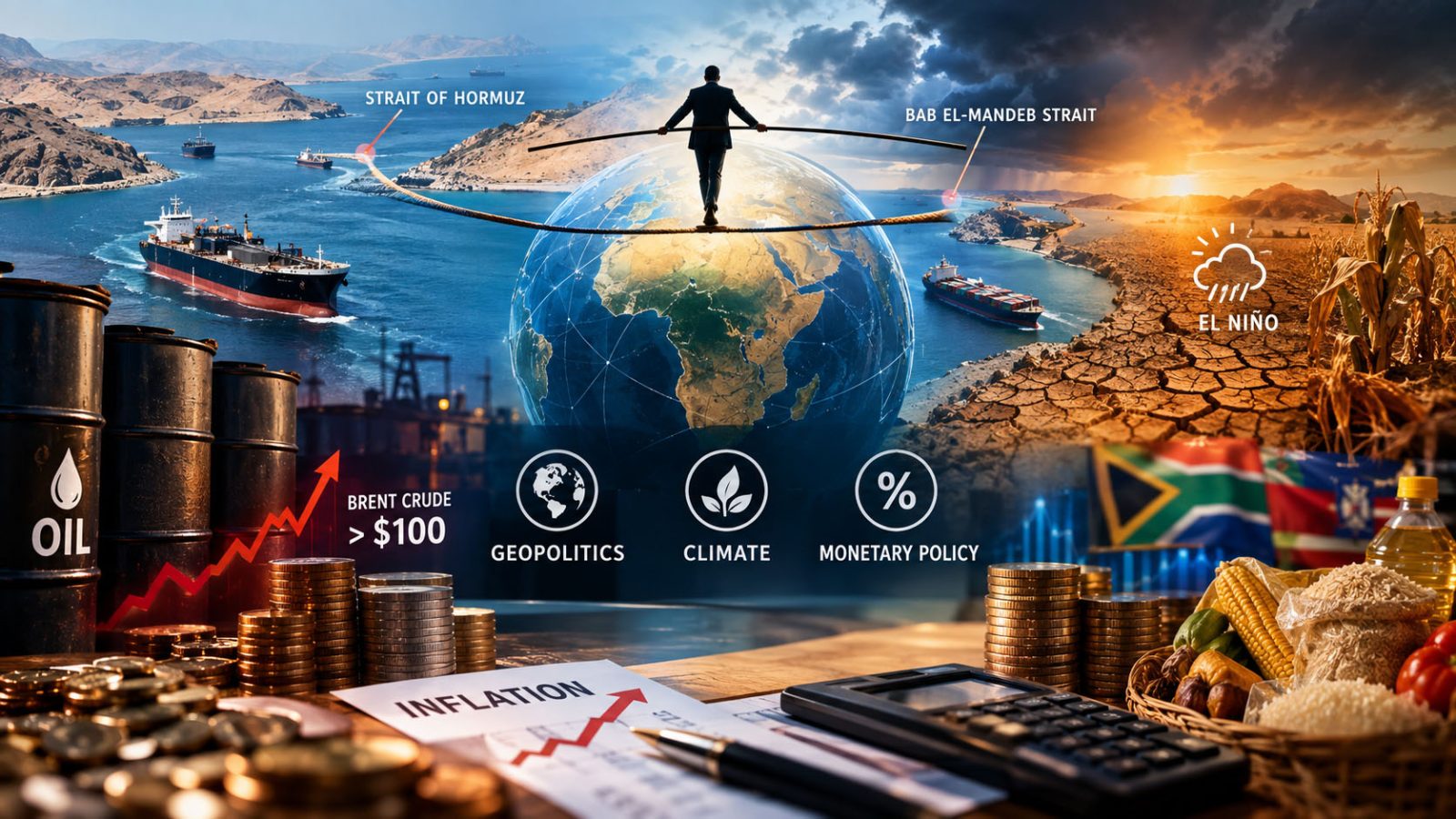
The global economy is once again hostage to geography and climate. The Strait of Hormuz and the Bab el-Mandab Strait, two of the world’s most strategic maritime chokepoints, have become flashpoints of geopolitical tension.
The Strait of Hormuz, through which nearly onefifth of global oil supply passes, has long been a lever of geopolitical power. Iran’s renewed brinkmanship and the US rejecting Iran’s proposals and threatening passage restrictions has sent Brent crude soaring past US$100 per barrel for the first time since the resurgence of hostilities in the Middle East.
Each spike in oil prices reverberates through transport costs, fertiliser imports and food inflation. Meanwhile, the Bab elMandab Strait, connecting the Red Sea to the Gulf of Aden, has become increasingly vulnerable to regional conflict and piracy. Disruptions here threaten shipping routes critical for African trade, compounding the risks already emanating from Hormuz. For small economies like the kingdom’s, dependent on imported fuel and food, these maritime tensions translate directly into higher consumer prices and widening trade deficits.
El Niño effect
Layered atop geopolitical shocks is the predicted El Niño weather pattern. Historically, El Niño brings drought to Southern Africa, reducing maize yields and stressing water supplies. Lower agricultural output drives food inflation, while governments face pressure to import grain at higher global prices.
The combination of oildriven transport costs and climateinduced food shortages is a recipe for inflationary acceleration. For households, this means higher grocery bills and tighter budgets. For governments, it means ballooning subsidy demands and fiscal strain. For businesses, it means squeezed margins and uncertain supply chains. El Niño, in short, magnifies the inflationary impact of Middle Eastern volatility.
Monetary policy determinants
Domestic inflation remains below three per cent, but South Africa’s inflation trajectory is the decisive determinant of local monetary policy due to the Common Monetary Area peg. South Africa’s inflation outlook is shaped by energy costs from Brent crude spikes, food inflation driven by El Niñoinduced drought and higher fertiliser prices, currency volatility as the Rand weakens against the US Dollar, wage pressures from ongoing labour negotiations and global supply chain disruptions through Hormuz and Bab elMandab. Projections suggest South Africa’s inflation could hover between four and five per cent in the coming months, with upside risks if hostilities persist and El Niño intensifies. This places the South African Reserve Bank under pressure to tighten policy further, compelling Eswatini’s Central Bank to follow suit.
Domestic monetary policy direction
Given these dynamics, one more interest rate hike in Eswatini before yearend appears likely. South Africa, facing sharper inflationary pressures, may implement two hikes if volatility continues by the first quarter of 2027. These moves, though painful, are necessary to anchor inflation expectations and preserve currency stability. Yet they also carry costs: Higher borrowing expenses, slower investment and tighter household budgets. The monetary policy environment is, therefore, caught in a delicate balancing act, attempting to contain inflation without strangling growth.
The road ahead for stakeholders
For businesses, rising input costs will squeeze margins, particularly in transportintensive sectors. Firms must hedge against currency volatility, diversify suppliers and invest in efficiency. Renewable energy adoption could reduce exposure to oil shocks, but such investments require capital at a time when borrowing costs are rising. For trade, higher shipping costs and disrupted routes will challenge regional flows. Importers face rising bills, while exporters grapple with uncertain demand.
Policymakers should streamline customs processes and invest in logistics infrastructure to cushion the blow. For government, fiscal authorities confront rising debt service costs and mounting subsidy demands.
The temptation to borrow more will grow, but fiscal prudence is essential. Governments must strengthen revenue collection, reprioritise spending and avoid populist measures that undermine stability. For households, consumers will bear the brunt of higher food and fuel prices. Rising interest rates will increase debt servicing costs, tightening household budgets. Financial literacy campaigns and targeted subsidies for vulnerable groups will be critical to cushion the impact.
Preparing for the times ahead
Resilience requires foresight and cooperation. Businesses should embrace costcutting innovations and explore renewable energy alternatives. Trade authorities must reduce nontariff barriers and strengthen regional integration.
Governments should pursue fiscal consolidation, enhance policy credibility and invest in climate resilience. Households must prioritise savings, reduce nonessential spending and manage debt prudently. Collectively, adaptation is the only path forward. The storm cannot be avoided, but it can be navigated.
The convergence of geopolitical conflict and climate disruption has created a perfect storm for inflation. The Strait of Hormuz and Bab elMandab threaten oil and trade flows, while El Niño jeopardises food security. For Eswatini and South Africa, the consequences are immediate: Inflationary pressures, tighter monetary policy and constrained fiscal space.
Businesses face rising costs, trade flows are disrupted, governments must balance fiscal discipline with social support, and households struggle with higher prices and borrowing costs. The path forward demands resilience, anchoring inflation expectations through rate hikes, strengthening fiscal buffers and investing in climate adaptation. Volatility is the new normal. The challenge is not to wish it away but to prepare for it. For policymakers, businesses and households alike, the imperative is clear: Adapt, prepare and endure.

















Leave a comment