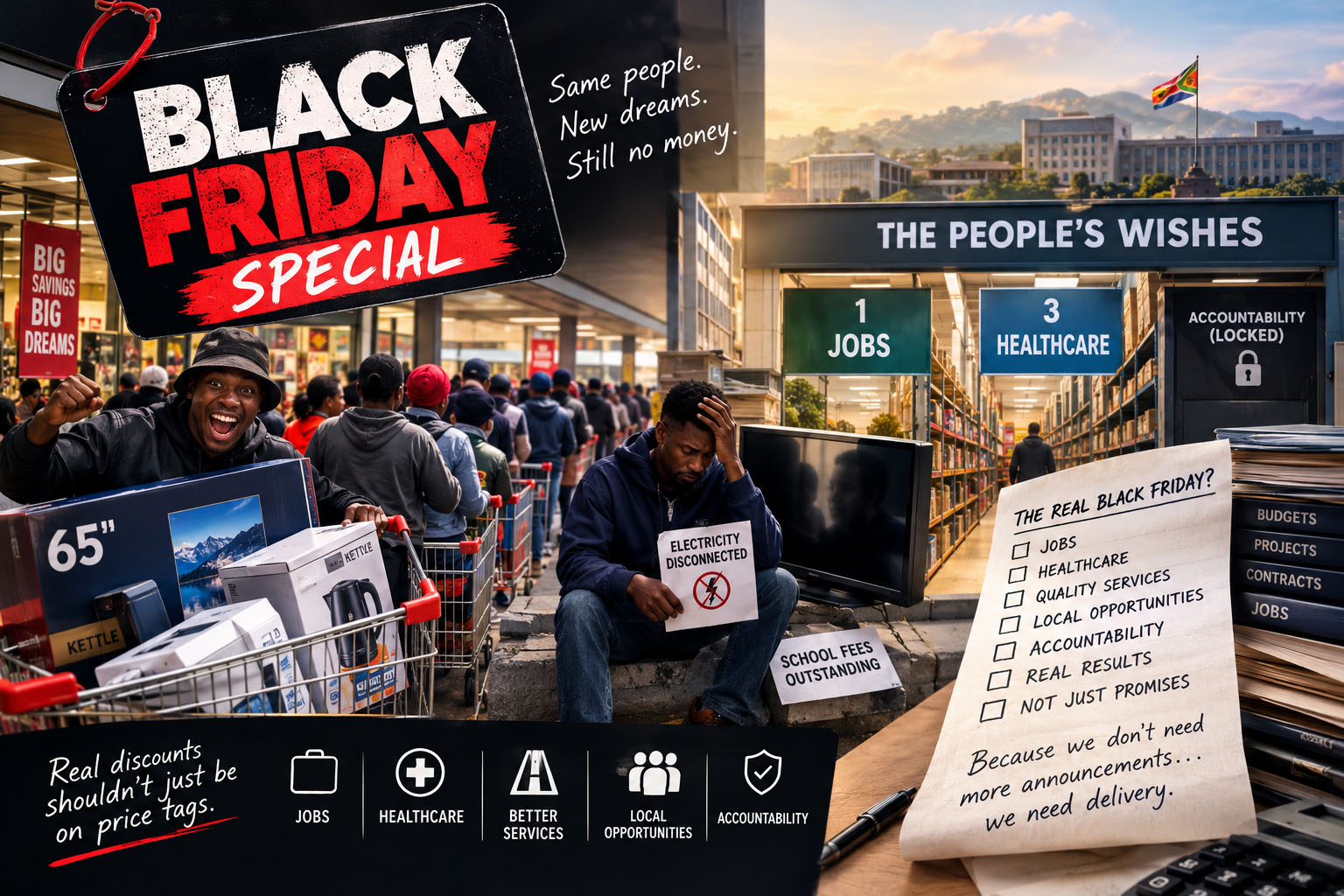
Every November, madness visits us: Black Friday!
For 11 months, people survive on borrowed E50, prayer and creativity that turns one chicken into three meals. Then November arrives and everybody becomes a millionaire.
A man who has not saved E500 since the last election wakes at 4am to buy a 65-inch television. School fees are outstanding; electricity is disconnected. He will watch nothing; the electricity is disconnected. He can admire his reflection. That is Black Friday; you do not need money, only confidence.
Some retailers raise prices in October, slash them in November and customers celebrate saving money they never had. You enter needing a kettle and leave with a television and a debt plan that will outlive your relationship.
“Instalments?” asks the cashier. “Of course!” Even poverty is on a payment plan.
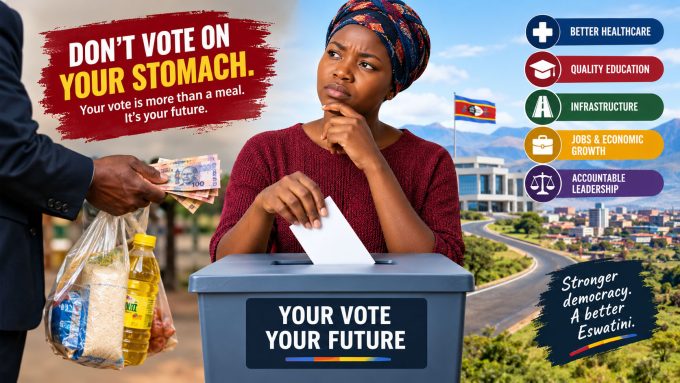
If emaSwati queue before sunrise for appliances, why not a national Black Friday for jobs? “Unemployment clearance sale! Every graduate gets work; every politician explains last year’s promises!”
The 2023 Sibaya submissions should be a public agenda against which progress is measured, not documents left to impress dust. The warehouse marked ‘The People’s Wishes’ has jobs in aisle one, healthcare in aisle three and accountability behind a locked door; “Management will advise.”
A graduate asks for work. “Experience?” “I just graduated.” “Then we cannot employ you.” “How do I gain experience?” “Find employment first.”
Soon he has 15 years’ experience in unemployment and qualifies as a joblessness consultant, if only he had five years’ consulting experience.
Public spending deserves the discipline families use when money runs short; check receipts, question costs and ask what could be done better. Projects must deliver quality, public benefit and jobs. Payments to foreign companies must provide value; local opportunities cannot be an afterthought.
Money and profits leave the country, but debt knows where to find us. Debt has the best GPS in Eswatini. We borrow billions, yet asking whether spending creates local jobs becomes a complicated debate. Money needs a consultant; the graduate asks, “When do I start work?” Nobody has translated that into a feasibility study.
We need roads, hospitals and schools; but development should not give concrete a better life than the people who paid for it.
A family has no money for its seven-colour meal. father points to a new building. “We may have no supper but look at that!”
“Can we eat it?” asks the youngest. “No.” “Can father work there?” “We await opportunities.” The child asks: “Did we build that for people who have food?”
Local firms and workers must benefit. Otherwise, citizens hold the repayment schedule while buildings and debt look beautiful in the annual report.
I have watched the High Court Roll for 36 months, hoping to see a case on the people behind the collapse of public health. Three years! That is not a delay; it is a long-term relationship. I am attached to the empty space where it should be. Its absence proves neither wrongdoing nor inactivity. The public can ask what remains outstanding. Politicians remember your constituency at election time. Ask about an unresolved promise and everybody develops amnesia. Hospitals may struggle, but the campaign machine is healthy: Transport, fuel, T-shirts and sound equipment. If promises became medicine, hospitals would be pharmacies.
A patient asks for medication. “Out of stock,” says the nurse. A campaign vehicle passes. “Can you prescribe whatever that vehicle is running on?”
“Sorry. That substance is only available during election season.”
Remember bobhabuli? What has been established about the publicly discussed corruption allegations? What action followed? Allegations are not convictions and suspicion is not proof. But citizens deserve answers.
Prince Simelane’s assertion that corruption will persist until Jesus Christ returns comes to mind. Heaven may need an investigations desk.
And yes, budget season has arrived. The annual blueprint will promise jobs, healthcare, services and growth. The speech arrives dressed like a billionaire; impressive figures and confident projections. Then implementation begins and expectations acquire invisible terms and conditions. A budget speech is a Black Friday advert; affordable until the till. Government says everything is possible until you ask when. The citizen is always at the till. It starts to feel like a stokvel treasurer.
You know the one who loses everybody’s money in December. In January, he returns with a new notebook, fresh suit and recovery PowerPoint. At election time, he promises the money back, with interest.
One member asks: “Before we contribute again, what happened to last year’s money?” “That is a negative question,” he replies. “We are discussing the future.” Soon members argue about who should contribute first. The treasurer needs not take the money twice. He only needs to persuade them to hand it over twice. Let November bring a clearance sale; jobs, healthcare, services, local opportunities and accountability. No artificial discounts or inflated promises. If government cannot display results, display the outstanding explanations. The tragedy is being asked to celebrate announcements about things we are still waiting for. For once, I’m planning for Black Friday from government. May the discounts be genuine and receipts accurate. A fresh notebook is not an audit. The costliest bargains are those we keep paying for without ever receiving.