
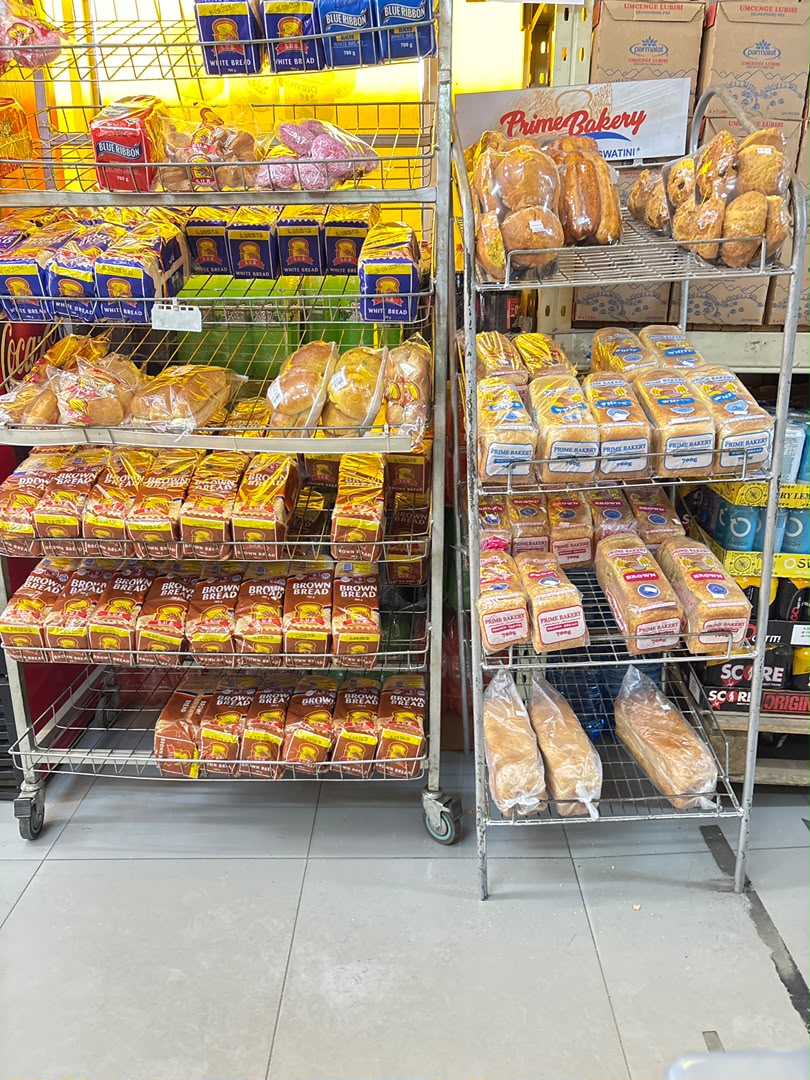
MBABANE – Government has formally gazetted a 4.23 per cent increase in regulated bread prices, confirming higher maximum prices for loaves of different sizes.
The gazette follows Cabinet’s approval of the adjustment, which was reported by the Times of Eswatini on September 23, 2026.
Under the revised price schedule, the maximum retail price of an 800g white loaf rises from E17.90 to E18.66, while that of an 800g brown loaf increases from E15.60 to E16.26.
The price of a 700g white loaf rises from E16.36 to E17.05, while the maximum retail price of a similar-sized brown loaf increases from E14.64 to E15.26.
The increase was requested by the Eswatini Bakers Association, which cited rising production and operational costs, including higher fuel and transportation expenses.
When the adjustment was announced, the Ministry of Commerce, Industry and Trade said the request had been assessed against changes in the costs of key inputs used in bread production.
The increase is being implemented under Section 5(1) of the Price Control Order of 1973, which provides for the regulation of prices.
The Maximum Wholesale and Retail Prices of Bread Notice 2026 (under Section 5) states that the Minister for Commerce, Industry and Trade, Manqoba Khumalo, in exercise of the powers conferred by Section 5 of the Price Control Order of 1973 (Order No. 25 of 1973), revoked Legal Notice No. 87 of 2025, which covered the maximum wholesale and retail prices of bread.
The 4.23 per cent adjustment came 11 months after the previous bread price adjustment, which saw prices increase by seven per cent on November 1, 2025.
That increase pushed the maximum retail price of an 800g white loaf from E16.73 to E17.90, while that of an 800g brown loaf rose from E14.58 to E15.60. The Eswatini Bakers Association was also reported to have argued that the cost of key inputs used to produce a standard 700g loaf had increased significantly between November 2025 and June 2026.
The association reportedly attributed much of the pressure to rising fuel prices, which had increased transportation and other production costs, as well as economic pressures threatening the sustainability of local bakeries. Bread remains a necessity in households, and it was submitted that the viability of bakeries was important to ensuring continued supplies and protecting jobs in the sector.
The previous seven per cent increase was reported by the Times of Eswatini in October 2025. It followed a 20.76 per cent price increase effected in July 2022.
The new bread price increase is set at 4.23 per cent.