

MBABANE – Judge Titus Mlangeni has condemned the ease with which former Deputy Sheriff Vusi Charles Mncina shot five defenceless women, four of whom died.
The judge made the remarks when sentencing Mncina to 124 years in prison yesterday for murdering four women and attempting to murder a fifth at Goje Township, Ezulwini, on October 28, 2023.
In his judgment on sentence, the judge observed that Mncina had been angered by two men who attended the party but did not lift a finger against them until they left in peace.
However, the judge said it was easy for Mncina to pull the trigger on five unarmed and defenceless women who cried for mercy until they could cry no more.
“While all the aspects of the triad do matter, it is apparent that more emphasis must now be placed on deterrence, especially general deterrence. Sans that (without that), victory against violent crime will remain a mirage, a forlorn hope,” Judge Mlangeni stated.
The judge said the case was not an ordinary murder matter but one that had inevitably rattled the emotions of the entire country, not only because of the number of victims who lost their lives but also the circumstances surrounding the deaths and near-fatal injury.
He said the enormity of the case made the danger of sentencing in anger real, adding that he had consciously avoided such an approach.
Instead, he embraced the words of the late former Chief Justice Bheki Maphalala, who had cautioned judicial officers against approaching punishment in anger or striving for severity.
The judge quoted the former chief justice as saying that a judicial officer should balance the crime, the criminal and the interests of society, while remaining firm where necessary and demonstrating humane and compassionate understanding.
“The above quotation is so concise it defies paraphrasing. It tells the whole story about sentencing, without any adulteration,” Judge Mlangeni said.
The judge noted that Mncina was a first offender but said this could hardly count in his favour under the special circumstances of the case.
He observed that, in his first brush with the law, Mncina had committed five serious offences in one transaction.
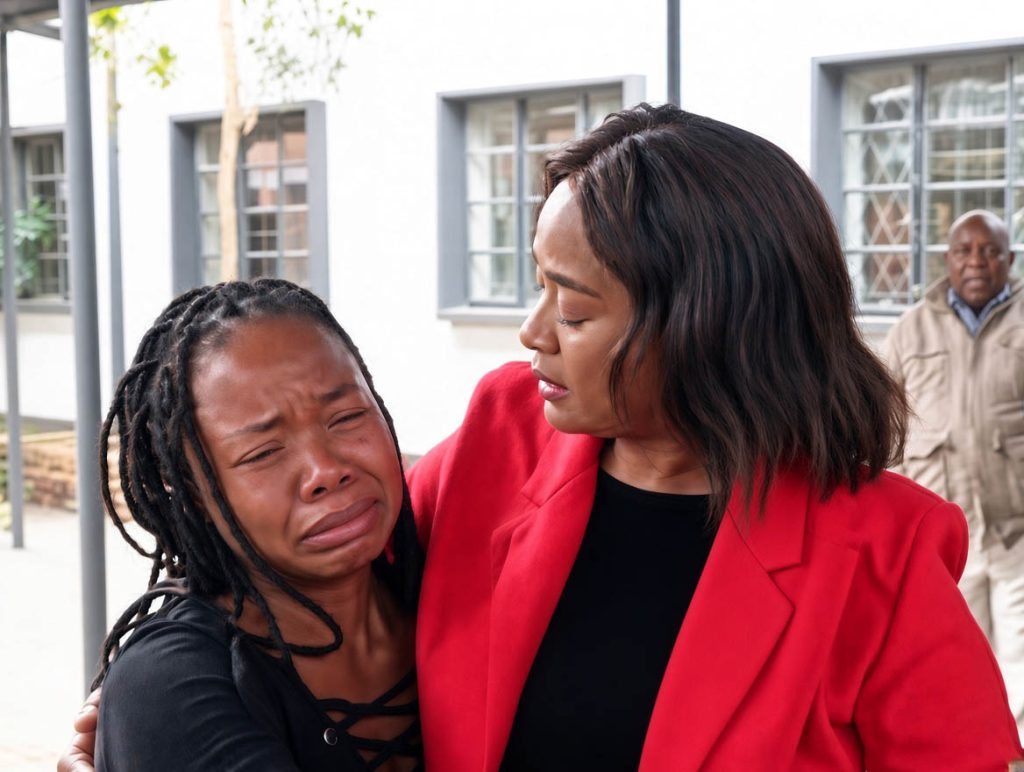
According to the judgment, the shooting permanently scarred the families of the deceased and society at large. The judge said the killing of a parent robbed children of that parent’s presence, guidance and love, and could also deprive them of a source of livelihood.
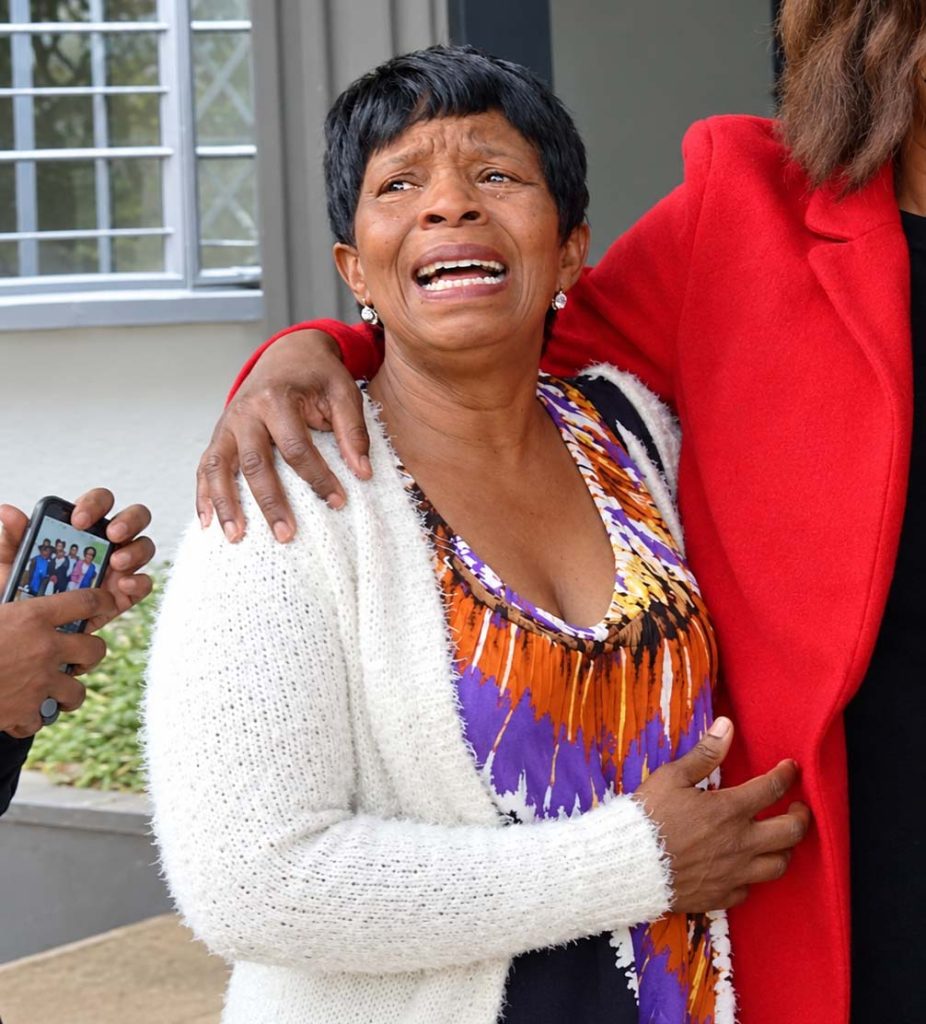
He described the incident as a stand-alone example of extreme callousness, in which four lives were taken in one incident, three of them belonging to the same family.
“In my view, no words can adequately describe the emotional abyss into which that particular family was thrown,” he stated.
Judge Mlangeni further said the offences occurred against the backdrop of persistent violent crime in the country, particularly murder.
He observed that the value of life was being significantly diminished by violent criminals who killed without needing a sound reason and did so in homes, at social gatherings and elsewhere.
The judge also highlighted the gender-based violence dimension of the case, noting that the women were unarmed and defenceless.
He said Mncina’s personal circumstances, including his marriage and minor children attending school, paled in comparison with the seriousness of the offences.
In considering the interests of society, Judge Mlangeni described Mncina as a palpably dangerous person who had failed to control his anger when it mattered most.
He said Mncina did not believe in walking away from a situation that caused him humiliation, despite having received advice to leave and allow himself time to cool down.
The judge noted that Mncina had acknowledged that three of the deceased women – Nonhlanhla Thwala, Lungile Shongwe and Fikile Shongwe – had done nothing to deserve what happened to them.
The same applied to Thuli Mkhwanazi, the only survivor of the shooting.
“A person such as this convict has to be kept away from society,” the judge stated.
He said society was entitled to peaceful coexistence and that the law had to intervene when an individual became a threat to others.
The judge also emphasised the need for deterrence where criminal conduct involved the use of a firearm resulting in multiple deaths.
In determining the appropriate punishment, Judge Mlangeni considered recent murder sentences of 40 and 50 years in individual cases.
He said mechanically calculating a cumulative sentence by applying those terms to Mncina’s five offences could result in an astounding total that might induce a sense of shock.

For that reason, he deliberately avoided mathematical extrapolation but said there was a need to send a clear message to Mncina and potential offenders that society had no place for violent crime.
The judge said he had considered whether the sentences should run concurrently or consecutively, as urged by the defence.
He observed that concurrent sentences primarily served the interests of the offender, potentially leaving society and those directly affected by the offences to deal with their losses.
To illustrate the difficulty, he referred to a hypothetical case of a bomber who killed 100 innocent people in a shopping mall, explaining that concurrent sentences could effectively account for only one life and produce a sense of injustice.
The judge said Section 300 of the Criminal Procedure and Evidence Act of 1938 gave courts discretion to order sentences to run concurrently or consecutively.
He exercised that discretion in favour of consecutive sentences, citing the severity of the offences individually and collectively, the killing of three members of the same family, Mncina’s disregard for their pleas for mercy, his failure to assist them and his use of a firearm against vulnerable, defenceless women.
Mncina was sentenced to 14 years in prison without an option of a fine for the attempted murder of Mkhwanazi.
He received 29 years without an option of a fine for the murder of Nonhlanhla Thwala, another 29 years for the murder of Lungile Shongwe and a further 29 years for the murder of Fikile Shongwe.
For the murder of his girlfriend, Cynthia Khulile Shongwe, he was sentenced to 23 years in prison without an option of a fine.
The sentences total 124 years and are to run from the date of his arrest, October 28, 2023.
During the trial, the court heard that the women had gathered in a small pantry at Cynthia’s home after a party when Mncina opened fire.
Mkhwanazi, the only survivor and eyewitness, testified that the women pleaded for mercy as Mncina continued shooting.
Mncina had advanced a defence of sane automatism, claiming that he experienced memory loss and could not remember shooting the women. The court rejected the defence, finding that the Crown had proved the elements of the offences, including criminal intent, beyond reasonable doubt.