Eswatini’s urban development ambitions are increasingly being tested by the financial, infrastructural and environmental demands of growing towns.
As urban populations expand, local authorities are expected to provide better roads, reliable water and sanitation, decent housing and efficient municipal services, often against the limitations of their existing revenue bases. This raises an important question about the sustainability of urban development: How can municipalities finance their own growth without remaining heavily dependent on traditional revenue sources and government support?
It is against this backdrop that the 2026 Eswatini Urban Forum seeks to create a platform for rethinking how the country’s urban centres are financed, planned and managed. With a focus on financing smart solutions, resilient infrastructure and housing for all, the forum will bring together local and international financiers, development partners, government representatives and urban development practitioners.
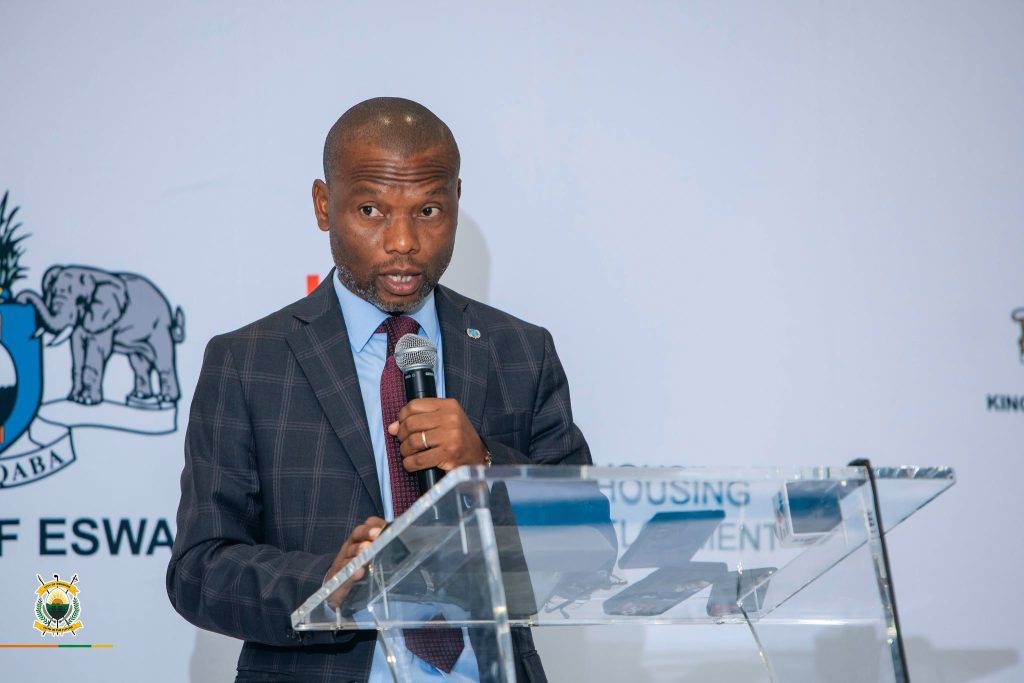
The initiative, which was first undertaken in 2024 during the Urban October celebrations, is expected to move discussions beyond identifying urban challenges towards exploring practical and sustainable solutions. Minister for Housing and Urban Development Appolo Maphalala said the forum would bring together stakeholders in housing and human settlements, urban governance and local government to deliberate on improving service delivery within the urban space.
“The discussions will revolve around among others: Finding additional sources of financing urban local authorities instead of their reliance on property rates; curbing informal settlements, etc.,” he explained.
Rethinking municipal financing
One of the most pressing issues facing urban local authorities is their ability to generate sufficient revenue to finance infrastructure and improve service delivery.
Heavy reliance on property rates as a primary source of municipal income presents limitations, particularly as towns face increasing development demands. The challenge, therefore, is to diversify municipal revenue streams while creating an environment that attracts private investment.
Maphalala identified municipal bonds as one possible financing mechanism, explaining that urban local authorities could issue bonds in the same way the national government does to raise funds for development.
“One option is for ULAs to sell bonds, just like the Eswatini Government. This has the ability to boost their revenues,” he said.
Public-private partnerships (PPPs) also offer municipalities an opportunity to unlock the development potential of assets such as vacant land. Under such arrangements, local authorities can make land available while private investors provide the financial resources required to undertake development projects.
Maphalala pointed to the Build, Operate and Transfer (BOT) model as one mechanism through which these partnerships could be implemented. However, diversifying municipal financing will require more than identifying alternative funding instruments. It also calls for a supportive legislative and policy environment, including political commitment towards implementing Intergovernmental Fiscal Transfers as provided for under the Constitution.
The implication is that municipalities need a stronger financial foundation, combining their own revenue-generation capacity with appropriate fiscal support and private sector participation.
Smart cities require practical local solutions
Financial sustainability must also be accompanied by improvements in how municipalities operate and deliver services. As urban populations increase, traditional approaches to municipal administration may struggle to keep pace with residents’ expectations.
Digital transformation and smart-city technologies present opportunities to improve municipal efficiency, strengthen transparency and make services more accessible.
The ministry is encouraging all urban local authorities to adopt smart-city principles, although Maphalala acknowledged that implementation would differ according to the size and capacity of individual municipalities. “Whereas some have introduced smart city principles such as the Municipal Council of Mbabane, Matsapha is following suite and Manzini Municipal Council, the ministry continuously encourage the rest to follow,” he said.
He further emphasised that smart-city development should not be understood as a fixed concept, but rather as a collection of solutions that can be adapted to local circumstances. “However, we should note that a smart city consists of a number of ideas but not static. It’s implementation, therefore, comes in different forms,” Maphalala explained.
Through its programmes, the ministry is coordinating efforts to equip urban local authorities with smart and innovative solutions that can improve service delivery and sustainable urban planning.
The hosting of the Urban Forum is also intended to translate international initiatives and experiences into practical interventions at local level. The challenge will be ensuring that these technologies extend beyond isolated municipal projects and become part of a broader transformation of local government operations.
Formalising settlements and building climate resilience
Housing and access to secure land tenure remain equally important to sustainable urban development. As towns expand, informal settlements present a growing challenge, particularly where residents occupy land without formal ownership or access to properly planned infrastructure.
The ministry is addressing this through its Informal Settlements Programme, which involves working with urban local authorities to identify and formalise informal settlements within their respective jurisdictions. Maphalala revealed that the exercise had so far identified 52 informal settlements within the country’s urban space. “To date, this exercise has led to the identification of 52 informal settlements within the urban space,” he said.
Working alongside international partners, including UN-Habitat, the ministry aims to formalise these settlements and provide occupants with title to the land they have occupied over the years. Implementation has already commenced in towns including Mbabane, Siteki, Ngwenya and Pigg’s Peak. In Pigg’s Peak, some beneficiaries have already been allocated the plots they have occupied for a number of years.
Where Crown or government land remains available, the ministry is also supporting urban local authorities in developing human settlements that can contribute towards increasing the supply of affordable housing. However, formalising settlements and expanding housing opportunities must go hand-in-hand with infrastructure development. Roads, drainage, water and sanitation remain essential components of liveable communities, particularly as urban areas become more exposed to climate-related risks.
In this regard, the ministry is participating in the Building Climate Resilience with Urban Poor (BCRUP) initiative, a United Nations-driven programme aimed at mobilising resources to address climate-induced disasters affecting vulnerable urban communities. The initiative recognises that urban resilience is not simply about constructing infrastructure, but also ensuring that communities, particularly those most exposed to environmental risks, are protected against the effects of climate change.
Putting residents at centre of development
While financial capacity, infrastructure and technology are important indicators of urban development, the ultimate measure of success is whether residents benefit from these improvements.
The ministry is therefore emphasising public participation as a fundamental requirement in the planning and governance of urban local authorities.
Maphalala explained that municipalities are expected to consult residents and relevant stakeholders when developing their Integrated Development Plans (IDPs), town planning schemes and annual budgets. These consultations should include people with disabilities, churches, the business community and ratepayers’ associations, among other stakeholders.
To ensure that participation is not limited to central municipal offices, urban local authorities are encouraged to organise ward meetings across their jurisdictions, bringing consultations closer to the communities they serve. The ministry’s policy direction also requires local authorities to demonstrate public participation in their integrated development planning and budget processes, as well as annual financial audits, governance processes and organisational appraisals.
Beyond participation, economic inclusion is another important consideration. The ministry has developed Local Economic Development (LED) and Public-Private Partnership/Private Finance Initiative (PPP/PFI) policies aimed at supporting local businesses and enhancing economic opportunities. These policies are intended to strengthen the role of local authorities in stimulating economic activity, attracting investment and creating opportunities within their respective communities.
For residents, particularly young people, women, people with disabilities and vulnerable groups, the expectation is that urban development should translate into more accessible services, safer neighbourhoods, economic opportunities and public spaces that accommodate everyone.
Turning urban ambitions into measurable progress
The 2026 Eswatini Urban Forum comes at a time when municipalities must rethink how they finance and manage the growing demands placed upon them.
Its emphasis on alternative financing, smart-city solutions, housing, climate resilience and public participation highlights the interconnected nature of sustainable urban development. However, the real test will lie in translating the discussions and policy commitments into measurable interventions at municipal level.
For urban local authorities, this means developing stronger revenue bases, making productive use of available assets, attracting private investment and improving institutional capacity. It also means ensuring that the expansion of towns does not happen at the expense of vulnerable communities or leave residents behind. Ultimately, building sustainable urban economies will require municipalities that are not only capable of financing development, but also accountable, innovative and responsive to the needs of the people they serve.