MBABANE – Eswatini needs more money, but through loans.
Eswatini News can reveal that government, once again, through the Ministry of Finance, is seeking loans amounting to E3.79 billion.
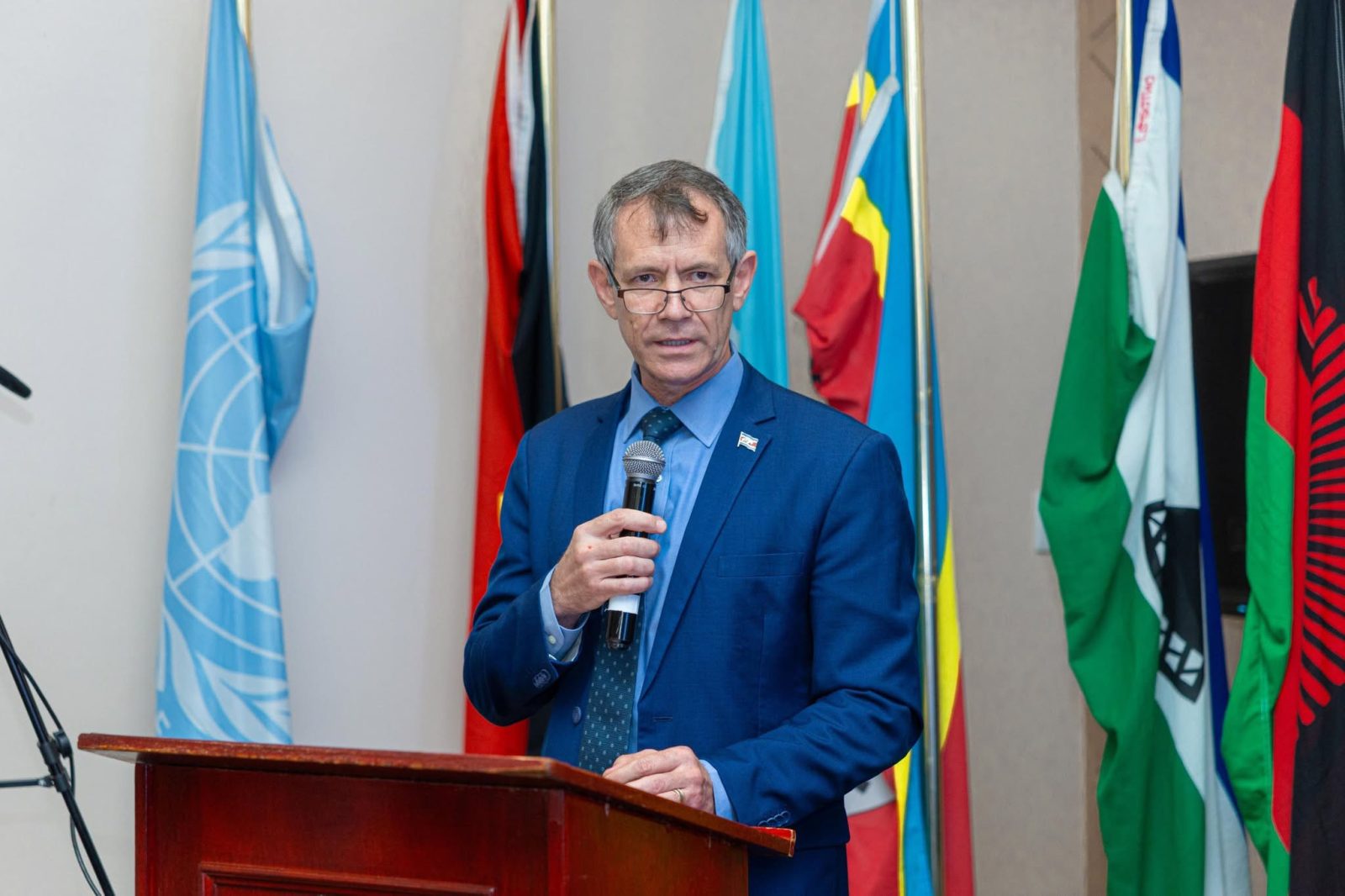
This is reflected in three loan Bills that were tabled by the Minister for Finance, Neal Rijkenberg at the House of Assembly on Thursday.
In the first instance, government intends to borrow up to E1.6 billion (R1.6 billion) from Standard Bank of South Africa Limited and other lenders to finance a portfolio of infrastructure and social development projects.
The proposed borrowing is contained in the Standard Bank of South Africa Limited Loan Bill, 2026, which was published in the Eswatini Government Gazette Extraordinary No. 91 dated October 29, 2026.
The Bill seeks to authorise the minister to raise a loan not exceeding E1.6 billion from Standard Bank of South Africa Limited, which will act as the sole mandated lead arranger and book runner, as well as other lenders that may be invited to participate in the financing arrangement.
Meanwhile, it must be said that the total public debt, as at September 29, 2026, stood at E43.04 billion, an equivalent of 41.63 per cent of the gross domestic product (GDP).
The stock is composed of domestic debt amounting to E22.82 billion, which is equivalent to 22.07 per cent of GDP and external debt amounting to E20.22 billion, an equivalent to 19.56 per cent of GDP.
According to the Memorandum of Objects and Reasons, the loan will be used to finance infrastructure and social development projects agreed upon between the Government of the Kingdom of Eswatini and the arranger, alongside other eligible social expenditure and incidental matters.
The proposed borrowing comes with several financial obligations, including interest, arranging fees and annual facility management charges that government will be required to meet.
Under the terms outlined in the Bill, the loan will attract a margin of 4.95 per cent per annum, subject to the terms of the agreement.
interest may be calculated at a floating rate equal to the applicable ZARONIA reference rate plus the agreed margin.
The Bill defines ZARONIA as the reference rate determined in accordance with the agreement and applicable compounded rate terms.
Government will also be required to pay an arranging fee equivalent to 1.30 per cent of the total facility amount, on terms agreed between the borrower and the arranger.
Based on the maximum proposed facility of E1.6 billion, the arranging fee could amount to approximately E20.8 million.
In addition, the facility will attract an annual management fee of R380 000 (E380 000), exclusive of value-added tax (VAT).
The Bill further provides that the borrower will be responsible for costs and expenses incurred in connection with negotiating, preparing, printing, executing and perfecting the agreement and other finance documents.
These costs, which include reasonable expenses incurred by the arranger, will be capped at E1.2 million. However, the facility agent fee will be waived under the proposed arrangement.
On repayment, government will be expected to settle the principal amount of each loan in 12 consecutive quarterly instalments after the expiry of a 24-month capital moratorium.
This means that government will have a two-year period before it starts repaying the principal amount, after which repayment will be made over 12 consecutive quarters, equivalent to three years.
The Bill states that interest will accrue on each loan daily and will be calculated based on the actual number of days elapsed in a 365-day year.
Interest will be payable quarterly, at the end of every three-month interest period, starting from the date of the first drawdown until the maturity date.
The proposed legislation further provides that the proceeds of each loan will be received and accounted for in accordance with applicable public finance laws of Eswatini.
The money will be paid into the Consolidated Fund or another public fund or account lawfully designated by the minister for the intended purpose.
The Bill also stipulates that the loan, together with interest, fees, costs, expenses and other amounts payable, will be charged upon the Consolidated Fund, subject to applicable law.
The proposed E1.6 billion borrowing is intended to support a portfolio of infrastructure and social development projects agreed upon by government and the arranger.
Among the projects specifically mentioned in the Bill are those associated with the development of the Sugar Belt area, including dam infrastructure.
Other eligible social infrastructure projects and social expenditure will also be financed through the facility.
The legislation defines a project as an undertaking forming part of the portfolio of infrastructure and social development projects agreed upon between the borrower and the arranger.
The second Bill reflects that government intends to borrow approximately E1.05 billion (US$60 million) from the Arab Bank for Economic Development in Africa (BADEA) to finance Phase 1B of the Mkhondvo-Ngwavuma Water Augmentation Programme.
The proposed loan is contained in the Arab Bank for Economic Development in Africa (Mkhondvo-Ngwavuma Water Augmentation Programme) Loan Bill, 2026, published in the Eswatini Government Gazette Extraordinary No. 90 dated October 29, 2026.
The Bill seeks to authorise the minister for Finance to raise a loan not exceeding US$60 million, equivalent to approximately E1.05 billion, from BADEA for the implementation of the water augmentation programme.
According to the Memorandum of Objects and Reasons, the legislation is intended to provide government with the necessary authority to secure the financing for Phase 1B of the programme and address matters incidental to the loan.
The proposed financing is specifically earmarked for the Mkhondvo-Ngwavuma Water Augmentation Programme, with the proceeds to be applied towards its implementation in accordance with the purposes, eligible expenditures and implementation arrangements contained in the executed agreement and approved project documents.
Under the proposed loan arrangements, the minister will be authorised to enter into an agreement with BADEA on behalf of government, subject to the terms and conditions specified in the Bill and the financing agreement.
The loan proceeds will be paid into the Consolidated Fund or another public fund, whether existing or established specifically for the purpose of the loan, as the minister may determine.
The proposed E1.05 billion loan will have a repayment period of 20 years, following a five-year grace period.
According to the Bill, government will repay the loan in 40 semi-annual instalments, with the first repayment falling due in accordance with the repayment schedule specified in the agreement.
The legislation further provides that government will pay interest to BADEA at a rate of five per cent per annum on the principal amount of the loan withdrawn and outstanding from time to time, or at such rate as may ultimately be provided for in the executed agreement.
The proposed maturity period is 25 years, inclusive of the five-year grace period and the 20-year repayment period, subject to the final agreement between the parties.
The Bill also makes provision for commitment fees, service charges and other fees or amounts payable in connection with the loan. However, these will only be payable to the extent and on the terms expressly specified in the executed agreement.
Government will not be entitled to re-borrow any portion of the facility that has already been repaid, unless the financing agreement expressly provides otherwise.
The loan, together with interest, fees and other amounts lawfully payable under the agreement, will be charged upon the Consolidated Fund.
On the other hand, the third Bill reflects that government intends to borrow approximately E1.14 billion (US$68.444 million) from the African Development Bank (AfDB) to finance the second phase of the Enhancing Economic Resilience and Competitiveness Programme (EERCP).
The proposed borrowing is contained in the African Development Bank (Enhancing Economic Resilience and Competitiveness Programme (EERCP) Phase II) Loan Bill, 2026, published in the Eswatini Government Gazette Extraordinary No. 89 dated October 29, 2026.
The Bill seeks to authorise the minister to raise a loan not exceeding US$68 444 000 from the AfDB to assist in financing Phase II of the programme.
According to the Memorandum of Objects and Reasons, the legislation is intended to provide the minister with the authority to secure the financing required for the programme.
The proposed loan is one of the financing arrangements government is seeking to secure through legislation, with the proceeds expected to be channelled towards the implementation of EERCP Phase II.
Under the Bill, the minister will be authorised to enter into an agreement with the AfDB for the purpose of raising the loan, subject to the terms and conditions specified in the proposed Act and the agreement.
The loan proceeds will be paid into the Consolidated Fund or another public fund, whether already existing or specifically established for the purpose of the loan, as the minister may determine.
Government will be required to repay the loan in 30 equal and consecutive semi-annual instalments after a grace period of five years.
This means that the repayment period will span 15 years following the five-year grace period, bringing the overall period to 20 years.
The Bill further provides that the interest payable on each disbursement during each interest period will be calculated at a floating rate.
The rate will comprise the applicable base rate, lending margin, funding cost margin, spread adjustment rate and maturity premium, where applicable.
However, the legislation does not specify a fixed overall interest rate, providing instead that the applicable rate will be determined in accordance with the financing arrangements.
The lender will be required to notify government of the interest rate applicable to each interest period as soon as it has determined the rate. Interest will become payable on the relevant payment dates.
In addition to interest, government will incur a commitment charge of 0.25 per cent per annum on the undisbursed loan balance.
The charge will begin accruing 60 days after the date of signature of the loan agreement and will be payable on each payment date in accordance with the agreement, including during the grace period. It will cease accruing once the loan has been fully disbursed or cancelled.
Government will also be required to pay a front-end fee equivalent to 0.25 per cent of the loan amount.
This fee must be paid no later than 60 days after the signing of the loan agreement or at the first disbursement, whichever occurs earlier. The Bill provides that no disbursement will be made until the lender has received the front-end fee in full.
Government may, however, request in writing that the fee be deducted from the loan proceeds, with the lender withdrawing an equivalent amount and paying the fee on its behalf.
The legislation further states that the front-end fee will remain payable even if the loan is fully or partially cancelled after the signing of the agreement.
The loan, together with interest and other amounts lawfully payable under the agreement, will be charged upon the Consolidated Fund.
Notably, in recent weeks, Parliament has been working on three other loans which amount to over E3 billion. These include one amounting to E428 million meant for the Eswatini Posts and Telecommunications Corporation (EPTC).