

“When something is not quite right with the brain, getting answers is an important step towards receiving the right medical care. But how do doctors investigate what is happening inside this complex organ without performing surgery?
One of the tools they use is an electroencephalogram (EEG), a specialised test that records the brain’s electrical activity.
Ekuphileni Clinic is bringing attention to this important diagnostic service, encouraging both medical practitioners and members of the public to become more aware of the availability of EEG testing at the clinic.
EEG, which stands for electroencephalogram, is a non-invasive procedure used to record the electrical signals produced by brain cells. These signals, commonly referred to as brain waves, help healthcare professionals understand patterns of activity in the brain and identify possible abnormalities.
One of the main uses of EEG testing is in the investigation and monitoring of epilepsy, a neurological condition that causes recurrent seizures. It can also assist doctors when investigating certain sleep disorders, brain infections and other conditions affecting brain function.
WHAT HAPPENS DURING AN EEG TEST?
For someone who has never undergone the procedure, the thought of having wires attached to their head may seem intimidating. However, EEG testing is generally painless and does not involve sending electricity into the brain.
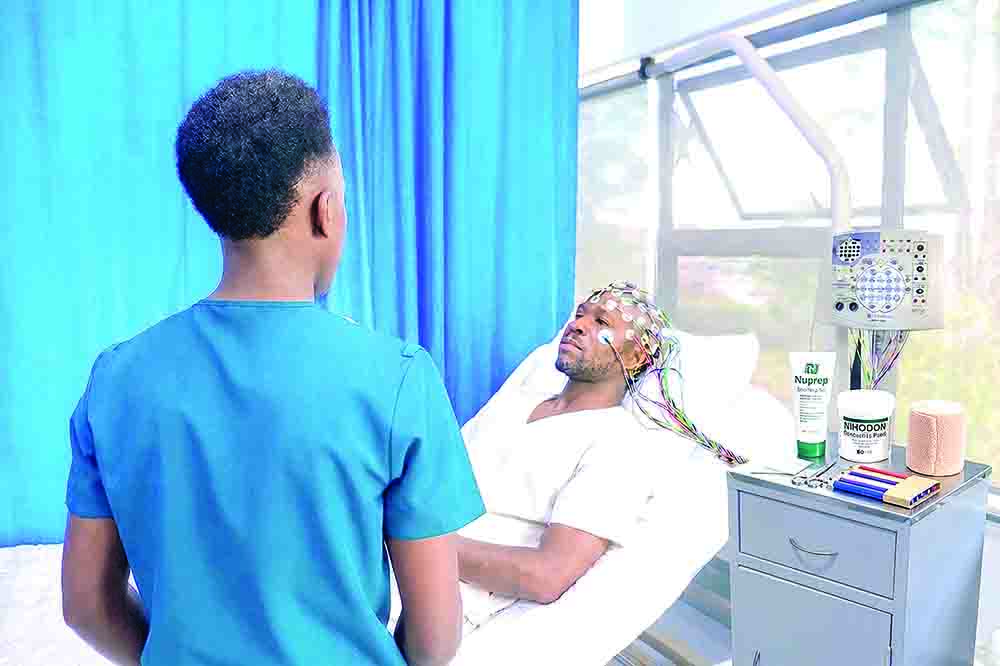
During the procedure, small metal discs known as electrodes are attached to specific areas of the patient’s scalp using a special paste or adhesive. These electrodes pick up the brain’s natural electrical signals and transmit them to a recording machine, which displays the activity as wave-like patterns on a computer screen.
Depending on the reason for the test, patients may be asked to open and close their eyes, breathe deeply or look at a flashing light. These activities help healthcare professionals observe how the brain responds to different conditions.
The electrodes only record electrical activity; they do not produce electrical signals or send shocks into the brain. This makes EEG a safe and non-invasive diagnostic procedure.
WHY IS EEG IMPORTANT?
Seizures are not always easy to understand or diagnose based on observation alone. An EEG can provide valuable information to help doctors investigate whether unusual brain activity may be linked to epilepsy.
It can also help monitor people who have already been diagnosed with certain neurological conditions and support decisions about their ongoing care.
However, it is important to understand that an EEG is one part of the diagnostic process. A normal result does not automatically rule out epilepsy, as unusual electrical activity may not occur during the recording. Doctors therefore consider the patient’s symptoms, medical history and other relevant investigations when interpreting results.
UNDERSTANDING THE IMPORTANCE OF EEG TESTING
For patients experiencing unexplained seizures, episodes of lost awareness or other symptoms that may point to a neurological condition, an EEG can be an important step towards getting answers.
Having access to this type of diagnostic service also makes it easier for medical practitioners to consider further investigation when assessing patients with suspected neurological conditions. At Ekuphileni Clinic, EEG testing is available to support this process, with EEG technician Liberty Shabangu involved in conducting the procedure.
Patients who have been advised to undergo an EEG can enquire about the service at the clinic and discuss the process with the relevant healthcare professionals.
Although an EEG does not provide answers to every brain-related condition, it offers valuable information that can help doctors make more informed decisions about a patient’s care. Recognising the symptoms early and seeking appropriate medical attention remain important steps towards better neurological health.
For more information or to book an appointment, contact Ekuphileni Clinic at +268 2408 9500 / 7976 0893 or +268 7602 3380, email info@ekuphileniclinic.com, visit www.ekuphileniclinic.com, or find them on social media at @Ekuphileniclinic.
Ekuphileni Clinic offers EEG testing
“When something is not quite right with the brain, getting answers is an important step towards receiving the right medical care. But how do doctors investigate what is happening inside this complex organ without performing surgery?
One of the tools they use is an electroencephalogram (EEG), a specialised test that records the brain’s electrical activity.
Ekuphileni Clinic is bringing attention to this important diagnostic service, encouraging both medical practitioners and members of the public to become more aware of the availability of EEG testing at the clinic.
EEG, which stands for electroencephalogram, is a non-invasive procedure used to record the electrical signals produced by brain cells. These signals, commonly referred to as brain waves, help healthcare professionals understand patterns of activity in the brain and identify possible abnormalities.
One of the main uses of EEG testing is in the investigation and monitoring of epilepsy, a neurological condition that causes recurrent seizures. It can also assist doctors when investigating certain sleep disorders, brain infections and other conditions affecting brain function.
WHAT HAPPENS DURING AN EEG TEST?
For someone who has never undergone the procedure, the thought of having wires attached to their head may seem intimidating. However, EEG testing is generally painless and does not involve sending electricity into the brain.
During the procedure, small metal discs known as electrodes are attached to specific areas of the patient’s scalp using a special paste or adhesive. These electrodes pick up the brain’s natural electrical signals and transmit them to a recording machine, which displays the activity as wave-like patterns on a computer screen.
Depending on the reason for the test, patients may be asked to open and close their eyes, breathe deeply or look at a flashing light. These activities help healthcare professionals observe how the brain responds to different conditions.
The electrodes only record electrical activity; they do not produce electrical signals or send shocks into the brain. This makes EEG a safe and non-invasive diagnostic procedure.
WHY IS EEG IMPORTANT?
Seizures are not always easy to understand or diagnose based on observation alone. An EEG can provide valuable information to help doctors investigate whether unusual brain activity may be linked to epilepsy.
It can also help monitor people who have already been diagnosed with certain neurological conditions and support decisions about their ongoing care.
However, it is important to understand that an EEG is one part of the diagnostic process. A normal result does not automatically rule out epilepsy, as unusual electrical activity may not occur during the recording. Doctors therefore consider the patient’s symptoms, medical history and other relevant investigations when interpreting results.
UNDERSTANDING THE IMPORTANCE OF EEG TESTING
For patients experiencing unexplained seizures, episodes of lost awareness or other symptoms that may point to a neurological condition, an EEG can be an important step towards getting answers.
Having access to this type of diagnostic service also makes it easier for medical practitioners to consider further investigation when assessing patients with suspected neurological conditions. At Ekuphileni Clinic, EEG testing is available to support this process, with EEG technician Liberty Shabangu involved in conducting the procedure.
Patients who have been advised to undergo an EEG can enquire about the service at the clinic and discuss the process with the relevant healthcare professionals.
Although an EEG does not provide answers to every brain-related condition, it offers valuable information that can help doctors make more informed decisions about a patient’s care. Recognising the symptoms early and seeking appropriate medical attention remain important steps towards better neurological health.
For more information or to book an appointment, contact Ekuphileni Clinic at +268 2408 9500 / 7976 0893 or +268 7602 3380, email info@ekuphileniclinic.com, visit www.ekuphileniclinic.com, or find them on social media at @Ekuphileniclinic.




















Leave a comment