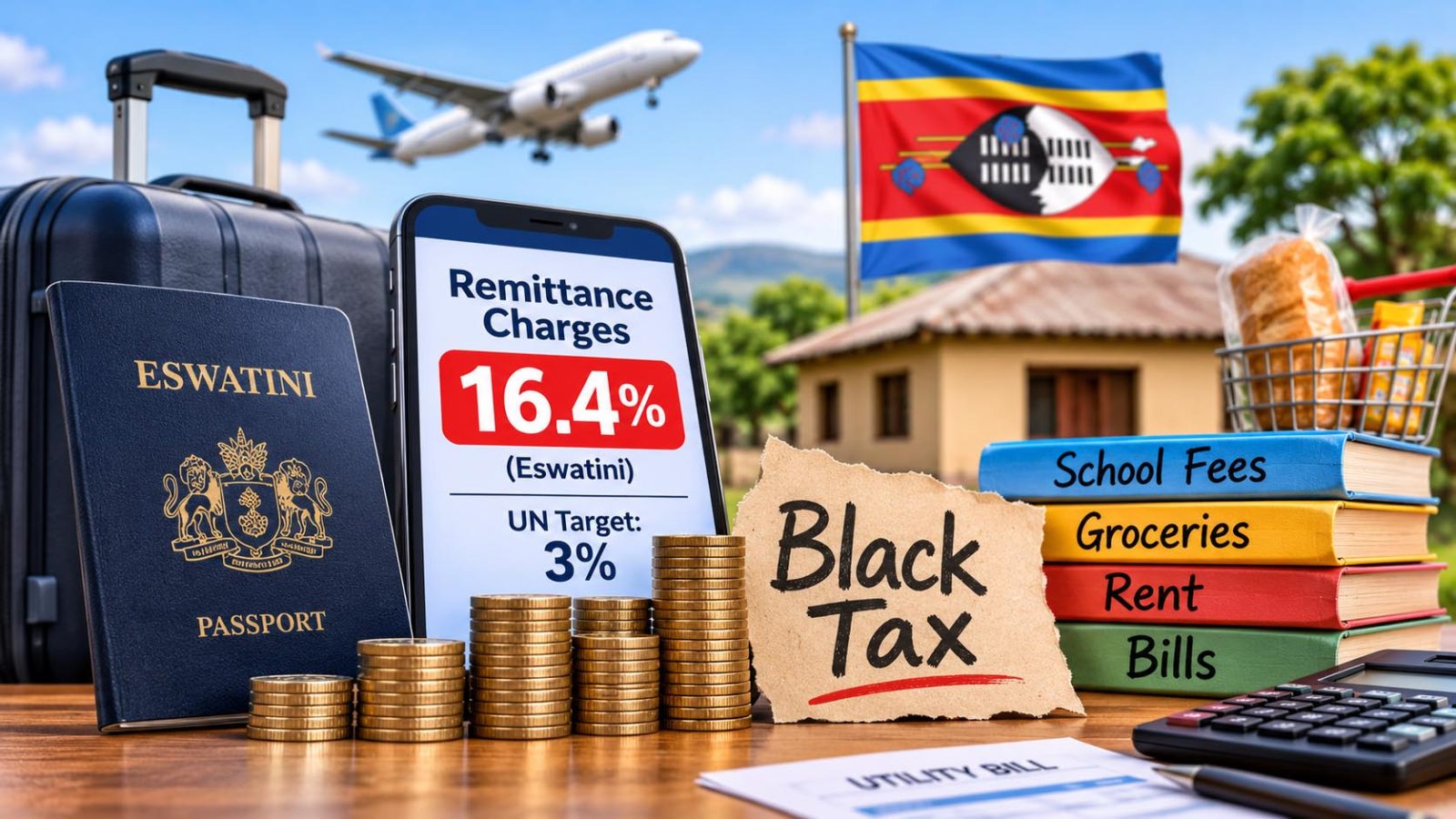
For many emaSwati, leaving the country is not simply about chasing a better salary. It is about becoming the person who can finally pay school fees without borrowing, buy groceries for parents and ensure that younger siblings have opportunities they never had.
Going abroad is often presented as the ultimate solution to financial struggles at home. However, the reality facing many migrant workers suggests that this dream is becoming increasingly expensive to sustain.
This publication’s recent article: ‘EmaSwati abroad lose 16.4 per cent when sending money home’, offers an uncomfortable reminder that earning money abroad does not necessarily translate into financial freedom. According to the newspaper, the country’s Global Compact for Migration Progress Report estimates that emaSwati lose 16.4 per cent of money sent home through remittance costs. That is more than five times the United Nations Sustainable Development Goal target of three per cent.
Think about what this means for someone who has left everything familiar behind to support a family. Before the money reaches home, a significant portion has already disappeared through transaction charges and currency conversion. The person sending it must then return to the realities of paying rent, buying food, travelling to work and keeping up with bills in a foreign country.
This is where the conversation about black tax becomes particularly important.
Black tax is the financial responsibility many black professionals and migrant workers carry towards their extended families. It is the expectation that once someone secures employment, particularly abroad, they must become a dependable source of financial support for those left behind. While this responsibility is rooted in love, gratitude and the desire to uplift one’s family, it can become a financial burden that is difficult to escape.
Formidable opponent
The problem is that the cost of living abroad has become a formidable opponent to the very dream that migration represents.
In countries such as the United Kingdom, Ireland, Canada and the United States, housing alone can consume a substantial portion of a worker’s earnings. Add transport, food, utilities, taxes and other necessities and the seemingly attractive salary begins to look considerably smaller. Migrants may also face the additional expense of establishing themselves in a new country, including paying deposits, purchasing essential household items and navigating unfamiliar financial systems.
Yet back home, the family may see only the foreign currency and assume that the person abroad is financially comfortable.
The World Bank’s findings on remittances reveal that this is not merely an Eswatini problem. Its September 2025 report placed the global average cost of sending money at 6.36 per cent, while Sub-Saharan Africa remained the most expensive region, with an average cost of 8.46 per cent.
For emaSwati, however, the situation is particularly concerning. The World Bank’s assessment of Eswatini’s remittance market found that the country was among the most expensive destinations in the region for receiving international transfers. Banks recorded average costs of 17.72 per cent, compared with 9.23 per cent for money transfer operators.
This raises an uncomfortable question: Are we asking our people abroad to achieve financial independence while simultaneously expecting them to finance the financial survival of those at home?
There is nothing wrong with supporting one’s family. Indeed, remittances are an important lifeline for many emaSwati households. The World Bank estimated that Eswatini received approximately E1.3 billion (US$80 million) in international remittances in 2023, representing 1.8 per cent of the country’s gross domestic product. More than 90 per cent came from South Africa.
But perhaps we need to rethink what success abroad really means.
If a person spends years working overseas yet cannot build savings, purchase property or establish financial security because their earnings are constantly divided between two countries, then migration has become less of an opportunity and more of an obligation.
The solution is not to abandon our families. It is to create a culture of financial responsibility that recognises the limits of those providing support. Financial institutions must also be challenged to make cross-border transfers more affordable and transparent. Ultimately, the dream of leaving home to build a better life should not become a lifetime sentence of financial sacrifice. Our people abroad deserve the opportunity to build their own futures too.