BY KWANELE DLAMINI AND MBONGISENI NDZIMANDZE
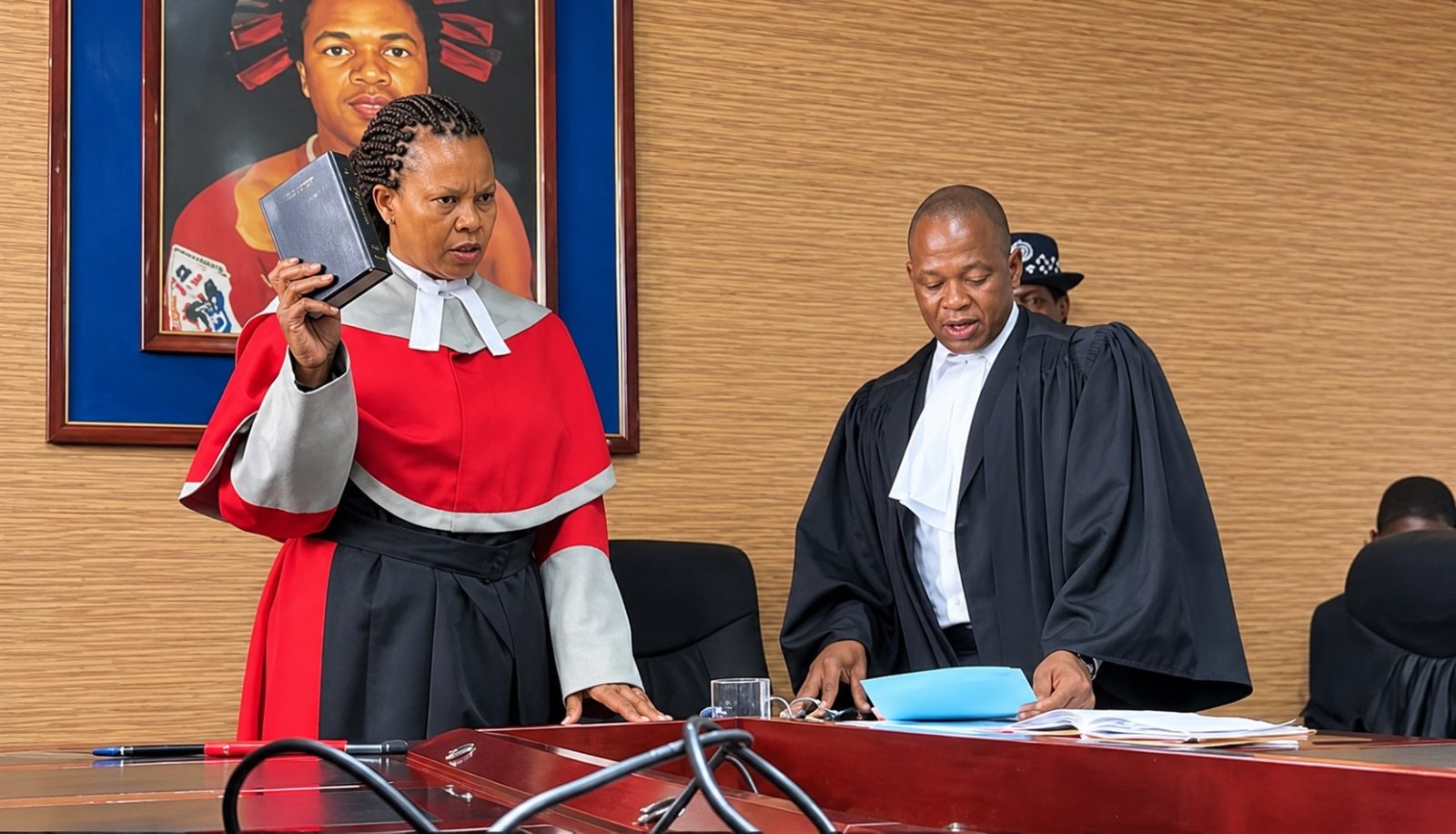
MBABANE – Acting Chief Justice (CJ) Mumcy Dlamini takes over a Judiciary facing 23 institutional, administrative and operational issues affecting the administration of justice in Eswatini.
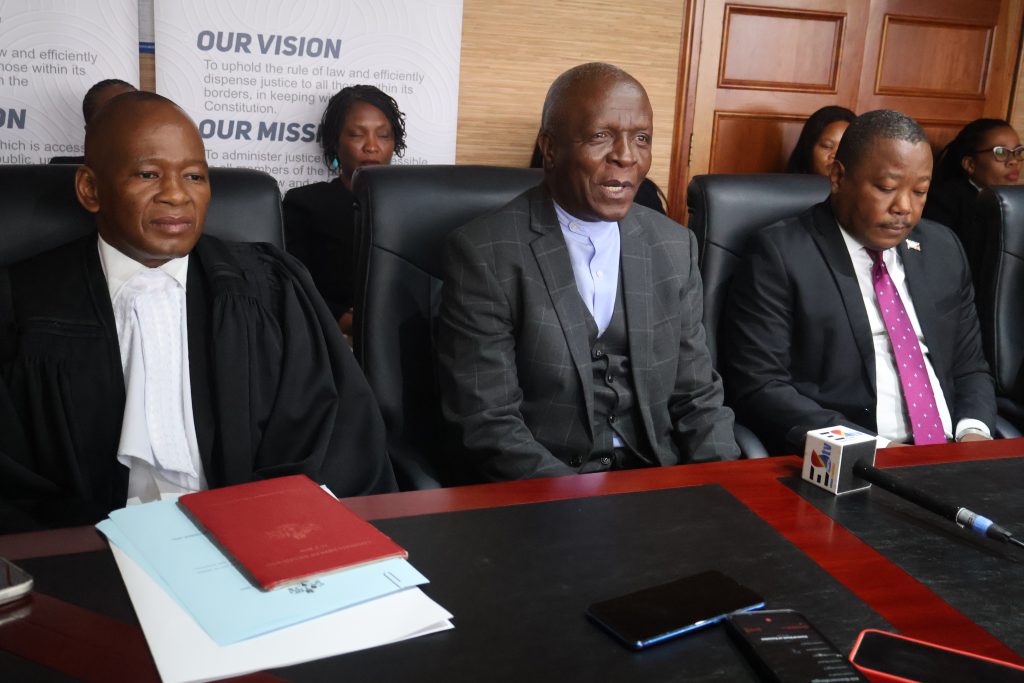
Her appointment, announced yesterday, makes her the first liSwati woman to occupy the Office of Chief Justice, albeit in an acting capacity. Her appointment was announced by the Minister for Justice and Constitutional Affairs, Prince Simelane, who was accompanied by the members of the Judicial Service Commission (JSC).
Judge Dlamini assumes the position following the death of Chief Justice Bheki Cuthbert Moses Maphalala, who served in the office for almost 11 years.
Issues of the Judiciary range from a substantial backlog of civil and criminal cases and prolonged pre-trial detention to shortages of judicial officers, court support staff and courtrooms.
Other matters include concerns surrounding the integrity of court records, the administration of the master of the High Court, judicial independence, the appointment of acting judges, legal aid and the safety of legal practitioners.
The challenges have featured in reports by the Judiciary, the Ministry of Justice and Constitutional Affairs, the United Nations Development Programme (UNDP), the African Commission on Human and Peoples’ Rights and the International Commission of Jurists (ICJ).
One of the major issues Dlamini inherits is the backlog of civil and criminal cases.
In July 2025, the Times of Eswatini reported that the Judiciary was preparing a five-year strategy to address a backlog of more than 29 000 cases.
The proposed intervention included the establishment of a Criminal Case Clearing Committee to identify stagnant matters and improve co-operation among institutions involved in the administration of justice.
Unresolved
Some cases had reportedly remained unresolved for a decade or longer.
The backlog has consequences beyond the court system, particularly for people awaiting trial in Correctional facilities.
A UNDP report published on July 8, 2025, stated that nine out of the country’s 11 Correctional facilities had accused persons who had been detained for more than 12 months without trial.
The assessment found that the nine facilities accommodating pre-trial detainees had exceeded their combined capacity of 3 090 by nearly 50 per cent.
The report identified several factors contributing to the delays, including pending committals to the High Court, the expiry of contracts for acting judicial officers, delayed judgments and sentences, unavailability of witnesses and co-accused persons, and ongoing investigations.
It also identified the lack of legal representation and the inability of some accused persons to afford bail, even after it had been granted.
The delay in committing cases from the magistrates courts to the High Court is another concern. Cases involving serious offences that must be heard by the High Court can remain in the lower courts while awaiting the necessary processes for transfer.
The assessment also identified cases awaiting judgments and sentences in both the magistrates courts and the High Court. Delays after hearings have concluded can prolong the period accused persons remain in custody and leave cases unresolved.
The availability of witnesses, complainants and co-accused persons also affects the progress of cases. The UNDP assessment identified postponements resulting from unavailable witnesses, absent co-accused persons and investigations that were still ongoing.
The expiry of contracts for judicial officers serving in acting positions was also identified as a contributor to delays. The assessment noted that the expiry of contracts, particularly those of acting judicial officers, affected the progress of cases.
Shortage
The shortage of judges and magistrates is another challenge. The Ministry of Justice and Constitutional Affairs’ 2024/2025 Annual Performance Report identified vacancies involving judicial officers.
The late chief justice had also highlighted the shortage of judicial officers during a visit to the Manzini Magistrates Court in July 2025.
The Judiciary requires sufficient administrative and support personnel to keep its operations running. The ministry’s annual performance report identified vacancies involving assistant registrars, assistant masters, clerks, secretaries, typists and estate examiners.
These employees perform administrative functions that support the processing of cases, management of court records and administration of estates.
The availability of suitable court facilities is another concern. The ministry’s annual performance report stated that there was an acute shortage of courtrooms, resulting in judges and magistrates sharing facilities.
The report linked this shortage to the backlog of cases and identified the failure to undertake capital projects for the construction of additional courts as a serious impediment.
In September 2025, the Judicial Service Commission (JSC) embarked on a nationwide inspection of court infrastructure. The inspection covered the Supreme Court, High Court, Industrial Court, Commercial Court and magistrates courts.
It examined courtrooms, offices, digital recording systems, security installations and accessibility for judicial officers and members of the public.
The Judiciary’s financial resources are also a concern. The ministry’s 2024/2025 Annual Performance Report stated that the Judiciary’s budget had remained low over several years and that this greatly hampered its operations.
The JSC, which plays an important role in judicial appointments and disciplinary matters, has also featured in discussions about the administration and independence of the Judiciary.
The International Commission of Jurists’ February 2025 report raised concerns about the adequacy and independence of the commission and the judicial appointment process.
Assessments
Judicial independence is another issue that has featured in local and international assessments of Eswatini’s justice system.
In February 2025, the International Commission of Jurists published a report titled ‘No Situation is Permanent: Repression, Intimidation, Harassment and Killing of Lawyers in Eswatini’.
The report documented concerns and perceptions expressed by lawyers interviewed during its research regarding the independence of judges and the legal profession. It also examined the constitutional and institutional arrangements governing judicial appointments and the relationship between the Judiciary and other arms of government.
The organisation made recommendations to the authorities on strengthening judicial independence and safeguarding the separation of powers. These are concerns raised in the report and should not be treated as findings of a court.
The appointment and continued use of acting judges is another issue raised in the ICJ report.
Lawyers interviewed by the organisation expressed concern about what they described as the frequent appointment and renewal of acting judges and the possible effect this could have on judicial independence.
The report raised questions about the number of acting judges serving in the courts and the safeguards surrounding their appointments and tenure.
The safety of legal practitioners has also been raised as a concern. The ICJ report documented accounts from lawyers who said they had experienced threats, intimidation, harassment and other forms of pressure in the course of their professional work.
It also examined concerns about the safety of lawyers handling matters regarded as sensitive or involving public interest.
The relationship between the Judiciary and the Law Society of Eswatini is another area requiring attention.
The Law Society represents legal practitioners who interact with the courts and participate in discussions concerning the administration of justice.
Execution
The ICJ report examined concerns raised by lawyers about the independence of the legal profession and the execution of the Law Society’s mandate. It also discussed the relationship between the legal profession and the Judiciary.
Access to legal representation for people who cannot afford private legal services is another issue.
The African Commission on Human and Peoples’ Rights, following its July 2025 mission to Eswatini, identified the absence of legal aid legislation as a concern affecting access to justice.
However, the legal position has since changed. In his 2026 Budget Speech, Finance Minister Neal Rijkenberg referred to the enactment of the Legal Aid Act and the Legal Practitioners (Amendment) Act as important developments in strengthening the legal framework for legal aid.
Judge Dlamini therefore takes over an institution whose challenges extend beyond the hearing and determination of cases. Her acting appointment comes at a time when several institutional, operational and justice-sector matters remain on the agenda.
22 ISSUES FACING THE JUDICIARY
1. Case backlog – More than 29 000 cases were reported in July 2025.
2. Prolonged pre-trial detention – Accused persons spending extended periods in correctional facilities awaiting trial.
3. Pending committals to the High Court – Delays in transferring cases from the magistrates courts.
4. Delayed judgments and sentences – Cases awaiting decisions after hearings.
5. Postponements and unavailable witnesses – Unavailability of witnesses, complainants and co-accused persons contributing to delays.
6. Expiry of acting judicial officers’ contracts – Disruptions associated with contracts ending.
7. Shortage of judges and magistrates – Vacancies affecting the capacity of courts.
8. Shortage of court support staff – Vacancies involving registrars, clerks, secretaries and other personnel.
9. Courtroom and infrastructure shortages – Judges and magistrates sharing facilities and inadequate court infrastructure.
10. Inadequate funding and capital projects – Limited resources for staffing, facilities and construction of additional courts.
11. Judicial Service Commission – Concerns raised about the commission’s composition, independence and appointment processes.
12. Judicial independence – Concerns raised about the independence of judges and the separation of powers.
13. Appointment and tenure of acting judges – Concerns about frequent appointments and renewals.
14. Safety and security of lawyers – Reports of threats, intimidation and harassment of legal practitioners.
15. Independence of the legal profession – Relations between the Judiciary and the Law Society of Eswatini.
16. Implementation of the Legal Aid framework – Resources and accessibility of legal aid services.
17. Lack of legal representation and pro bono accountability – Access to representation for indigent accused persons.
18. Cases involving vulnerable accused persons – Including juveniles and people with psychosocial disabilities.
19. Integrity and security of court records – Allegations involving missing files, forged documents and tampering with dockets.
20. Master of the High Court reforms – Implementation of the 42 recommendations of the Commission of Inquiry.
21. Digital case management and virtual court processes – Implementation and expansion of electronic and remote court systems.
22. Training and professional development – Resources for continuing training of judges and judicial officers.
23. The alleged manipulation of court orders.