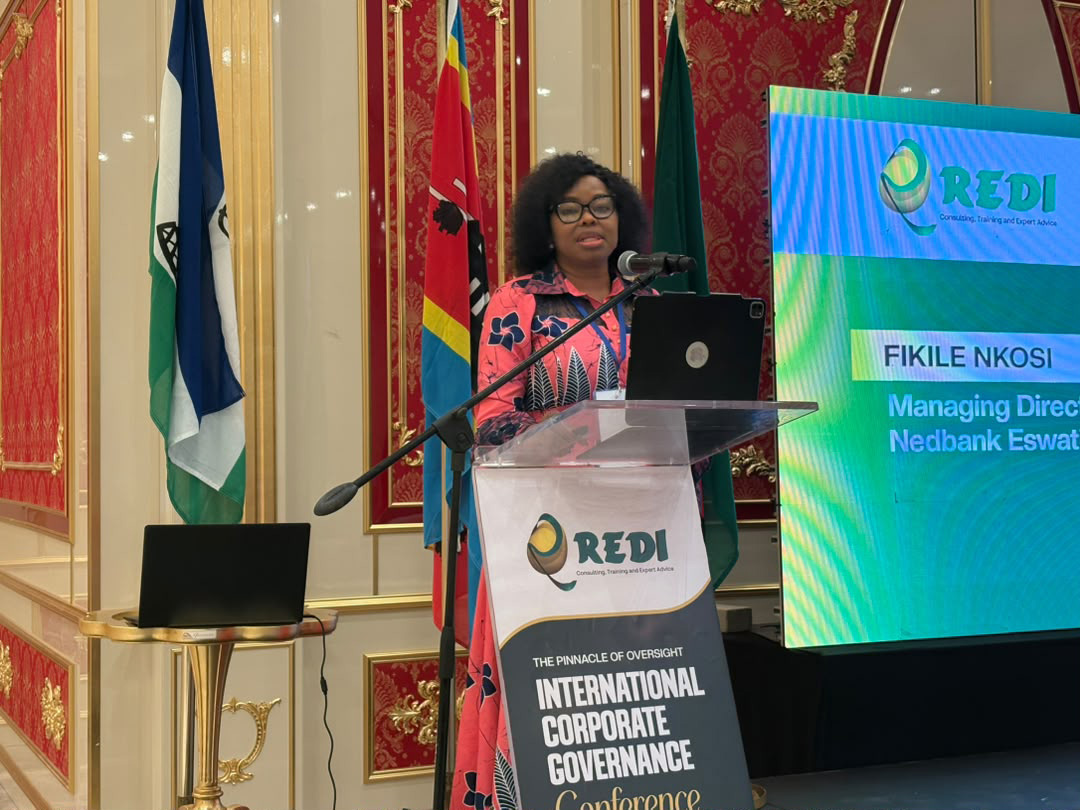
MBABANE- Corporate governance should go beyond protecting institutions and meeting regulatory requirements to ensuring that decisions create lasting value for communities and future generations.
This was mentioned by Nedbank Eswatini Managing Director Fikile Nkosi. Nkosi was speaking on the second day of the International Corporate Governance Conference held at Palazzo ICC, Ezulwini, Nkosi challenged business leaders to rethink the purpose of governance and consider the wider consequences of their decisions.
She said institutions should not measure good governance solely by their ability to comply with regulations, avoid risks or protect their reputations, but also by how effectively they fulfil their purpose and contribute to society.
Nkosi said every significant decision made by an organisation should be assessed against three fundamental questions including whether it supports the institution’s purpose, contributes to sustainable value creation and strengthens trust among its stakeholders.
She illustrated the importance of this approach by referring to the ongoing debate surrounding foreign-owned businesses and indigenous enterprises in Eswatini. Nkosi questioned whether decisions affecting ownership of businesses, particularly small shops in rural communities, adequately considered the people who depended on them for essential goods and services.
She said some of these establishments had historically been operated by local families and had become important sources of goods for surrounding communities. While acknowledging the need to consider the people receiving services from these businesses, she challenged leaders to look beyond immediate economic benefits and consider the long-term sustainability of local economies.
She questioned what would happen to communities and future generations if local businesses were displaced without sufficient consideration of the economic opportunities that could be lost. The Nedbank MD said governance should therefore involve decisions that considered not only immediate organisational interests, but also their impact on customers, employees, investors, communities and future generations.
Turning to the financial services sector, Nkosi said financial institutions occupied a unique position in society because their decisions could determine whether people were able to establish businesses, educate their children and participate meaningfully in the economy. She said purpose should influence how banks made credit decisions, managed risks and designed financial products.
According to Nkosi, financial institutions should ensure that their commercial objectives, environmental, social and governance commitments and positive social impact complemented rather than undermined one another. She further emphasised that trust was among the most valuable assets an organisation could possess and was built through consistent and responsible decision-making.
Nkosi said the true test of an organisation’s purpose was often evident when leaders faced difficult choices, particularly when short-term commercial opportunities conflicted with long-term consequences.
She outlined three stages of corporate governance, beginning with traditional governance, which focuses on compliance, risk management and protecting an organisation’s licence to operate. The second stage places greater emphasis on sustainability and considers how organisations can remain successful while responding to the interests of their stakeholders.
The third stage, which she described as purpose-driven governance, requires leaders to consider the legacy their organisations leave behind and how their decisions contribute to society. She said this did not mean that compliance became less important, but rather that it formed the foundation upon which sustainable and responsible institutions should be built.
Nkosi challenged leaders to examine whether they had the courage to question decisions within their organisations, particularly where those decisions could compromise their stated purpose. She said governance should ultimately be reflected in everyday decisions rather than remain an aspiration contained in corporate documents and policies. The conference brought together leaders and stakeholders to discuss the role of corporate governance in strengthening institutions and promoting sustainable development.
Businesses risk lawsuits over ESG failures
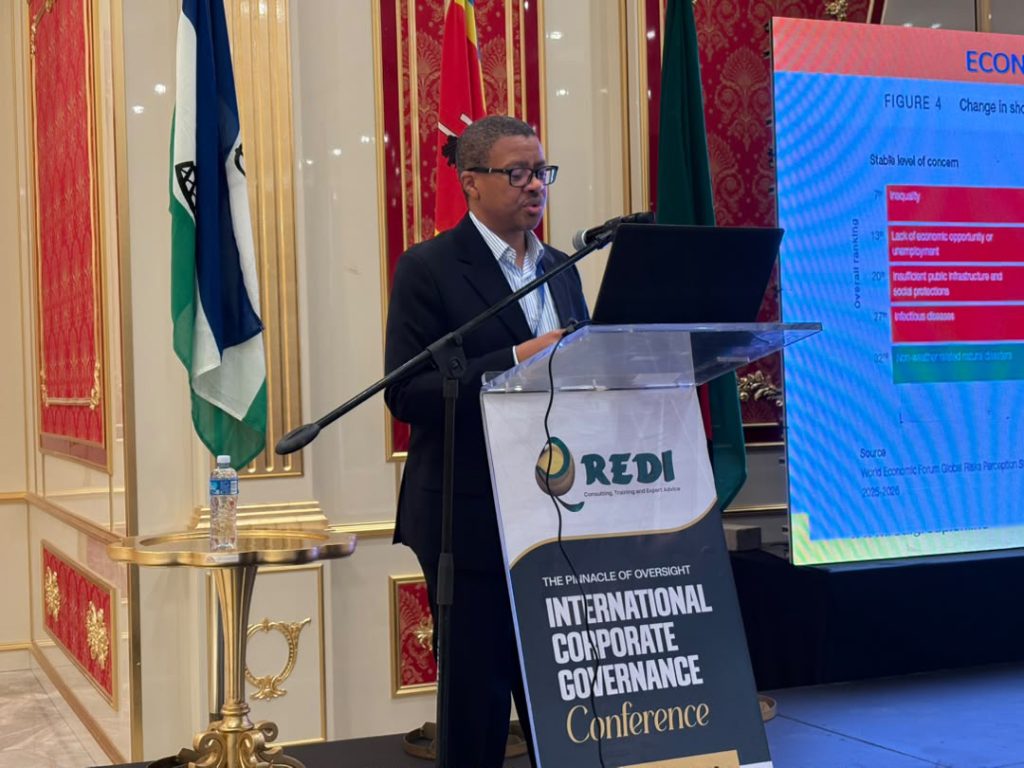
MBABANE- Companies and their directors could face legal action for failing to honour environmental, social and governance (ESG) commitments.
Director of Pectus Governance Services Sibane Mngomezulu spoke on the second day of the International Corporate Governance Conference at Palazzo ICC. Mngomezulu said businesses were increasingly being held accountable for their environmental and social responsibilities, with investors and other stakeholders demanding greater transparency.
He said directors could face legal challenges for making misleading statements about their organisations’ sustainability commitments or failing to implement the promises they had made. Mngomezulu said this demonstrated how corporate governance was evolving, with accountability extending beyond financial performance and regulatory compliance to include the environmental and social consequences of business activities.
The director challenged boards of directors to examine whether their organisations were genuinely incorporating ESG principles into their operations or merely making commitments on paper. He said businesses needed to demonstrate what they were doing to address climate change, manage waste, protect biodiversity, uphold human rights and promote inclusion.
Mngomezulu warned against greenwashing, where organisations claim to be environmentally responsible without taking meaningful action to support those claims. He said companies that misrepresented their environmental performance risked damaging their reputations and losing the confidence of stakeholders.
The director further noted that global investors were increasingly considering businesses’ responses to sustainability challenges when making investment decisions.
He said organisations that failed to demonstrate responsible business practices could find themselves at a disadvantage when seeking global capital. Mngomezulu also questioned whether companies were holding their executives accountable for ESG performance, particularly when determining bonuses and other incentives.
He said executive remuneration should not be measured solely against financial performance, but should also consider how organisations managed their social, environmental and governance responsibilities. He argued that businesses needed to recognise different forms of capital, including financial, natural, social and relationship capital, when measuring their long-term success.
Turning to the wider global environment, Mngomezulu said businesses were operating amid interconnected crises, including geopolitical tensions, economic uncertainty, misinformation, climate change and social polarisation. He referred to the concept of a polycrisis, which describes multiple crises occurring simultaneously and intensifying one another.
He said these developments had consequences for businesses, including those operating in Eswatini, because economic and political developments in other parts of the world could affect trade, supply chains and the cost of doing business.