For many years, installing solar panels, buying an inverter or investing in a backup generator was considered a luxury.
Today, with electricity becoming increasingly expensive in Eswatini, alternative energy is no longer simply about convenience; it is becoming a necessity for households and businesses looking to manage rising costs.
At the beginning of the year, consumers were confronted with the shocking news that the Eswatini Electricity Company (EEC) was proposing a 20.67 per cent electricity tariff increase. One figure particularly captured everyone’s attention: E100 would buy just 32 units of electricity. By April, consumers were already feeling the impact.
Now, another concerning headline has emerged, with the Times of Eswatini reporting on Wednesday, that EEC is seeking yet another tariff adjustment, potentially leaving consumers with just 30 units for every E100 spent.
For families already struggling to balance household expenses, this presents a difficult reality. Electricity is essential for cooking, refrigeration, lighting, security, schooling and entertainment. Those units can disappear surprisingly quickly.
The timing is particularly challenging. Schools will soon close for the festive holidays, meaning children will spend more time at home. Televisions, computers, gaming consoles, kitchen appliances and other devices will operate for longer hours, potentially pushing household electricity consumption higher.
Businesses face similar pressure. The festive season brings increased demand for products and services, forcing establishments to extend operating hours, increase production and rely more heavily on machinery, refrigeration and lighting. Expensive electricity can directly affect their operating costs and profitability.
Consumers therefore need to look beyond the national grid and consider alternative energy solutions. Solar power, inverters, generators and liquefied petroleum gas (LPG) offer different ways to reduce electricity consumption and improve energy security.
The Bridge Shopping Centre in Mbabane provides a practical example of this transition. By installing rooftop solar panels, the shopping centre has taken steps towards reducing its reliance on the national grid. Similar investments are increasingly visible in residential properties.
Sihle Langwenya, a solar expert, stresses the importance of embracing alternative energy, highlighting the benefits of reliable electricity, reduced dependence on the grid and peace of mind during power interruptions.
Which solution best
suits your property?
The question is no longer whether consumers should consider alternative energy, but which solution best suits their property, requirements and budget.
1. Solar Energy – An investment that keeps giving: Solar energy is one of the most attractive long-term alternatives because it allows households and businesses to generate their own electricity using sunlight. With Eswatini enjoying considerable sunshine, solar installations offer an opportunity to reduce dependence on conventional electricity.
Depending on the system’s capacity, solar power can operate lights, televisions, refrigerators, computers, pumps and other appliances.
Consumers can choose between grid-tied, off-grid and hybrid systems. Grid-tied installations work alongside the national electricity supply, off-grid systems operate independently, while hybrid systems combine solar panels, battery storage and grid electricity.
Solar water heaters are another worthwhile investment, particularly for households spending considerable amounts on electric geysers. They use sunlight to heat water, reducing electricity consumption.
Before installing a system, consumers should consider the capacity and quality of the panels, batteries and inverter. Regular maintenance, including cleaning panels and checking connections and battery performance, is equally important. Using reputable installers helps ensure the system meets the property’s requirements.
Your quick solution
to backup power
Inverters are essential components of many solar installations. They convert direct current (DC) electricity stored in batteries into alternating current (AC), which household appliances use.
Langwenya explains that hybrid inverter systems offer a practical backup solution, particularly when supported by appropriately sized batteries.
Backup duration depends on battery capacity and electricity consumption. A system designed to power essential appliances for four to six hours will differ from one expected to run an entire household overnight.
Consumers should identify which appliances they need during outages before purchasing a system. Surge protection and appropriate safeguards against lightning and overloading are also essential.
2. Generators – Reliable backup when demand is high: Generators remain practical for households and businesses requiring backup electricity. They are particularly useful for restaurants, supermarkets, workshops and manufacturing operations that cannot afford interruptions.
How big a generator
should you get?
Generator capacity depends on the combined electrical load of appliances you intend to operate simultaneously, measured in watts.
List the appliances you need to power and calculate their running requirements. Remember that equipment with electric motors, including refrigerators, pool pumps and air conditioners, requires additional power when starting.
What loads should you consider powering with a generator?
Depending on its capacity, a household generator can support:
Kitchen, bathroom and sitting room lights.
Refrigerators and freezers.
Television and decoder.
Cellphone chargers and computers.
Microwaves and selected kitchen appliances.
Garage door openers.
Security systems, electric fencing and outdoor lighting.
Businesses may also need electricity for refrigeration, production equipment, computers and point-of-sale systems.
What’s the difference between a standby and backup generator?
A standby generator is permanently installed and connected to a property’s electrical system. When fitted with an automatic mains failure system, it can start automatically when grid electricity fails.
A portable backup generator is movable and provides temporary electricity for selected appliances when needed.
A quick checklist before buying a generator:
Safety: Use a qualified electrician to instal an approved change-over switch and appropriate circuit protection.
Electrical load: Calculate the total wattage required.
Voltage and frequency: Ensure compatibility with your appliances.
Automatic starting: Decide whether you need an automatic mains failure (AMF) system or manual operation.
Location: Operate generators outdoors in properly ventilated areas to prevent dangerous exhaust fumes accumulating.
Noise levels: Consider neighbouring properties.
Running costs: Compare fuel consumption and maintenance requirements.
3. LPG – Taking pressure off your electricity bill: Liquefied petroleum gas (LPG) is another alternative gaining popularity in Eswatini. Although commonly associated with cooking, it has several other household and commercial applications.
Uses of LPG
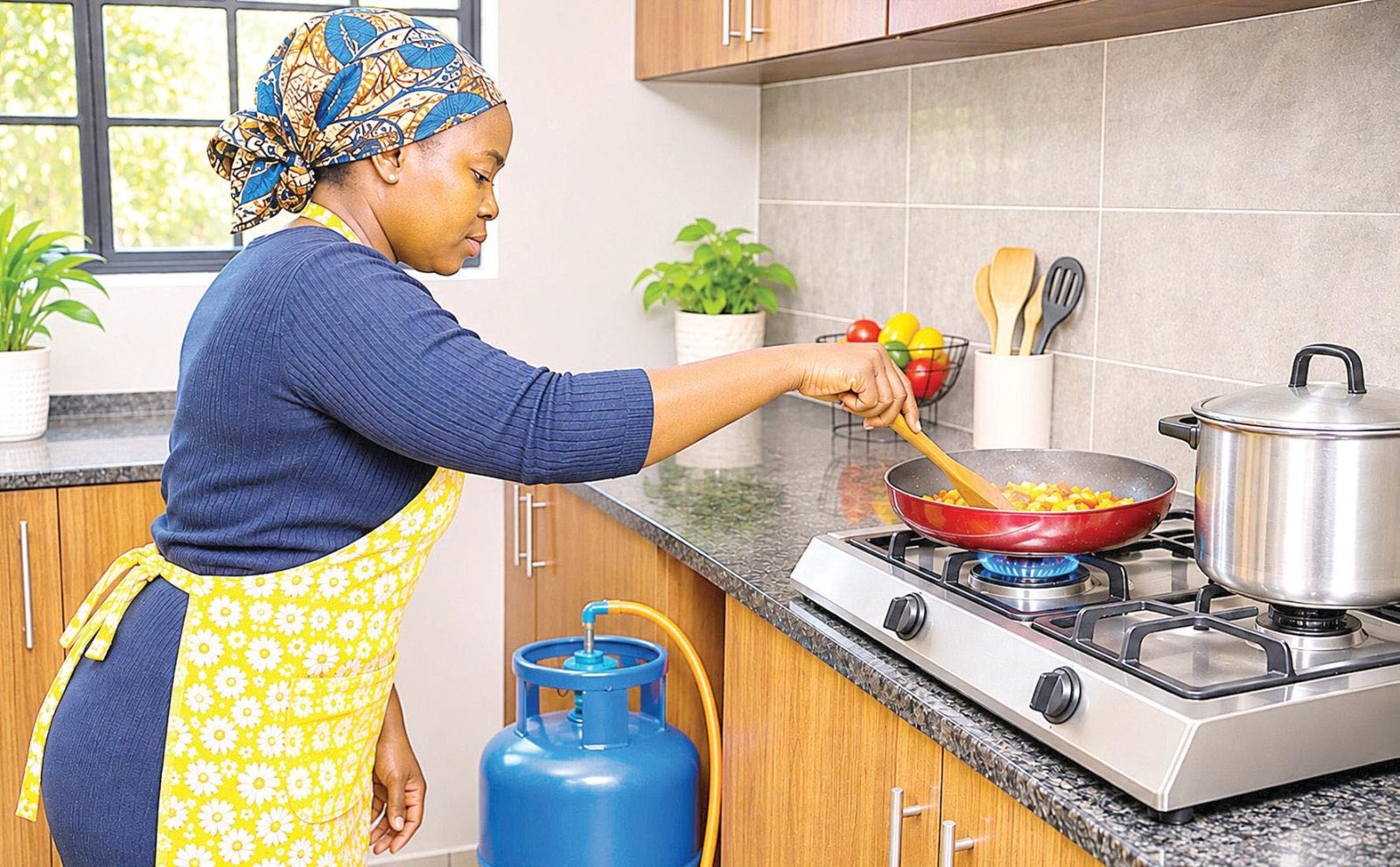
LPG can power cookers, ovens, water heaters, fireplaces, residential heaters and barbecue grills. It is also widely used in commercial kitchens.
Replacing an electric stove with a gas cooker, for example, can reduce daily electricity consumption, particularly during school holidays when families spend more time preparing meals.
Restaurants and food-processing businesses can similarly use gas-powered equipment for selected operations.
Advantages of using LPG
Reliability: LPG does not depend on the national grid. As long as there is sufficient gas, households can continue cooking and heating water during power interruptions.
Accessibility: Different cylinder sizes cater for household and commercial requirements. Suppliers also offer delivery services, making replenishment convenient.
Energy efficiency: Gas provides direct heat, making it an effective option for cooking and heating while reducing dependence on electricity.
Versatility: From cooking and water heating to fireplaces and commercial kitchen equipment, LPG serves several purposes. Safety remains essential. Cylinders should be stored upright in ventilated areas, away from heat, and fitted with suitable regulators and connections. Regular leak checks are important.
Alternative energy is no longer a luxury. It is an investment in household affordability, business continuity and energy security.