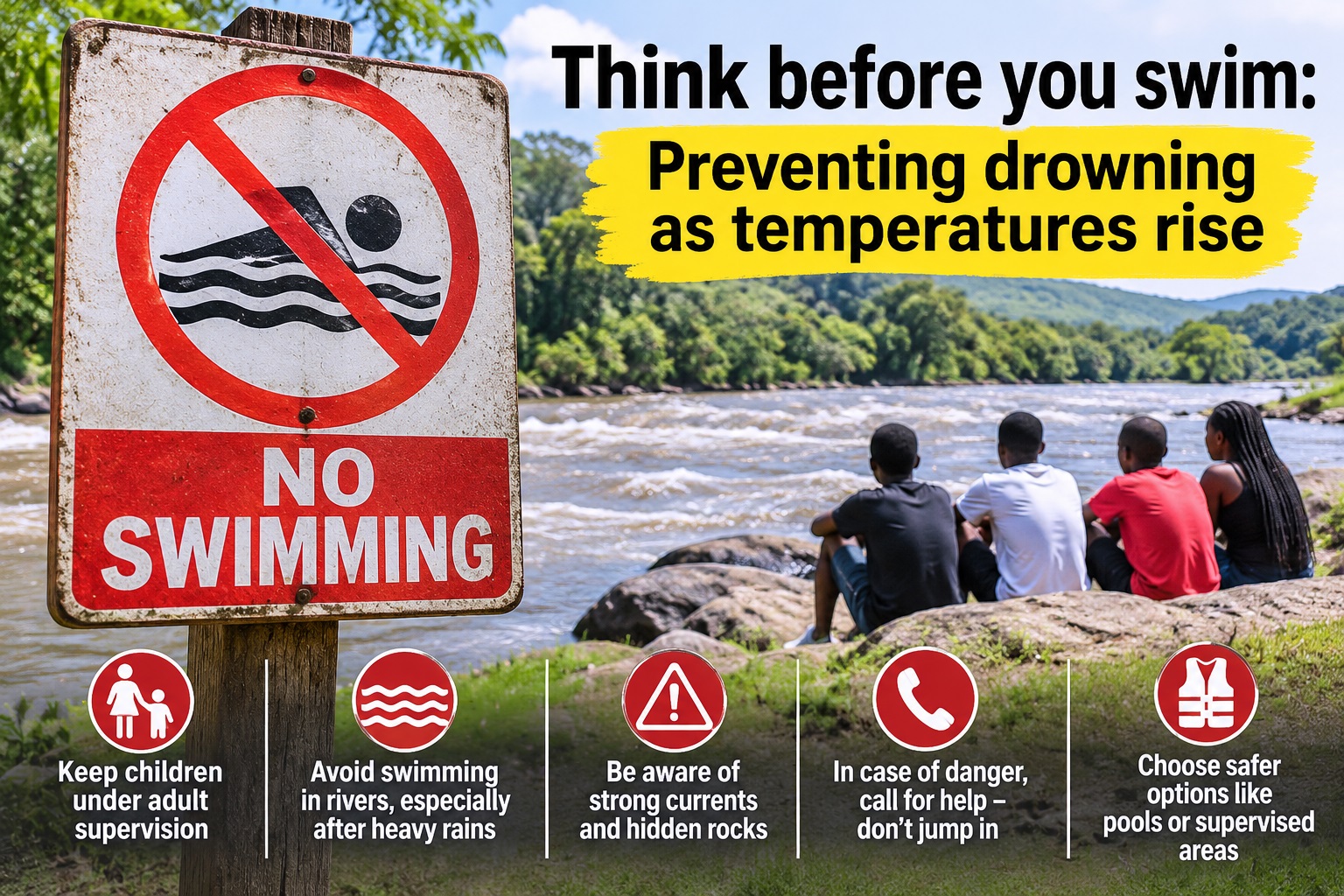
As temperatures rise and the heat becomes increasingly uncomfortable, rivers may look like the perfect escape. But beneath the inviting water could be strong currents, hidden rocks and dangerous depths capable of turning a refreshing swim into a tragedy.
The death of a 14-year-old Hermann Gmeiner (SOS) HighSchool pupil, who drowned in the Mbabane River after allegedly leaving school to swim with other pupils, is a painful reminder of the dangers associated with swimming in rivers.
According to a report published by the Times of Eswatini on Tuesday, the incident happened at around 12:45pm it Manzana, behind the Sidwashini Correctional Facility. Another pupil had reportedly experienced difficulties while swimming in the same river previously, but was rescued.
The incident comes as we experience warmer weather, with some people, particularly children and young people, likely to seek relief from the heat in rivers and other natural water sources. However, the heavyrains make these water bodies particularly dangerous.
Unlike swimming pools, rivers have unpredictable currents, uneven riverbeds and sudden changes in depth. Following heavy rainfall, water levels can rise rapidly, while currents become stronger and carry branches, rocks and other debris. Even a river that appears calm on the surface can conceal dangerous underwater conditions.
Swimming ability also does not guarantee safety. Strong currents can overpower even confident swimmers, while cold water can cause sudden physical shock, making it difficult to breathe or move normally.
Children are particularly vulnerable. Parents and guardians should know where their children are, discourage unsupervised swimming and teach them never to enter rivers, dams or other water bodies without permission and responsible adult supervision. Children should never be left to supervise one another around water.
Adults also need to exercise caution. Avoid swimming alone, entering unfamiliar rivers, diving into water of unknown depth or swimming after drinking alcohol. Never attempt to cross flooded rivers or streams, even if the water does not appear particularly deep.
If someone gets into difficulty, resist the urge to jump in after them. This can result in another drowning. Instead, call emergency services, alert others and where possible, throw a rope or floating object towards the person without entering the water.
The Royal Eswatini Police Service has similarly warned about hidden river currents, slippery banks and the importance of constant child supervision.
As the heat intensifies, finding ways to cool down is understandable. However, no moment of relief is worth a life. Rivers are natural water bodies, not swimming pools and when heavy rains have fallen, staying out of the water may be the safest decision.