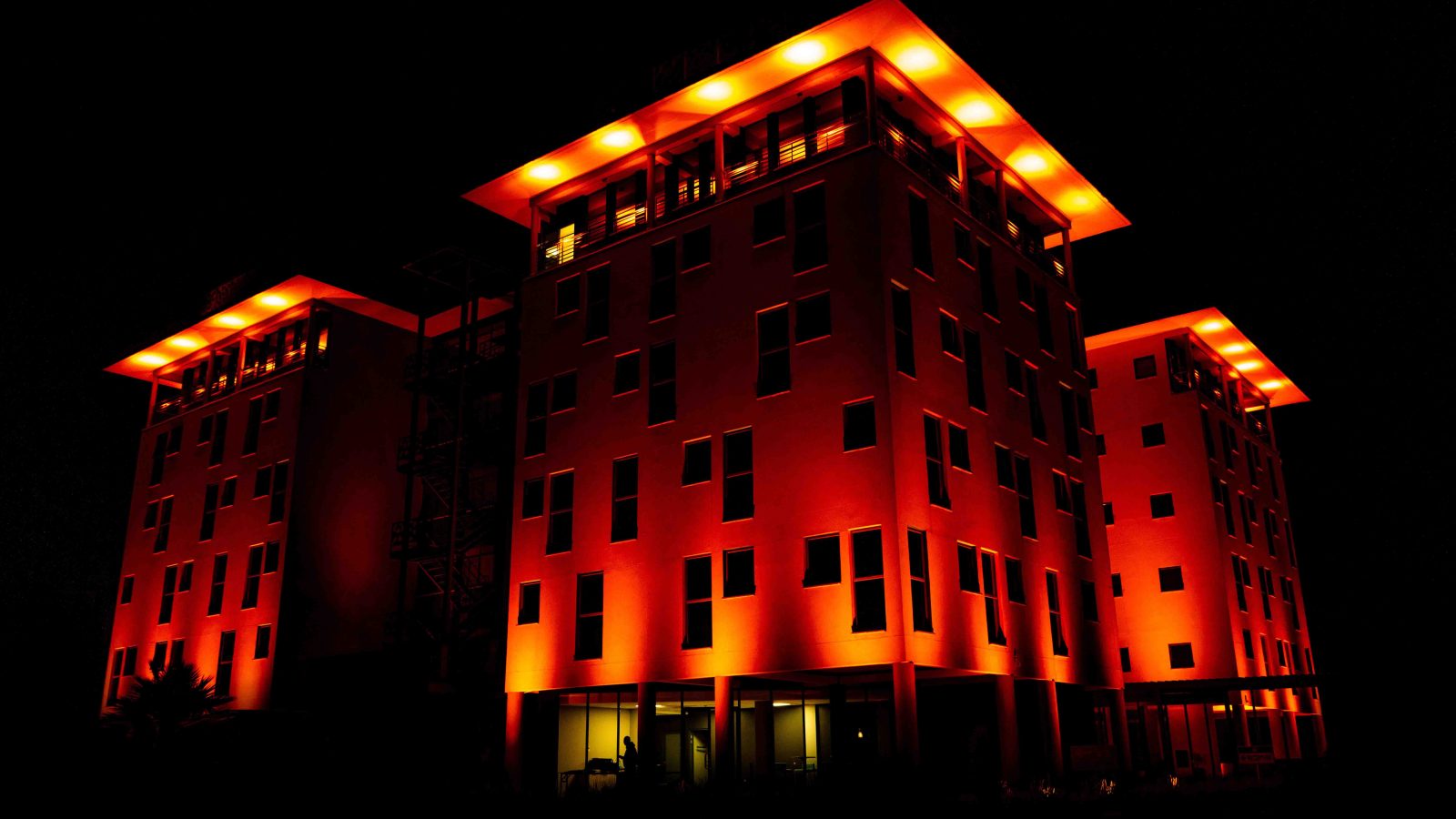
MBABANE – The United Nations House was illuminated orange on Wednesday evening as Eswatini joined the global campaign to end gender-based violence against women and girls.
The illumination was undertaken by the United Nations in Eswatini and the Deputy Prime Minister’s Office to mark the launch of the 16 Days of Activism Against Gender-Based Violence campaign.
The event brought together representatives of government, civil society organisations, development partners, survivors, young people and communities in a collective call for an end to violence against women and girls.
This year’s campaign is being held under the theme, ‘UNiTE to End Violence Against Women and Girls: Ensure Justice, Protect Survivors, End Impunity.’
The campaign runs from November 25, which is observed as the International Day for the Elimination of Violence Against Women, to December 10, Human Rights Day.
The illumination of UN House formed part of the global Orange the World campaign, which uses the colour orange as a symbol of hope and a future free from violence.
Speaking during the occasion, United Nations Resident Coordinator George Wachira said the orange glow represented solidarity with survivors and a shared commitment to ending gender-based violence.
He said the illumination was a reminder of the need to work collectively towards an Eswatini where all women and girls could live in safety, dignity and justice.
Wachira emphasised that ending violence required collective action and the involvement of all sectors of society.
Swatini Action Group Against Abuse (SWAGAA) Executive Director Nonhlanhla Dlamini also called for an end to impunity, stressing that perpetrators should be held accountable regardless of their status or influence.
She urged communities to stand with survivors, speak out against abuse and ensure that justice is served.
The ceremony also included reflections from partners and testimony from a survivor, highlighting the importance of prevention, protection, access to justice and survivor-centred support.
The campaign seeks to raise awareness and mobilise communities to take action against gender-based violence, while strengthening efforts to ensure that survivors receive the support and protection they need.
The United Nations and its partners are expected to continue with advocacy, awareness and community-engagement activities throughout the campaign period.
The campaign also reinforces the importance of ending gender-based violence in achieving the Sustainable Development Goals and building inclusive, peaceful and resilient societies.
The evening illumination followed the daytime launch of the 2026 16 Days of Activism campaign, organised by the Department of Gender and Family Issues in the Deputy Prime Minister’s Office.
Information presented during the launch showed that 10 577 cases of violence were recorded between January and June 2026 through the National System on Surveillance of Violence.
The figures were compiled from nine reporting partners and showed that current and former boyfriends or girlfriends accounted for the largest single relationship category, with 2 913 reported cases.
Other family members and relatives accounted for 1 803 cases, while 1 662 cases involved fathers or mothers. Current and former husbands or wives accounted for 1 429 cases.
The data further showed that females accounted for the majority of reported cases. Of the 10 409 records in which sex was captured, 7 082 involved females, representing 68 per cent, while 3 327 involved males, representing 32 per cent.
Regarding the locations where the incidents occurred, 7 472 of the 10 407 records with location information indicated that the violence took place at home. This represented 71.8 per cent of the recorded cases.
Emotional or verbal abuse was the most frequently recorded form of violence, with 3 647 cases, followed by physical abuse at 3 317 and sexual abuse at 1 374.
The Manzini Region recorded the highest share of cases at 31.1 per cent, followed by Hhohho at 26.3 per cent, Lubombo at 25.5 per cent and Shiselweni at 17.1 per cent.
The figures were presented against a background of increasing reports of violence over the years. Eswatini recorded 18 236 reported cases in 2023, while reports showed a 50 per cent increase in cases between 2017 and 2023, representing an average annual increase of 12 per cent.
The launch also highlighted interventions being implemented to respond to gender-based violence. This included support provided to 5 164 callers through the 116 helpline and the training of 123 social workers on the helpline.
A further 324 gender-based violence first responders had been trained, while 35 survivors were accommodated in shelters and 782 clients accessed day safe-space services.
Through the Ending Gender-Based Violence Campaign, 66 000 people had been reached across 12 towns, while 2 244 people were reached in 11 communities. Another 1 070 leaders, parents and community members had also been reached through various engagements.
Other interventions included training 201 survivors and persons with disabilities in employability and digital business skills, reaching 226 adolescent girls and young women with sexual and reproductive health rights and gender-based violence training, and training 189 people in entrepreneurship.
The information also showed that 2 380 people had benefitted from cash transfers.
The campaign response was presented as being built around five interconnected systems: Prevention, protection, justice, social protection and accountability.
Among the priorities highlighted were funding survivor services, closing gaps in the justice system, strengthening gender-based violence-responsive social protection, reaching every region, transforming harmful social norms and improving data collection and accountability.
The launch also heard calls for stronger justice systems and improved capacity to handle cases of sexual and gender-based violence.
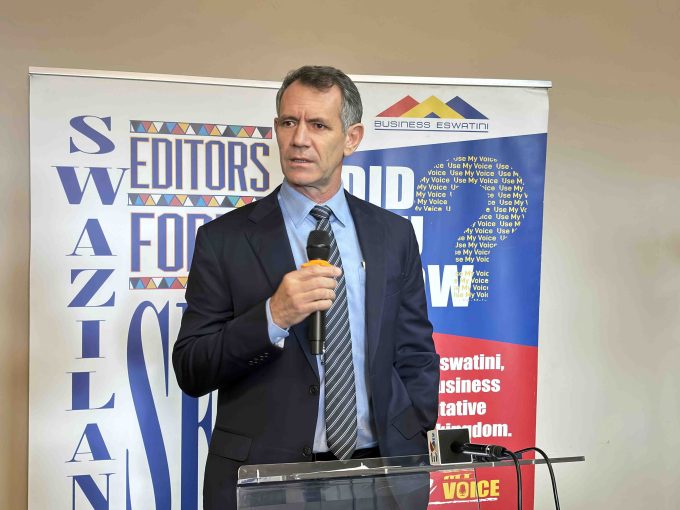
Mbabane Principal Magistrate Fikile Nhlabatsi called for Eswatini to establish its own forensic laboratory, saying this would help reduce delays in obtaining forensic results and speed up the prosecution of rape and murder cases.
She said the country currently relied on a memorandum of understanding with South Africa’s Forensic Department to obtain forensic services.
However, the demand for services from across the Southern African Development Community (SADC), as well as paying clients, meant that Eswatini’s requests could be delayed.
“It is time for us to develop our own forensic laboratory,” said Nhlabatsi.
She said having a local facility would also create opportunities for young emaSwati with scientific qualifications to contribute to the country’s forensic capacity.
Such a facility could assist in establishing paternity through DNA testing and linking suspected offenders to DNA evidence more quickly.
Nhlabatsi further noted that delays in receiving forensic reports meant that accused persons remained in custody while being cared for at the expense of government.
She said developing local capacity could reduce the cost to the State while allowing rape and murder cases to be finalised more quickly.
She also called on chiefdoms and chiefdom councils to uphold the truth and protect vulnerable members of their communities.
Nhlabatsi cautioned against situations in which people lost land because leaders failed to act truthfully or children were left fighting for their fathers’ homes without shelter.
She reminded leaders that the Constitution guarantees every citizen the right to shelter and urged those in positions of authority to defend the innocent, regardless of whether doing so was unpopular.
She also warned against favouritism towards people because of their financial standing and urged leaders not to withhold information about family history when it was necessary to resolve disputes.