

EZULWINI – Eswatini has earned regional recognition for taking the lead in the establishment of a national consultative mechanism for SACU tariffs and trade remedies.
The country has become the first Southern African Customs Union (SACU) Member State to initiate the process.
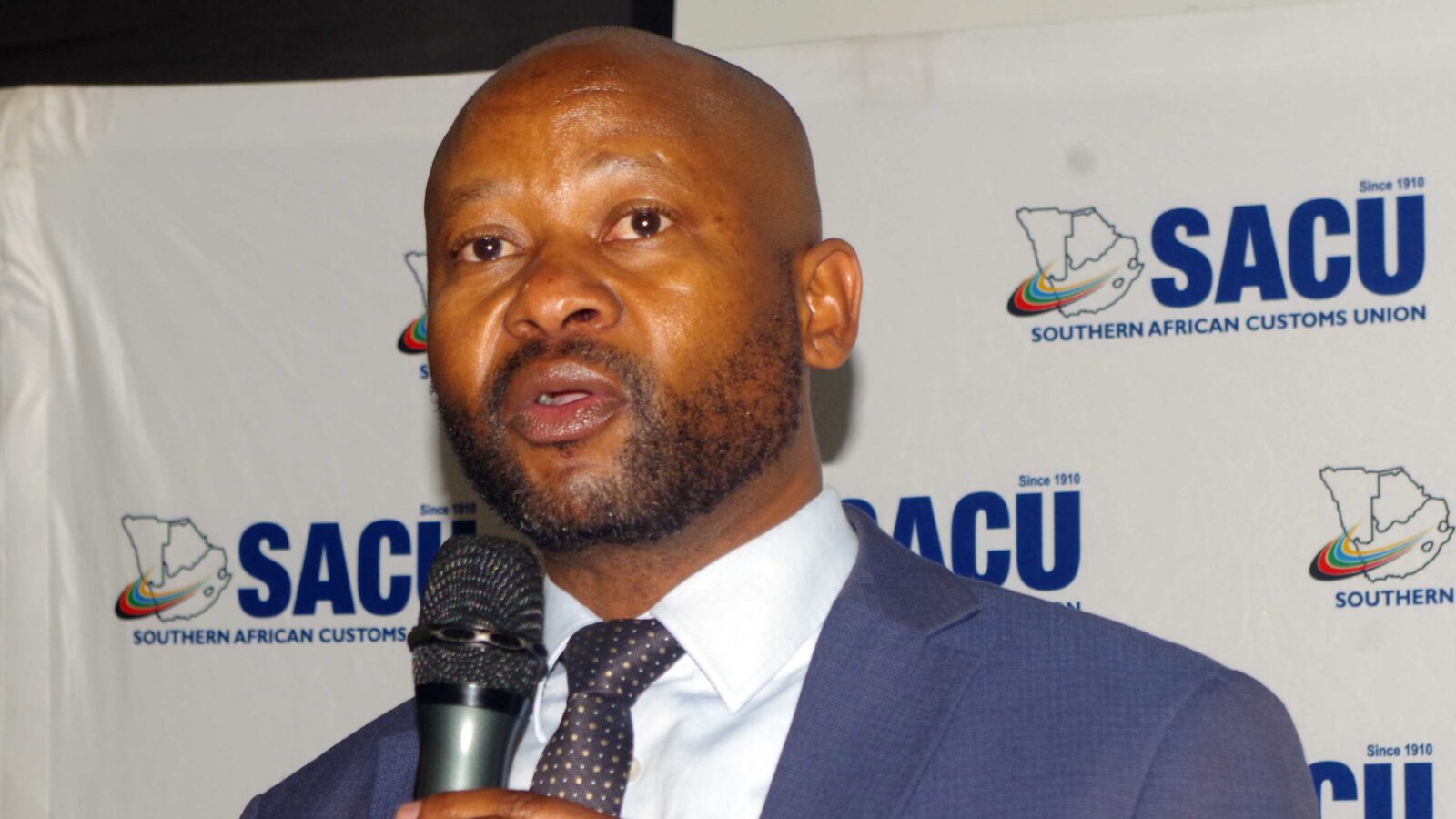
Speaking at the opening of the two‑day workshop at the Happy Valley Hotel, Ezulwini yesterday, Thuto Mathetsa, Tariff Board Coordinator at the SACU Secretariat, hailed Eswatini for its swift action in advancing the long‑awaited implementation of this critical mechanism.
The workshop empowers government officials, representatives from the private sector and civil society organisations to craft a mechanism that reflects the realities of Eswatini’s economy, while also enabling meaningful interaction with SACU regional structures.
Mathetsa emphasised that the establishment of national consultative mechanisms is central to giving all SACU Member States a voice in determining tariffs and trade remedies—an area that has remained largely under South Africa’s administration through the International Trade Administration Commission (ITAC).
Highlighting the historical context, Mathetsa explained that while the current SACU Agreement was adopted in 2002 and came into force in July 2004, its institutional framework was never fully implemented.
Provisions for a SACU Tariff Board, national bodies and an ad hoc tribunal were included, but none became operational. As a result, ITAC has managed the SACU Common External Tariff (CET), making decisions on tariff changes, trade remedies and rebates based on Council of Ministers’ recommendations.
This arrangement was always intended to be temporary, says Mathetsa, but became semi-permanent.
He noted that Botswana, Eswatini, Lesotho and Namibia—the BLNS countries—have consistently voiced concerns over this arrangement, arguing that ITAC is fundamentally a South African institution which cannot act on their behalf indefinitely. Eswatini’s proactive move to establish its own national mechanism is seen by the SACU Secretariat as a decisive step towards restoring equitable representation.
Mathetsa also referenced the 2013 amendment that introduced the SACU Summit, tasked with defining SACU’s political and strategic direction and overseeing the council’s work—but he noted that tariff and trade remedy institutions remain dormant and represent a gap in the regional architecture.
It is worth noting that the 2002 SACU Agreement, which came into force on July 15, 2004, was designed to democratise the union by establishing independent institutions such as a regional tariff Board and national consultative bodies. It promised transparent, collective decision-making—but as Mathetsa noted, these institutions never became fully functional.
South Africa, through ITAC, continued to unilaterally manage the CET and trade remedies. BLNS States repeatedly raised concerns, particularly over anti-dumping and safeguard duties being imposed without suitable input from their national bodies.
Eswatini derives up to 50–55 per cent of government revenue from SACU receipts, generated through CET and excise components pooled and shared. This makes any decline in CET‑related revenue—due to trade disputes or global trade slowdowns—particularly damaging to fiscal stability.
Recent concerns over global trade wars and the potential erosion of trade preferences under African Growth and Opportunity Act (AGOA) bring to the fore the vulnerability of SACU revenue sharing—and by extension, the need for Eswatini to gain stronger domestic input in tariff policy development.
Mathetsa wrapped up his remarks reaffirming SACU’s support: “This process is about restoring Member States’ voices in decisions that shape their economies. Eswatini’s leadership today could become a model for the entire customs union.”
Strategic milestone for Eswatini – govt
EZULWINI – Principal Secretary (PS) in the Ministry of Commerce, Industry and Trade Melusi Masuku described the exercise as ‘a strategic milestone’ for the kingdom.
Masuku was represented by Registrar of Intellectual Property Dr Celucolo Dludlu.
“It is my distinct pleasure to welcome you to this national workshop, organised in collaboration with the Southern African Customs Union (SACU) Secretariat, on establishing a consultative mechanism for tariffs and trade remedies in Eswatini,” said the PS.
He went on to highlight that as a customs union, Eswatini’s participation in developing the Common External Tariff (CET) is both a right and responsibility.
“Tariffs and trade remedies are powerful tools of industrial policy. Our ability to influence these instruments must be underpinned by well‑structured national processes that gather and reflect the voices of all stakeholders—public, private and civil society.”
Masuku confirmed that Eswatini is already reviewing legislation to establish a national body on tariffs and trade remedies at home.
“The timing is opportune. SACU is currently rethinking aspects of its architecture, including its approach to tariffs. Eswatini, for its part, is reviewing legislation. This convergence presents a valuable opportunity to align national reforms with regional imperatives.”
“This initiative is not just administrative. It is a strategic move to strengthen Eswatini’s voice in one of the most important policy spaces in our regional integration agenda,” Masuku declared, officially opening the three days of deliberations and urging full engagement.
He also extended formal appreciation to SACU Executive Secretary Thabo Khasipe, through the office of the Tariff Board Coordinator, for support rendered to Eswatini since October 2024, including virtual engagements that laid the groundwork for yesterday’s in‑person workshop.










Leave a comment