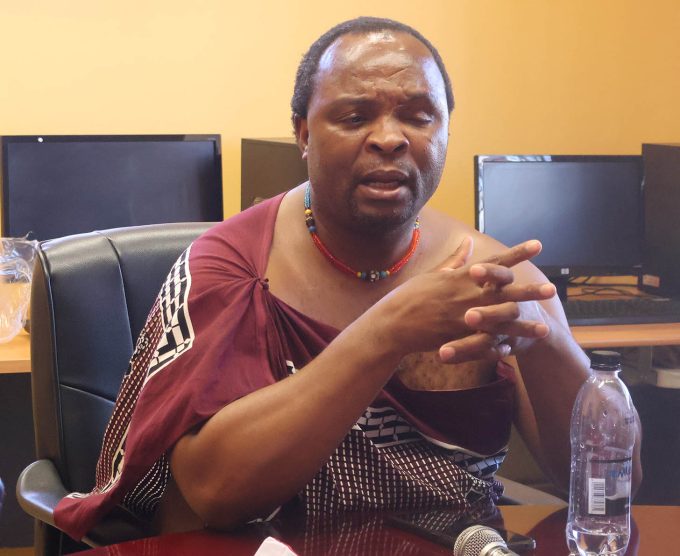

MBABANE – Minister for Economic Planning and Development Dr Thambo Gina says government’s partnership with the World Bank must translate into jobs, improved public services and better livelihoods for emaSwati.
Dr Gina made the remarks during a meeting with World Bank Executive Director for Africa Group 1 Constituency Dr Zarau Wendeline Kibwe on the sidelines of the 2026 Annual Meetings of the International Monetary Fund (IMF) and World Bank Group in Bangkok, Thailand.
The IMF-World Bank Annual Meetings are taking place from October 12 to 18, 2026, bringing together policymakers and financial institutions to discuss global economic conditions, development financing and related challenges.
The meeting provided an opportunity for the two parties to discuss Eswatini’s development priorities, financing requirements and progress in implementing development projects.
“We value the bank as a strategic partner in advancing inclusive growth, economic resilience and sustainable development,” Gina said.
He acknowledged the World Bank’s visit to Eswatini in May 2025, saying it had provided valuable insight into the country’s national priorities and development challenges.
The minister emphasised that the partnership should extend beyond the provision of funding to include technical expertise, policy advice and institutional support to strengthen the implementation of development programmes.
“Our shared objective must be to translate development financing into tangible results, jobs, improved public services and better livelihoods for emaSwati,” he said.
The discussions highlighted several priorities, including digital transformation, expanding access to safe water and sanitation and promoting private sector-led job creation through the proposed Jobs 4 All Eswatini initiative.
The meeting also highlighted the need to accelerate project implementation, improve coordination among relevant institutions and address challenges that could delay the delivery of development commitments.
The engagement comes as Eswatini continues to pursue development financing and partnerships to support economic growth, improve service delivery and expand employment opportunities.
The emphasis on implementation points to the importance of ensuring that financing commitments result in completed projects and measurable improvements in the lives of citizens.
Meanwhile, Minister for Finance Neal Rijkenberg has called for stronger intra-African trade and increased domestic production of value-added goods to address the continent’s trade imbalances and strengthen its financial resilience.
Rijkenberg made the call during the Africa High Level Working Group on the Global Financial Architecture, convened by the United Nations Economic Commission for Africa (ECA) on the sidelines of the same IMF-World Bank Annual Meetings in Bangkok.
He urged African countries to work together to reduce their reliance on imported finished products while exporting raw materials, a pattern that limits opportunities to retain more economic value within the continent.
The minister highlighted public procurement as a potential instrument for supporting industrial development and expanding regional trade.
He pointed to a proposed African Union initiative on strategic supply rights, which would enable African countries to specialise in producing selected goods for supply across the continent.
Under this approach, countries could develop particular production capabilities and supply products to other African markets, potentially strengthening regional value chains, encouraging local manufacturing and creating employment.
Rijkenberg’s submission formed part of discussions involving African ministers of finance and central bank governors on infrastructure financing and the new IMF-World Bank debt sustainability frameworks for low-income countries.
The discussions addressed issues affecting African economies’ ability to finance development while maintaining sustainable debt positions.