

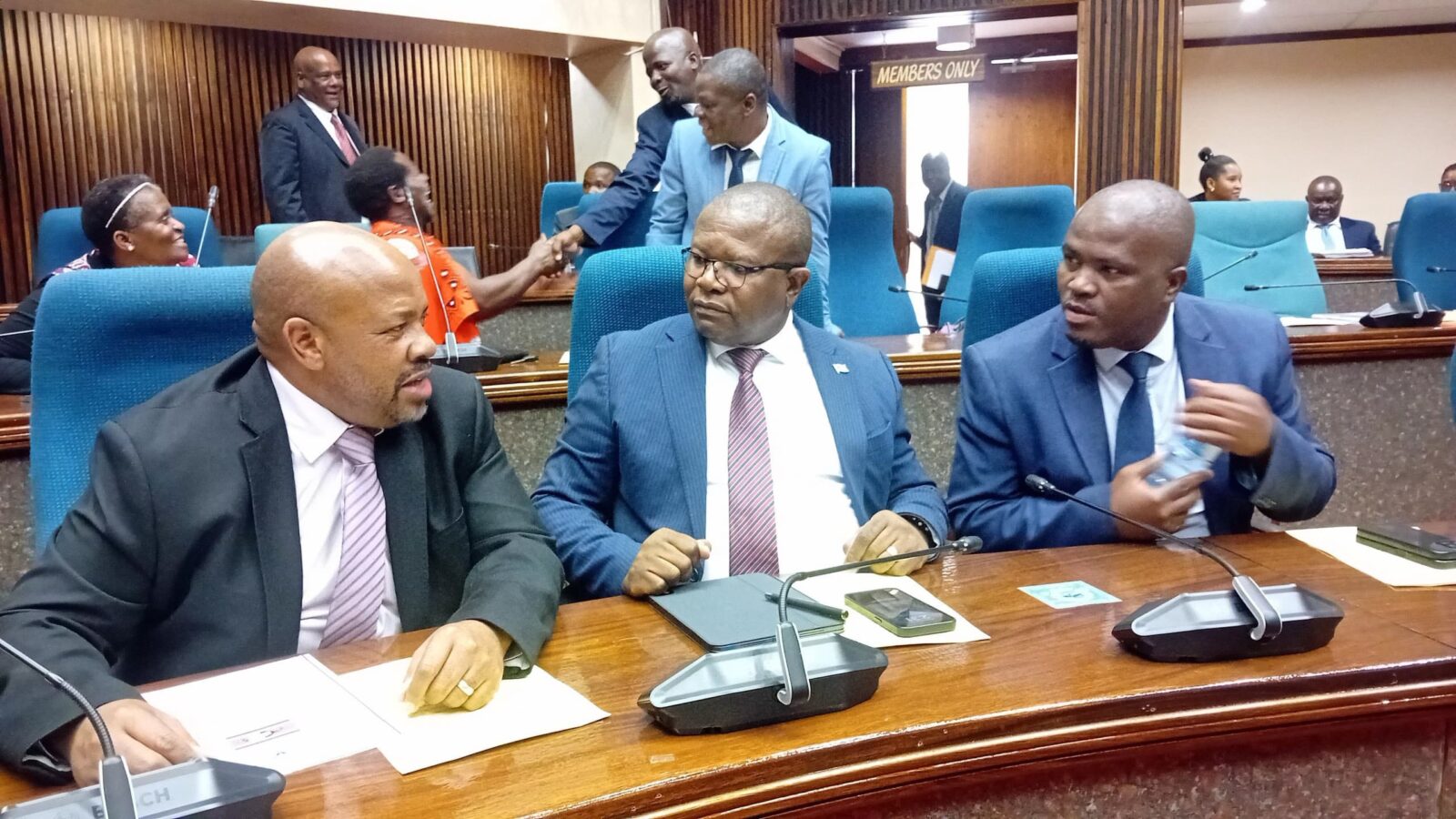
MBABANE – Speaker in the House of Assembly, Jabulani Mabuza, has clarified that Parliament is playing an oversight role over the Judiciary, not interference.
Mabuza was addressing the perception that Parliament was interfering in the affairs of the Judiciary, which would be contrary to the Constitution. Section 141(1) of the Constitution states that in the exercise of the judicial power of Eswatini, the Judiciary, in both its judicial and administrative functions, including financial administration, shall be independent and subject only to this Constitution and shall not be subject to the control or direction of any person or authority.
Subsection (2) reflects that neither the Crown nor Parliament nor any person acting under the authority of the Crown or Parliament nor any person whatsoever shall interfere with judges or judicial officers or other persons exercising judicial power, in the exercise of their judicial functions. Mabuza clarified that Parliament respects the independence of the Judiciary as stipulated in the Constitution and the separation of powers thereof. However, as an institution that passes ministries’ budgets, they have the responsibility to play oversight on the utilisation of budget allocation and it is what they are doing.
The clarity by the Speaker, who requested the Minister for Justice and Constitutional Affairs, Prince Simelane, to further communicate it to the Judiciary leadership, emanated from the adoption of the report of the Ministry of Justice and Constitutional Affairs Portfolio Committee on the Law Reform and Development Bill, 2024.
The report, tabled by the minister in Parliament recently, was subsequent to a motion moved by Lobamba Member of Parliament (MP) Michael Masilela, which requested the minister, in collaboration with the minister for Public Service, to address the issue of low remuneration and generally poor terms and conditions of service for the country’s magistrates.
“Minister, I request that you pass the message to the Judiciary to give clarity that as Parliament, we are an institution that passes the budget for every ministry and government department hence it is our duty to follow up on the use of the budget we have passed in the House. We are not at all interfering in the affairs of the Judiciary but we are simply playing oversight role as Parliament,” he said.
Prior to the clarity by the Speaker, the minister requested to withdraw the adoption of the report, after Members of Parliament made a recommendation that he should be given at least three months to address the matter. The legislators were not satisfied about the feedback given by the minister on the motion and they afforded him an extended opportunity to address the issue.
The minister initially told the MPs that ‘angikaphatsi lutfo’, meaning he had no positive feedback on the issue save to say that the newly-appointed Judicial Service Commission (JSC) was working on the matter. The minister submitted that the JSC had assured him that it was working on the matter and he would give updates to Parliament on developments, stating that as a ministry, they were cognisant of the issues raised in the motion and they engaged all stakeholders involved, including the Ministry of Finance and that of the Public Service, to help the situation of the magistrates in the country.
However, he did remind the House about Section 141 of the Constitution which gives independence to the Judiciary, revealing that he was also reminded of same by the Judiciary leadership and sometimes he finds himself between a rock and a hard place on such matters.
Full story in today’s paper.


















Leave a comment