

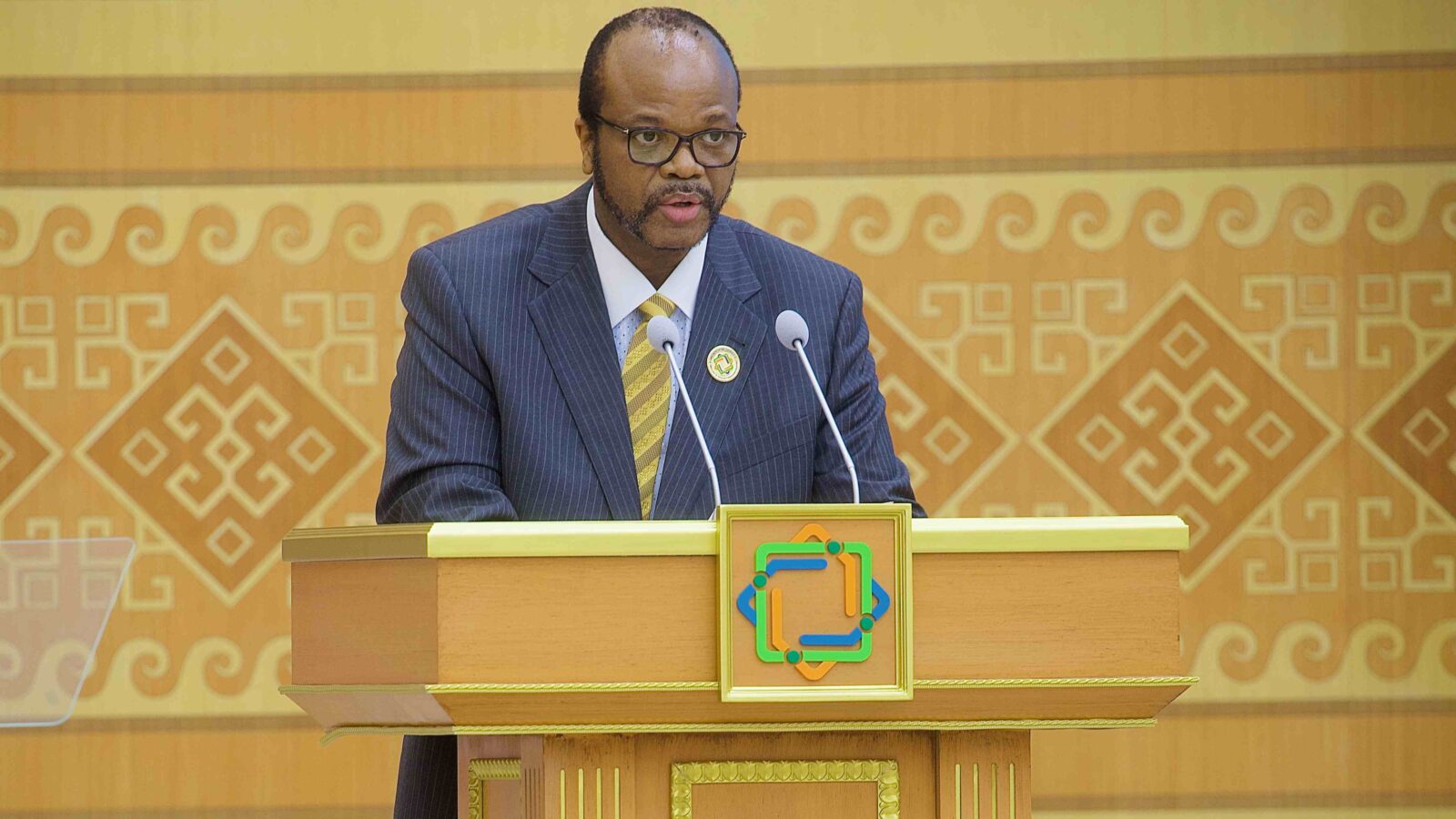
AWAZA, TURKMENISTAN – His Majesty King Mswati III has told the third United Nations Conference on Landlocked Developing Countries (LLDCs) that they pay twice the transport costs of coastal neighbours, hindering competitiveness and investment.
The conference was attended by UN Secretary General Antonio Gutteres, Turkmenistan’s President Serdar and other world leaders from LLDCs.
The King said this is one of many other challenges faced by Eswatini and other LLDCs, which comprise of logistical delays, limited market access due to poor infrastructure.
“For Eswatini, being landlocked is not just a geographic condition, but a daily development challenge. High transport costs and vulnerability to global shocks slow our progress. Yet, these challenges inspire us to think innovatively and seize opportunities for cooperation,” he said.
However, despite these challenges, His Majesty the King said the theme for the conference: “Driving progress through partnerships” resonates with landlocked countries’ aspirations.
The King said the country prioritises infrastructure investment to transform from landlocked to land-linked, enhancing connectivity and reducing trade costs.
“We are upgrading rail lines, streamlining customs procedures and investing in digital infrastructure to connect our people, communities and markets efficiently, to mention just a few. These efforts foster regional integration and economic competitiveness,” His Majesty said. He said to build resilience and ensure sustainable growth, Eswatini is diversifying beyond traditional sectors, as the country is promoting investment in agro-processing, tourism, renewable energy, ICT, creative industries and private enterprise.
“This strategy broadens our economic base, creates jobs and supports inclusive development, aligning with our national priorities and Agenda 2030 and 2063,” the King said.
His Majesty the King said a dynamic private sector is vital for inclusive growth and the Kingdom is fostering an enabling environment for all, including youth, women and marginalised groups through regulatory reforms and entrepreneurship programmes, unlocking their potential to drive economic progress and ensure no one is left behind.
Full article available in our paper.
















Leave a comment