Home Business SARFED warns rising debt poses policy risks for economy
Business

SARFED warns rising debt poses policy risks for economy

Share
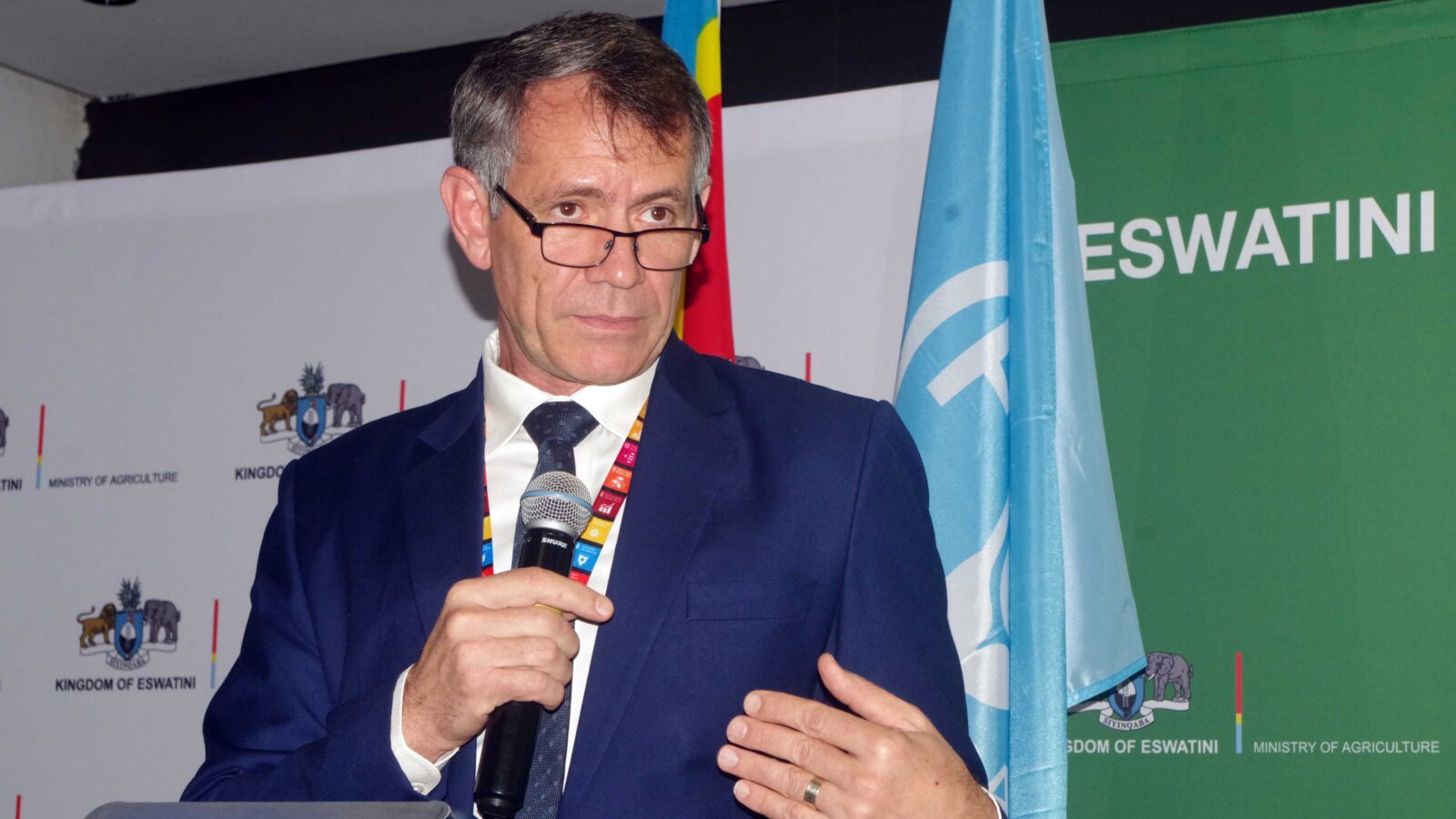
Finance Minister Neal Rijkenberg. Although Eswatini’s debt-to-GDP ratio of 40.2 per cent remains within the 41 per cent benchmark, the country has little room left to manoeuvre. (Pic: File)
Share

MBABANE – Eswatini’s rising public debt is pushing the economy into a danger zone, warns Dr George Choongwa, Regional Coordinator at SARFED, calling for urgent fiscal discipline.

The Coordinator at the Southern African Research Foundation for Economic Development (SARFED), Dr Choongwa, has warned that Eswatini’s rising public debt is pushing the economy into a danger zone that could compromise long-term growth, stability and social progress.

Responding to Finance Minister Neal Rijkenberg’s defence of the nation’s E38 billion debt earlier this month, Dr Choongwa said that although Eswatini’s debt-to-GDP ratio of 40.2 per cent remains within the 41 per cent benchmark, the country has little room left to manoeuvre.

 “Eswatini is effectively operating with less than a 2 per cent debt-free margin, which is a high-risk position in an unpredictable global environment,” Dr Choongwa said.

According to the Ministry of Finance’s 2024/25 Annual Performance Report, the country’s external debt stands at about 40.2 per cent of GDP. While technically below the safety threshold, Dr Choongwa cautioned that international experience shows debt levels in the 40–50 per cent range are widely considered a red flag.

He further pointed out that Eswatini is grappling with vulnerabilities ranging from global geopolitical tensions such as the Russia-Ukraine war, to domestic challenges like climate shocks and high poverty levels, currently estimated at 53 per cent.

Despite this, Eswatini continues to attract foreign investment in mining, infrastructure and technology — a trend that Dr Choongwa said could be undermined if debt reliance deepens.

Dr Choongwa emphasised that Eswatini’s public finance policy must become more forward-looking rather than reactive if it is to shield the economy from widening fiscal risks.

 “Short-term fiscal fixes may keep the numbers in line, but they do not provide the stability that long-term investors are looking for,” he cautioned.

Full article available in our publication.

Share
Written by
Nhlanganiso Mkhonta

Nhlanganiso Mkhonta serves as Business Editor at the Times of Eswatini. He reports on business, economics, finance, investment, entrepreneurship and public policy, producing insightful coverage and analysis of the issues driving Eswatini’s economy and the wider African business environment.

Leave a comment

Leave a Reply

Your email address will not be published. Required fields are marked *

Don't Miss

Chief Justice Bheki Maphalala passes on

MBABANE- Chief Justice Bheki Maphalala has died, according to reports emerging on Thursday. Maphalala is reported to have passed away while receiving treatment...

Thousands flock to Shiselweni for Umhlanga second leg

MANZINI – Thousands of Imbali yesterday descended on the Mbangweni Royal Residence in the Shiselweni Region, marking the beginning of the second leg...

Schools open as scheduled – PS

MBABANE –Principal Secretary in the Ministry of Education and Training, Nanikie Mnisi, has affirmed that schools will reopen as scheduled in accordance with...

E50 000 bail for couple in E2.3 million theft case

MBABANE - A former chief clerk and her husband, implicated in the alleged theft of E2.3 million from Pick Yours Supermarket in Buhleni,...

Mbuso Simelane accused of attempts to divert E10m public funds

MBABANE – The Eswatini Medical Christian University (EMCU) Council has alleged that the Chairman of the committee appointed to investigate the affairs of...

Related Articles

E8m retail threshold puts shops in emaSwati’s hands

MBABANE - All retail operations with an annual turnover below E8 million...

FNB Eswatini earnings fall 3% despite income growth

MBABANE - FNB Eswatini’s profit before tax declined by 3 per cent...

New COMESA rules reshape regional competition landscape

MBABANE - The new COMESA Competition and Consumer Protection Regulations, 2025, introduce...

Revenue Tribunal targets efficiency as appeals rise

MBABANE – The Revenue Appeals Tribunal Eswatini (RATE) has pledged to strengthen...