

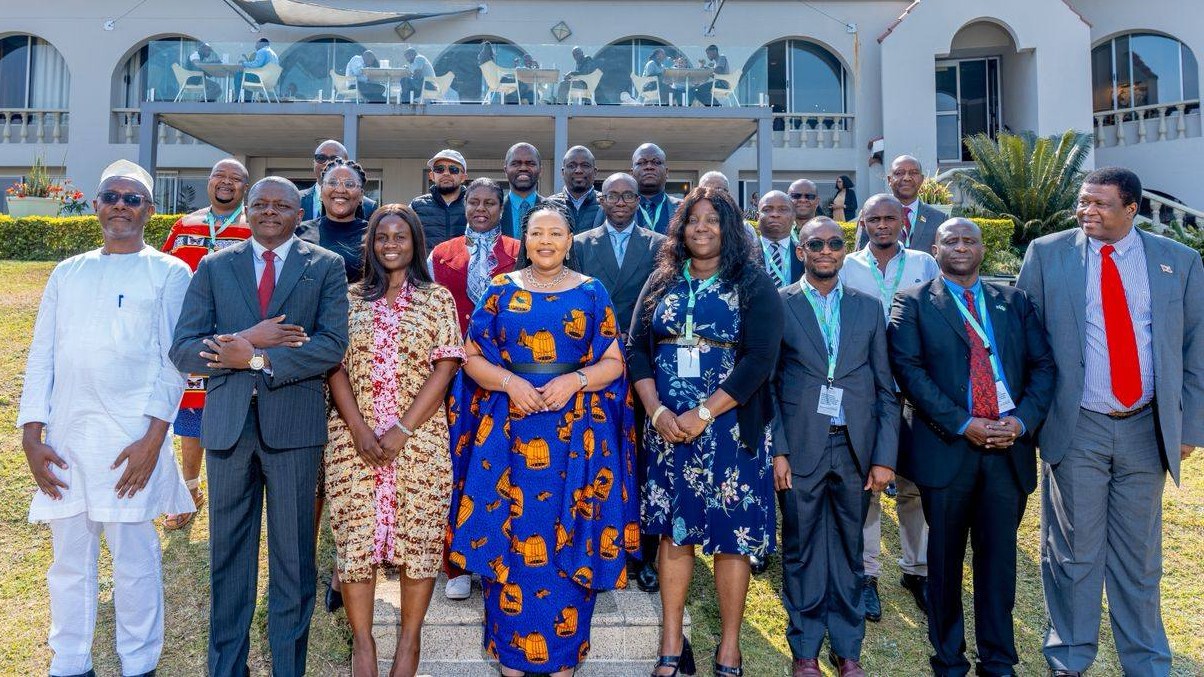
A regional workshop on strengthening early warning and governance monitoring mechanisms in southern Africa recently took place in the kingdom of Eswatini; bringing together representatives of government, the African Union (AU), the Economic and Social Council (ECOSOC), the Southern African Development Community (SADC) and civil society organisations (CSOs). The event, facilitated by Thinking Africa in partnership with the AU, focused on deepening cooperation between State institutions and civil society in conflict prevention and peacebuilding.
The meeting responded to a pressing reality. Africa continues to face recurrent conflicts, political instability and security challenges that undermine development. The AU, through the African Peace and Security Architecture (APSA), has prioritised early warning and rapid response as core strategies to manage threats before they escalate into violent crises. The Continental Early Warning System (CEWS) plays a central role in this work, yet its effectiveness depends heavily on the collaboration of civil society. Article 12 of the Peace and Security Council (PSC) Protocol directs CEWS to engage with CSOs in data collection, analysis and early response.
The discussions explored how to professionalise and institutionalise this partnership. The workshop trained CSOs in conflict analysis, digital monitoring tools, mediation techniques and data protection, thereby equipping them with essential skills for contemporary peacebuilding. Beyond training, the meeting led to the formalisation of the Southern Africa CSO Early Warning Coalition, designed to strengthen the regional network of organisations able to detect risks and support timely intervention. Participants also co-designed digital platforms for conflict monitoring and rapid alerts, which are expected to advance the capacity for accurate and swift information-sharing across borders. Eswatini’s hosting of the event carried weight. As a member of the AU and SADC, the country plays a role in supporting the collective security mechanisms of the continent. Its position as host showed a readiness to provide space for dialogue on matters that transcend national boundaries, particularly those affecting peace and development in southern Africa. Eswatini’s engagement in such processes is also consistent with its participation in AU decision-making structures, where it has supported calls for inclusive approaches to peace and security.
The importance of CSO involvement in this work is not theoretical. Across Africa, civil society has played a decisive role in preventing violence and facilitating reconciliation. In Kenya, following the post-election violence of 2007 – 2008, CSOs worked with religious leaders and community groups to mediate between rival factions, laying foundations for the mediation process later led by former UN Secretary General Kofi Annan. Their local networks and credibility made them indispensable in calming tensions and restoring dialogue.
Another example is Liberia, where during years of conflict, women’s peace movements such as the Women of Liberia Mass Action for Peace mobilised across religious and ethnic lines, to pressure warring parties into negotiations. Their activism not only supported the signing of the 2003 Accra Peace Agreement, but also laid the groundwork for long-term reconciliation efforts. These cases show how civil society complements State and intergovernmental action, reaching into communities where official mechanisms may struggle to operate effectively.
By formalising a coalition of CSOs focused on early warning in southern Africa, the discussions held sought to build on such experiences and adapt them to current challenges.
The regional dimension of the programme also deserves attention. Conflict rarely respects national borders. Instability in one country can spill into its neighbours, whether through refugee flows, cross-border crime or economic disruption. The inclusion of participants from across SADC ensured that the strategies developed in Mbabane were not confined to a single context, but considered the realities of the region as a whole. This regional approach is consistent with the AU’s reliance on Regional Economic Communities and Mechanisms, such as SADC and COMESA, as pillars of the continental peace and security framework. The workshop lay the foundation not only in training or coalition-building, but also in creating a framework for continued relationships between governments and civil society.
The kingdom’s participation in such processes is important for both domestic and regional reasons. By aligning with AU mechanisms, it reinforces its standing in continental governance structures and contributes to the shared responsibility of maintaining peace. At the same time, it benefits from access to regional expertise, networks and tools that can support its own efforts to prevent instability. For a country situated in a region with diverse political and economic challenges, such engagement provides both security and diplomatic advantages.
Past experiences from Kenya and Liberia illustrate how decisive this involvement can be. By building structures such as the Southern Africa CSO Early Warning Coalition and investing in digital monitoring tools, the AU and its partners are laying foundations for more effective conflict prevention. Eswatini’s role as host and participant affirms its contribution to this continental project. The task now is to ensure that the partnerships forged and frameworks developed translate into concrete outcomes that strengthen Africa’s ability to prevent conflict and sustain peace.
Comments may be sent to bongwebagcinile@gmail.com or 7927 8210













Leave a comment