

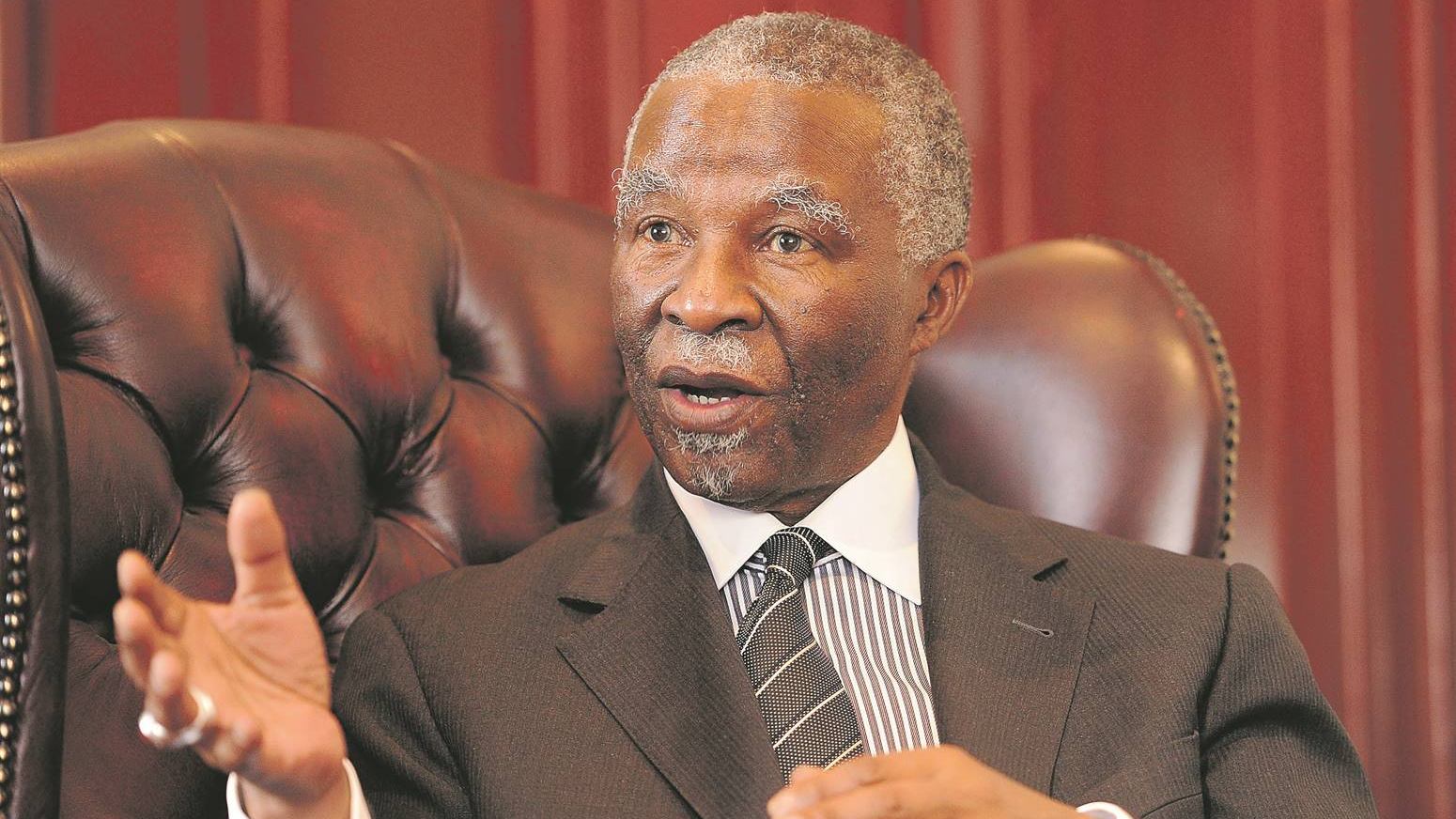
JOHANNESBURG – Former President Thabo Mbeki has delivered a scathing critique of the current government and its civil service.
Without ethics, the State cannot serve the public to its full potential, Mbeki said at a lecture at the University of South Africa during the weekend, paying tribute to the first chair of the public service commission, Stan Sangweni.
“South Africans can no longer pretend the public service is working fully for their benefit because it is not,” Mbeki said. The concept of Batho Pele (People First) was missing in most government departments.
“People don’t need handouts, but need to be empowered. From collapsing municipalities and rolling blackouts to empty taps and dysfunctional clinics, the State seems to be failing its people.”
The country is not only confronted by a technical challenge, but also a moral one, Mbeki said, ‘for a government that cannot be trusted cannot govern. Therefore, if leaders want citizens to believe again, they must show honesty and responsibility in their conduct’.
The former president highlighted the rise in private sector service organisations and campaigns, which emerged due to government’s failure to deliver essential services, including education, health and reliable electricity supply.
He cited the Solidarity movement’s plan to construct a university outside Pretoria as an example. Co-operative Governance and Traditional Affairs Minister Velenkosini Hlabisa said political appointments have replaced merit.
“Accountability has become optional. Ordinary citizens, especially the poor, unfortunately, pay the heaviest price.” Professionalising public service is key to the country’s growth, but this is also not the responsibility of government alone, Hlabisa said.
“Public administration is a legacy between the State and the public. It is a state that invests in people.
‘‘But South Africans have heard promises before, and they are now fed up,’’ he said. The government of national unity can prioritise service delivery over corruption and ‘act as catalysts in ensuring transparency in public service’.



















Leave a comment