

MBABANE – The United Nations Economic Commission for Africa (ECA) has singled out Eswatini as one of Southern Africa’s most stable economies.
The ECA commends Eswatini’s fiscal discipline, consistent growth and sound economic management despite global and regional headwinds.
In its 2025 Report on Recent Economic and Social Conditions in Southern Africa, released ahead of the 31st Intergovernmental Committee of Senior Officials and Experts (ICSOE) meeting hosted in Ezulwini, the ECA highlights Eswatini’s steady 4 per cent GDP growth in 2024, achieved amid a difficult year marked by drought, commodity price volatility and subdued regional demand.
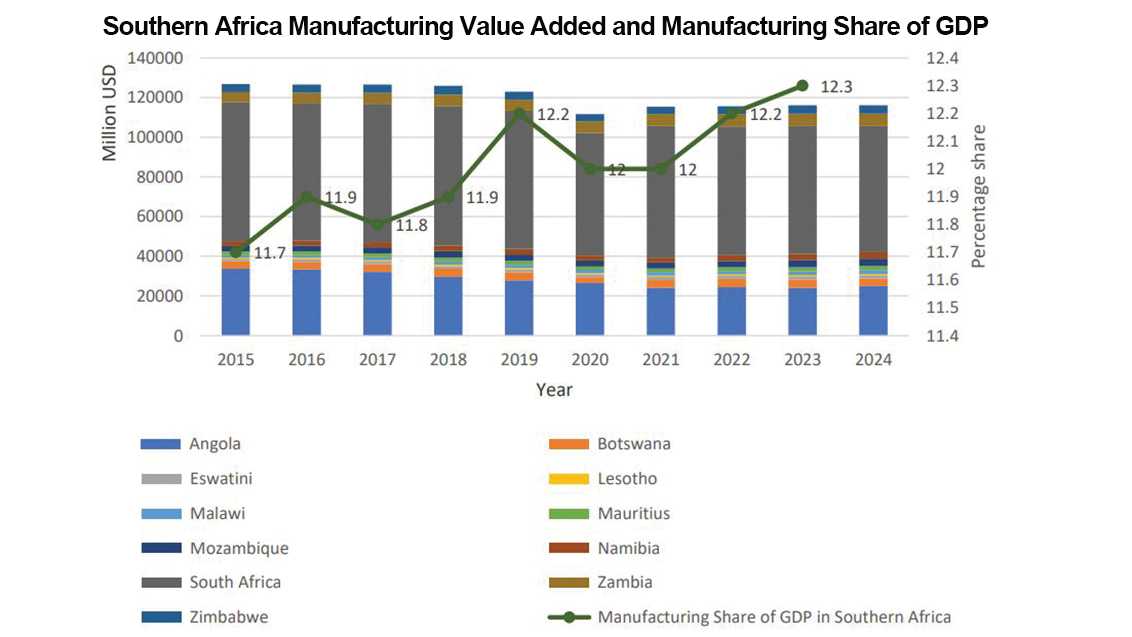
According to the report, Eswatini’s growth was driven by the manufacturing, mining and construction sectors, with mining benefitting from a rise in coal production and construction activity boosted by the Mpakeni Dam project.
“Eswatini’s growth was propelled by manufacturing, mining and construction sectors, with mining benefitting from increased coal production and the construction sector being revitalised by the Mpakeni Dam construction,” the report states. The ECA report places Eswatini among only four Southern African countries – alongside Angola, Lesotho and Zimbabwe – to achieve the regional fiscal deficit target of 3 per cent of GDP in 2024. This, the commission notes, demonstrates prudent financial management in an environment where many neighbouring economies faced widening deficits due to drought-related spending and global trade uncertainty.
*…
AGOA remains key to export, employment stability
MBABANE – In assessing the impact of the African Growth and Opportunity Act (AGOA), the ECA report lists Eswatini as one of the most AGOA-dependent economies in Africa, alongside Lesotho and Mauritius.
Between 2001 and 2022, 81.1 per cent of Eswatini’s exports to the United States were channelled through AGOA, mainly sugar and textile products, representing 6.5 per cent of its total global exports.
The ECA cautions that uncertainty surrounding AGOA’s renewal could threaten jobs and investment in Eswatini’s textile and apparel industry, which employs about 22 000 workers according to the International Finance Corporation (IFC).
“A sudden AGOA repeal could lead to factory closures, investor flight and substantial job losses in already vulnerable labour markets,” the report warns.
The commission, therefore, recommends that Eswatini and other SADC states leverage the African Continental Free Trade Area (AfCFTA) to diversify export markets, reduce dependence on preference-based trade regimes and enhance regional value chains.
*…
Inflation within target band
MBABANE – While the drought pushed food and energy prices higher across Southern Africa, the ECA report notes that Eswatini’s inflation remained within the 3–7 per cent regional target range during 2024.
Together with Lesotho, Mauritius, Mozambique, Namibia and South Africa, Eswatini maintained price stability thanks to a combination of fiscal restraint, exchange rate stability linked to the Rand, and moderate domestic demand pressures.
“Eswatini’s inflation management reflects the effectiveness of coordinated fiscal and monetary policy underpinned by regional monetary stability,” the report states. The report also reveals that Eswatini’s current account balance performed above the regional benchmark, placing it among six countries – Angola, Lesotho, South Africa, Zambia, Zimbabwe and Eswatini – that kept the deficit below 3 per cent of GDP.
However, the ECA cautioned that foreign exchange reserves, while stable, remained below the regional target of six months of import cover, highlighting the need to strengthen buffers against future external shocks.
*Full article available in our publication.


















Leave a comment