

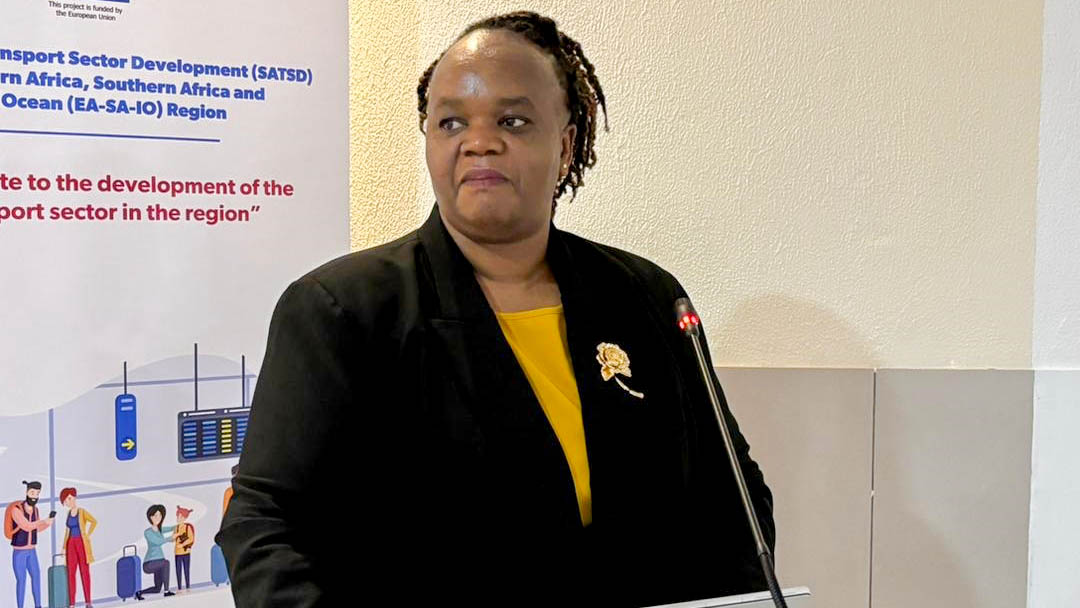
MATSAPHA – Eswatini this week positioned itself at the centre of Africa’s aviation liberalisation drive.
It hosted a high-level regional capacity-building workshop aimed at accelerating the operationalisation of the Single African Air Transport Market (SAATM).
The three-day workshop, held from December 15 to 17 in Manzini and Mbabane, brought together senior government officials, civil aviation authorities, regulators and industry stakeholders from the Eastern Africa, Southern Africa and Indian Ocean (EA-SA-IO) region.
The meeting focused on assessing progress, addressing challenges and developing strategies to fast-track implementation of SAATM, a flagship African Union initiative under Agenda 2063.
Opening the workshop, Dr Zachariah Kongori, Senior Transport Economist at the Common Market for Eastern and Southern Africa (COMESA), conveyed apologies from the COMESA Director of Infrastructure and Logistics, Dr Bernard Dzawanda, before welcoming delegates on behalf of the COMESA Secretariat and its Secretary General, Chileshe Mpundu Kapwepwe.
Dr Kongori expressed appreciation to the Government and people of Eswatini for hosting the event, noting the country’s consistent support for regional integration initiatives. He described Eswatini as a vital pillar in advancing economic prosperity and seamless connectivity across the COMESA market.
He also acknowledged the European Union for providing €8 million in financial support through the Support to Air Transport Sector Development (SATSD) Programme, which COMESA is implementing on behalf of partner regional economic communities including the East African Community (EAC), Intergovernmental Authority on Development (IGAD), Indian Ocean Commission (IOC) and the Southern African Development Community (SADC).
As the lead implementing REC, COMESA, he said, remains committed to achieving three core objectives under the SATSD Programme: operationalising SAATM, strengthening the regulatory and institutional capacity of civil aviation institutions and improving air navigation efficiency across the EA-SA-IO region.
Dr Kongori reminded delegates that SAATM was launched in 2018 following African Union member states’ commitment to fully-liberalise air transport through the implementation of the 1999 Yamoussoukro Decision. He highlighted several concrete steps already taken by COMESA, including the development of a Yamoussoukro Decision-compliant Model Bilateral Air Services Agreement (BASA), capacity-building on competition, consumer protection and dispute settlement regulations, and support to partner RECs in domesticating key air transport regulations.
According to Dr Kongori, the Manzini workshop is designed to establish the implementation status of the revised eight concrete measures from each of the 15 SAATM signatory states in the region. The expected outcomes include identifying bottlenecks, sharing lessons learnt and developing strategies to accelerate compliance.
He stressed that delays in implementing SAATM come at a high economic cost, citing persistently high airfares, long travel times and excessive stopovers as barriers to regional integration. He urged member states that have already signed the Solemn Commitment to fully implement the eight measures, while encouraging non-signatory neighbours to join the initiative.
*Full article available in our publication















Leave a comment