

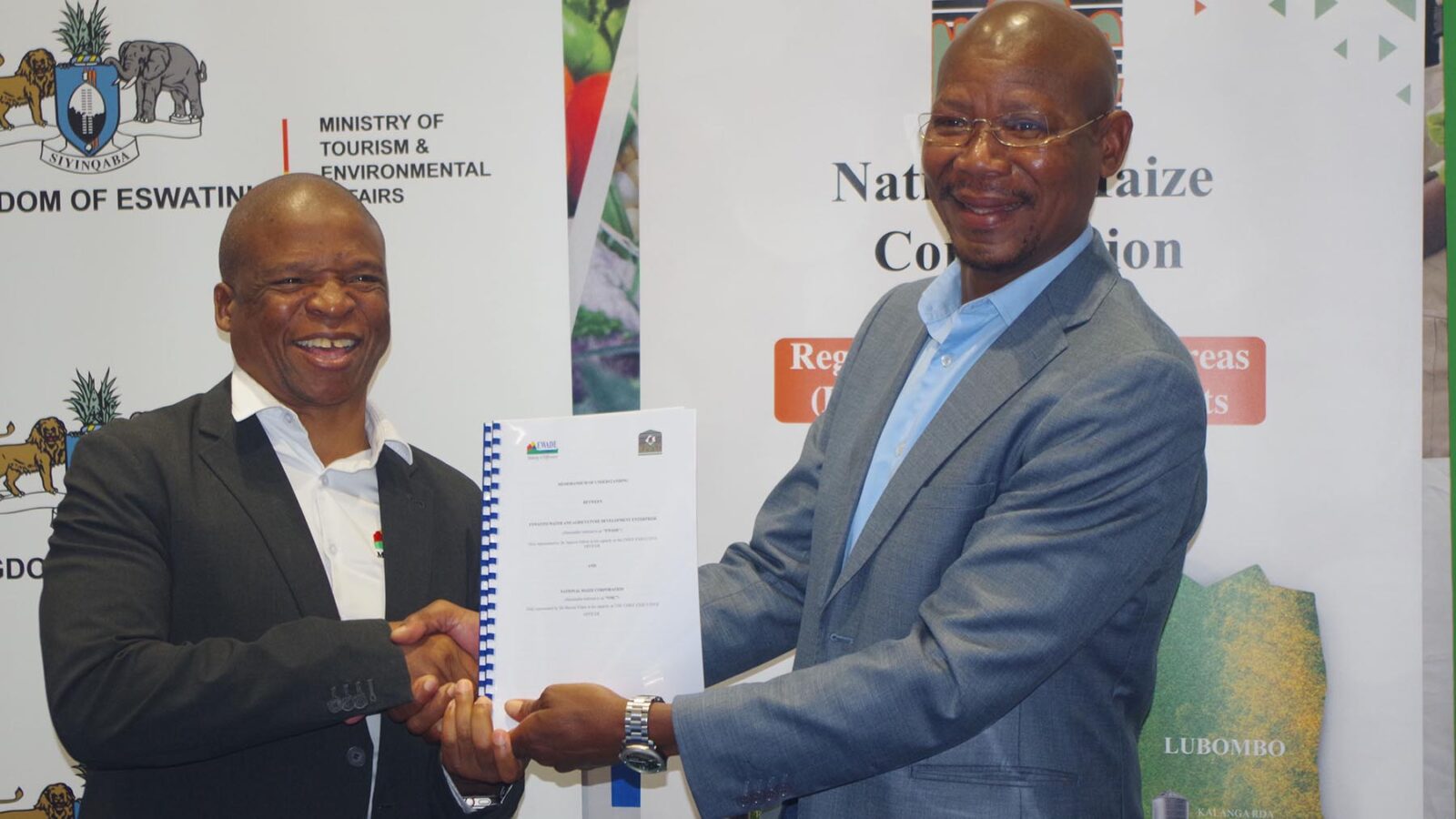
MBABANE – EWADE has signed partnership agreements with key institutions to strengthen coordination and implementation of SAPEMP, a national programme targeting smallholder farmer productivity, resilience and market access.
The Eswatini Water and Agricultural Development Enterprise (EWADE) has signed a second batch of Memoranda of Understanding (MoUs) with key government institutions to strengthen collaboration and coordinated implementation of the Smallholder Agriculture Productivity Enhancement and Marketing Project (SAPEMP).
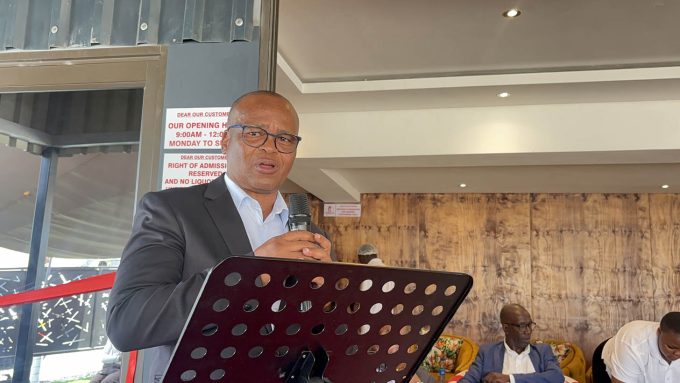
The MoU signing ceremony was held in Mbabane and was addressed by EWADE Chief Executive Officer Dr Samson Sithole, who said the agreements formalise strategic partnerships and move cooperation from informal engagement to structured action.
The MoUs were signed between EWADE and the National Maize Corporation (NMC), the Eswatini Environment Authority (EEA), the Ministry of Tourism and Environmental Affairs and the Ministry of Tinkhundla Administration and Development.
Dr Sithole said the agreements reflect a shared commitment to collaboration, coordination, accountability and impact and provide a framework for delivering tangible results under SAPEMP.
He said the ceremony builds on an earlier set of MoUs signed on September 16, 2025 with the Ministry of Agriculture, the Deputy Prime Minister’s Office and the National Agricultural Marketing Board (NAMBoard), which were aimed at aligning institutional mandates, resources and expertise in direct response to the needs of smallholder farmers.
Dr Sithole said the MoUs signed during the ceremony are not standalone agreements but they are directly aligned to SAPEMP, which was officially unveiled in March 2025 by the Minister for Agriculture, Mandla Tshawuka.
He said the agreements provide a practical expression of SAPEMP’s vision by translating policy commitments into coordinated implementation and ensuring that the programme delivers measurable benefits to farmers, communities and the broader economy.
According to Dr Sithole, SAPEMP was designed in recognition of the complex challenges facing smallholder farmers, including low productivity, limited market access, climate risks and knowledge gaps, which cannot be addressed by individual institutions acting in isolation.
He said the project promotes multi-stakeholder solutions by aligning mandates, resources and expertise across government, parastatals and development partners through structured collaboration.
Dr Sithole outlined that SAPEMP aims to increase smallholder farmers’ production, nutrition and incomes, while building resilience to climate change through three main components.
*Full article available in our publication
















Leave a comment