

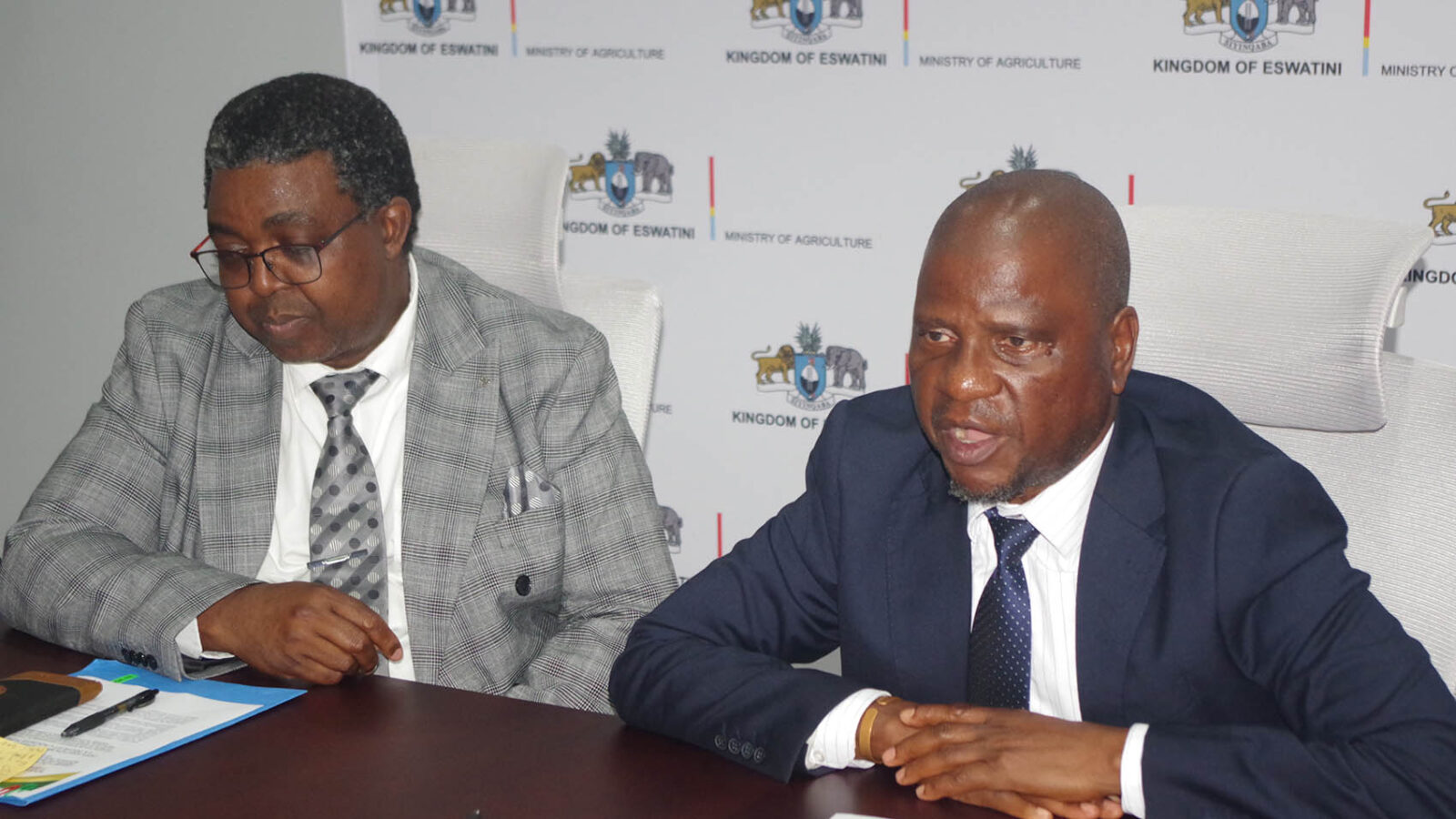
MBABANE – Minister for Agriculture Mandla Tshawuka has announced that the sale of cattle for slaughter has been reopened, with farmers now permitted to sell livestock strictly to recognised abattoirs for beef trade.
The minister said the decision was taken after careful consideration of the livelihoods of emaSwati, many of whom depend on cattle trading as a primary source of income.
He noted that the outbreak of foot-and-mouth disease (FMD) had severely affected farmers, resulting in increased cattle deaths, while movement restrictions prevented the sale of animals.
Tshawuka said farmers are now allowed to sell cattle exclusively for slaughter at the nearest recognised abattoirs, where the process will be conducted under the supervision of qualified inspectors.
He explained that when slaughtering is carried out under controlled conditions, the meat is certified disease-free, allowing it to be transported from red zones to green zones for sale.
However, the minister emphasised that slaughtering must take place within the same zone where the animal originates, warning that moving cattle from red zones to green zones for slaughter would pose a serious risk of spreading the disease.
“We believe that if the process is followed correctly and all procedures are adhered to, this will pose no risk of spreading the disease to green zones.
“This measure is intended to help farmers earn a living after a prolonged period of restrictions caused by the outbreak,” Tshawuka said.
In a previous interview, the minister outlined several interventions the ministry has implemented to manage the impact of foot-and-mouth disease while protecting farmers’ livelihoods.
These include the partial reopening of trade in areas where vaccinations have been completed, such as Hluti and Lavumisa, using standard operating procedures that allow vaccinated animals to be sold for slaughter under strict conditions and monitoring.
He also said the ministry has allowed meat processors a limited window to import beef from disease-free abattoirs in South Africa to stabilise domestic supply.
In addition, businesses operating in FMD-free areas have been encouraged to increase production of slaughter animals to support national food supply.
Tshawuka added that the ministry continues to intensify vaccination programmes with the aim of eradicating the disease.
He further appealed to farmers and the public to refrain from smuggling animals and restricted products, warning that such practices undermine national disease-control efforts. “We urge everyone to support the ministry’s efforts so that the country can overcome this challenge and the livestock sector can recover,” he said at the time.


















Leave a comment