

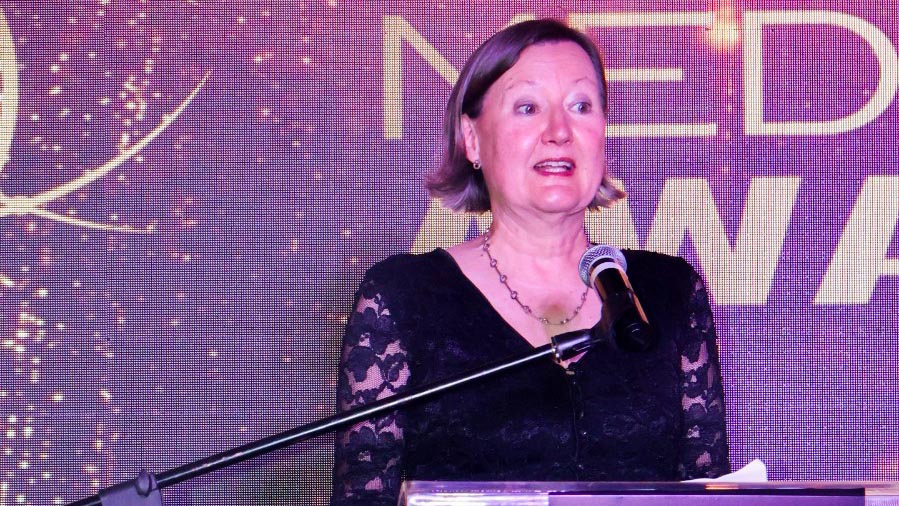
MBABANE – During the National Media Awards (NMA), the European Union stated that they will continue supporting and protecting local media freedom.
The Head of Cooperation, EU Delegation to the Kingdom of Eswatini Eva Maria Engdahl said that she was honoured to stand among the journalists and communicators who tell Eswatini’s stories every day. “For the European Union, free, independent, professional and pluralistic media is vital for resilient and healthy democracies. The EU remains steadfast in its commitment to protect media freedom and pluralism across the world. In defending media freedom, we protect not just the right to know, but our very ability to shape a future guided by truth and accountability,” she said.
Engdahl further stated that the EU advocates for strong journalism as that underpins social cohesion, protects human rights and ensures all voices are heard. “This is why, on May 2, 2025, World Press Freedom Day, we partnered with the Eswatini National Editors Forum. This partnership was not simply to commemorate the day, but to invest in the future of journalism through meaningful and practical engagements on various issues like Artificial Intelligence and developmental journalism,” she said.
The EU’s involvement in media development is centred on various key commitments including:
1. They believe in supporting efforts to curb disinformation and misinformation by promoting fact-checking, balance and editorial integrity.
2. Secondly, support media by advocating for an ethical use of Artificial Intelligence. It is a fact that we are living in the age of ever-evolving digital information. Such digital transformation has taken us to the whole new world of AI. Today, AI is transforming all sectors including journalism. It provides tools that enhance investigative reporting, content creation and fact-checking. AI also allows for greater efficiency, multilingual accessibility and improved data analysis.
However, these digital advancements also bring disadvantages and risks. AI can generate misinformation and disinformation and it is important that media professionals are well conversant with the safe use of AI. That is why in the European Union, AI is guided by the EU AI Act, the world’s first comprehensive AI law, offering important lessons for responsible practice.
“At this stage, I want also to speak about FIMI (foreign information manipulation and interference) and how all of us, including the media, should be vigilant against it. Over the last few years information manipulation by foreign and domestic actors has been on the rise and has become a critical feature of political, social and economic discourses, challenging democratic systems, social cohesion, security and stability in many countries,” she continued.
That is why the EU is continuously building up critical capacity to counter misinformation and disinformation, particularly FIMI, helping EU citizens to strengthen their resilience to disinformation, manipulation and propaganda, with initiatives such as the EU vs Disinfo platform and the European Digital Media Observatory.
Therefore, in the face of these threats posed by FIMI, they cannot over-emphasise the importance of fact-based journalism. Fact and evidence-based journalism is very important to counter dis and misinformation thus ensuring that citizens, including emaSwati, enjoy their rights to accessing credible and accurate information that enables them to make right choices for their lives.
The EU also stated that they support the media in sharing news about impactful opportunities in Eswatini, through working with development actors to extend reach beyond the country.



















Leave a comment